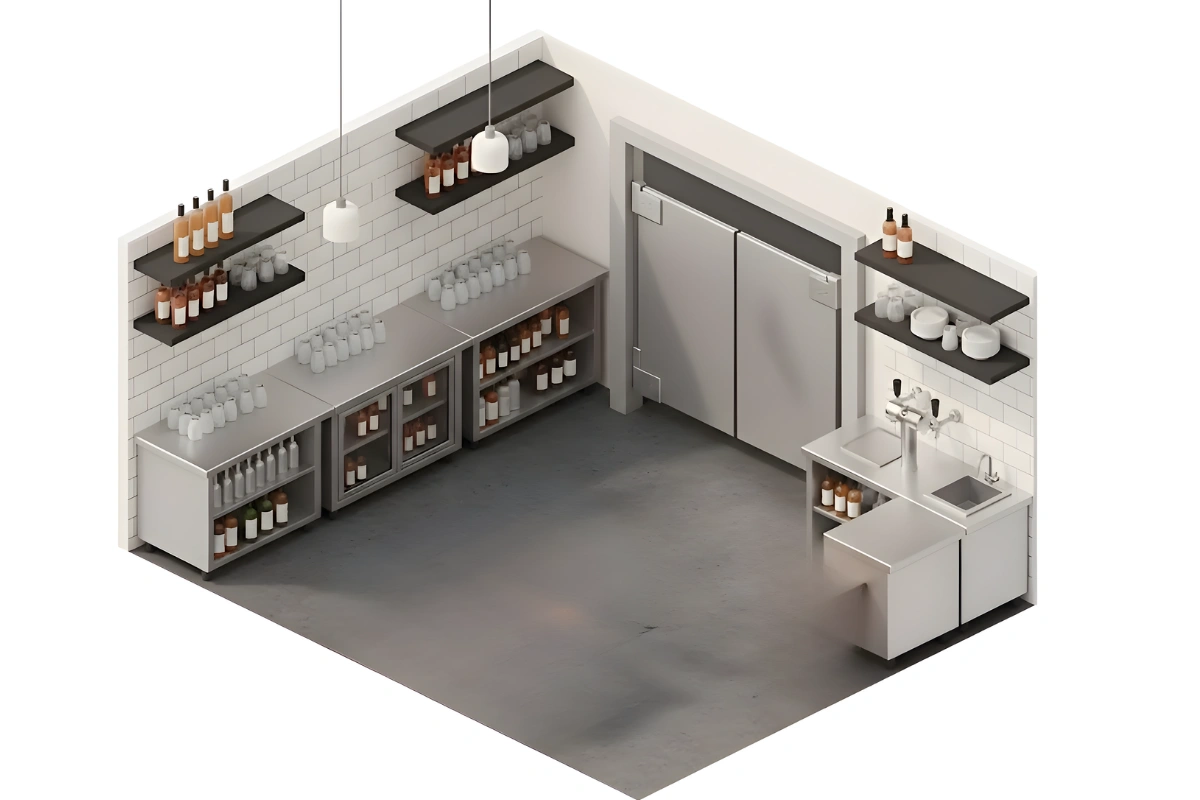
Bar Area Swinging Doors
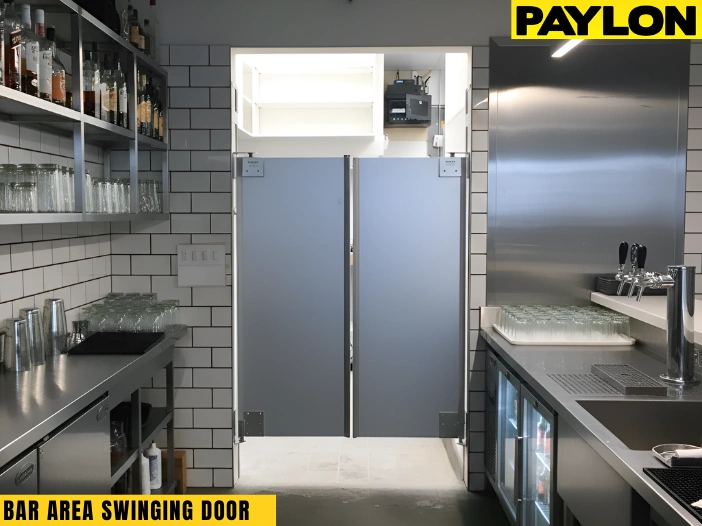
Congestion is a common challenge in bar areas, especially between front-facing service and back prep zones. Bottlenecks slow service and disrupt staff movement during busy hours. This article explains why congestion happens, how access planning with swinging doors helps reduce it, how options compare, where they work best, and what bar owners should consider when improving layout flow.
Engineered for Industrial Workflow and Movement
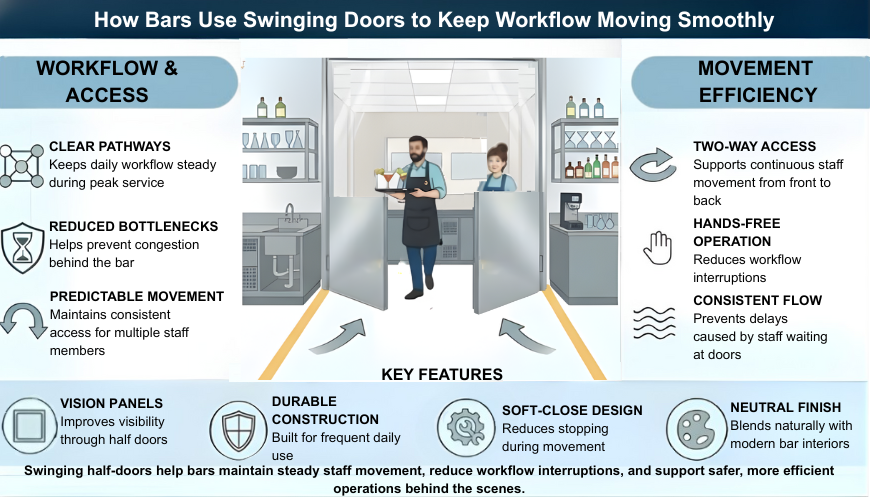
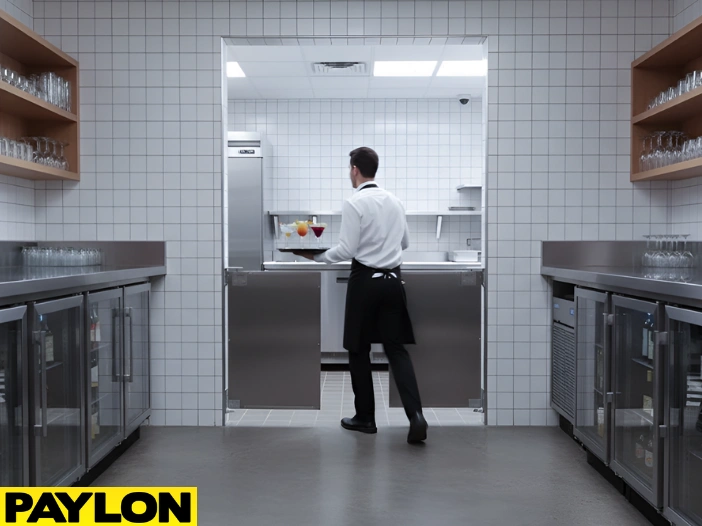
Bar areas rely on fast, organized movement to keep service running smoothly. When front and back service areas become congested, delays and frustration quickly follow. This infographic shows how swinging doors help reduce bottlenecks by supporting two-way traffic, improving staff flow, and keeping access points clear during busy hours. Understanding where congestion occurs and how the right access solution helps can make a noticeable difference in daily bar operations.
Why Congestion Happens in Bar Service Areas
Congestion behind the bar rarely comes from a single issue. It develops when limited space and poorly defined access points collide during active service. When movement is constant and pathways are unclear, even experienced staff can struggle to keep things moving smoothly during peak hours.
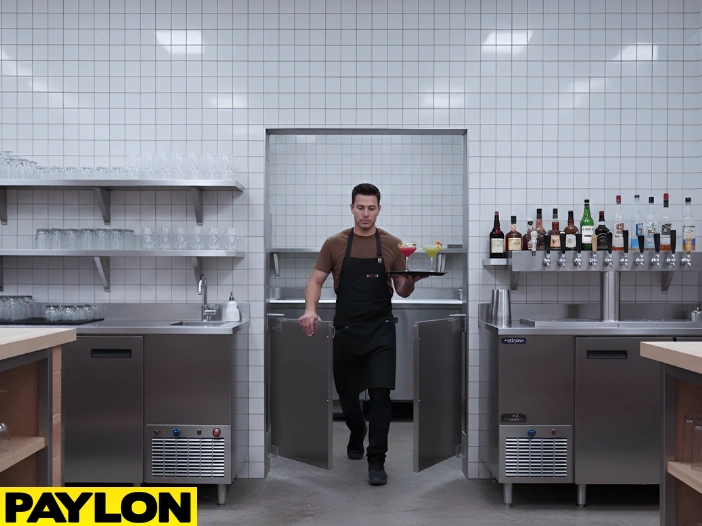
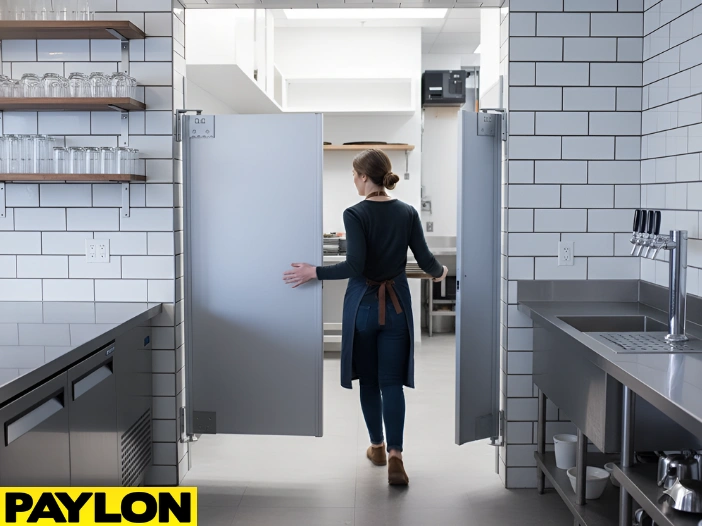
Limited Space and Conflicting Staff Movement
Tight Work Zones Behind the Bar
Behind the bar, space is often limited by equipment, storage, and service counters. Narrow work zones leave little room for passing, turning, or staging items. When staff operate within tight boundaries, simple movements take longer, especially when multiple tasks happen at once during busy service periods.
Staff Crossing Paths During Busy Service
During rush hours, staff often move in opposite directions while carrying drinks, glassware, or supplies. When layouts do not support smooth passing, small pauses and adjustments quickly add up. These repeated slowdowns increase pressure and make routine tasks feel more difficult than they should.
Poorly Managed Access Points Between Service Areas
Swinging Door Options That Help Reduce Bar Area Congestion
Once congestion sources are clear, choosing the right swinging door becomes a practical decision. Different bar environments place different demands on access points, so selecting the right material and build helps support smoother movement during daily service.
This option is designed for bars where space is limited and movement needs to stay quick. Its lightweight build helps staff move through access points without added resistance during busy service.
• Lightweight construction supports fast movement through openings during busy service
• Works well in tight bar spaces with frequent staff movement throughout shifts
• Helps reduce hesitation at access points when hands are full during service
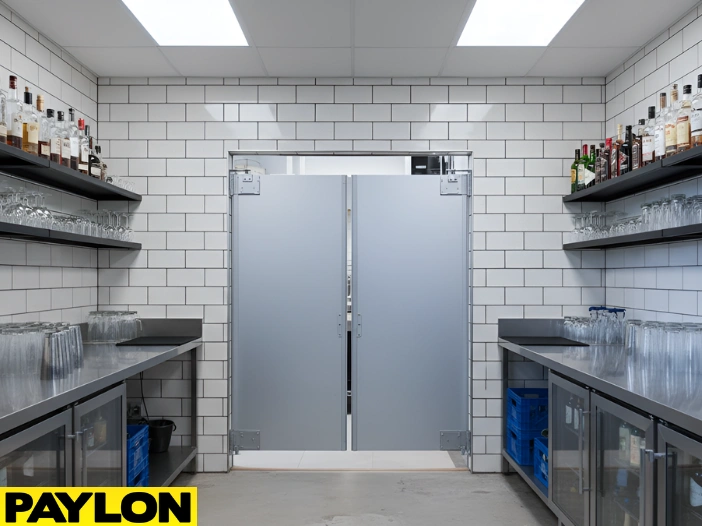
PE-510HPL-CD: Easy to Clean for Daily Service Needs
This option suits bars that prioritize cleanliness without slowing down operations. The surface supports frequent wipe downs while maintaining smooth access between service areas.
• Smooth surface supports frequent wipe downs without slowing daily operations
• Ideal for bars where spills and cleanup occur throughout service hours
• Balances durability and appearance for front and back bar areas
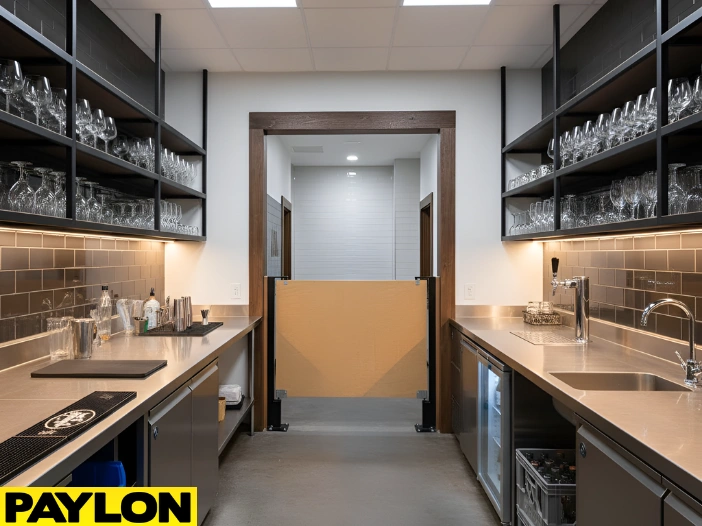
This option is a strong fit for bars with steady front-to-back movement throughout the day. Its construction supports higher traffic levels while maintaining consistent performance during long shifts.
• Designed to handle steady traffic between front and back service zones
• Stronger construction supports repeated use during long service periods
• Fits bars that rely on consistent movement during extended operating hours
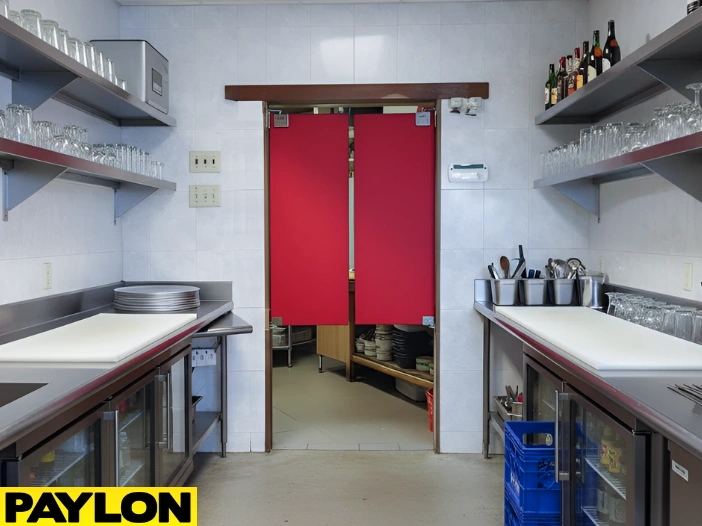
This option is intended for demanding bar environments with constant use and frequent cleaning. The stainless steel surface supports durability while maintaining reliable access during peak service.
• Stainless steel surface handles heavy use and frequent cleaning cycles
• Well suited for bars with constant traffic and demanding maintenance needs
• Supports smooth access where durability and hygiene are daily priorities
How Swinging Doors Compare to Other Bar Area Access Options
Choosing the right access solution is not just about filling an opening. It affects how staff move, how often congestion forms, and how smoothly service runs during busy periods. The table below compares common access options used in bar environments and how each performs under daily service conditions.
| Access Option | Impact on Congestion | Ease of Staff Movement | Space Efficiency | Suitability for Busy Bar Environments |
|---|---|---|---|---|
| Open Doorways | Traffic overlaps easily, leading to crowding | Movement is unstructured and unpredictable | High, but lacks control | Low |
| Standard Hinged Doors | Creates frequent stopping points | Requires manual opening and clearance | Moderate, needs swing space | Low |
| Sliding Doors | Limits flow to one direction at a time | Slower transitions during peak service | Uses wall space | Moderate |
| Swinging Doors | Helps control flow and reduce bottlenecks | Supports continuous two-way movement | Minimal clearance required | High |
This comparison highlights why swinging doors are often better suited for active bar service areas. By supporting steady movement without forcing stops or direction changes, they align more closely with the pace and demands of busy bar operations.
Key Features of Swinging Doors for Bar Service Areas
Choosing the right swinging door isn’t just about style or durability, it’s about improving daily workflow behind the bar. Understanding the features that matter most helps bar owners select doors that reduce congestion, protect equipment, and support smooth staff movement during busy service hours.
| Feature | Why It Matters in Bar Service Areas |
|---|---|
| ✅ Full-Perimeter Seals for Hygiene and Temperature Control | Helps maintain clean and organized service areas by minimizing interference and keeping access points clear, ideal for high-traffic zones behind the bar. |
| ✅ Tear-Drop Bumpers and Kick Plates | Protects the door surface from frequent impact by carts, trays, or staff movement, reducing long-term wear and extending service life. |
| ✅ Rust-Resistant Hardware for Wet or High-Cleaning Areas | Stainless components resist corrosion from frequent cleaning or moisture exposure, keeping doors functional and reliable in demanding bar environments. |
| ✅ Clear Vision Panels to Reduce Collisions | Enhances safety by allowing staff to see through doors in busy service areas, reducing accidental collisions and improving workflow efficiency. |
| ✅ Durable Foam or ABS Cores That Hold Up Under Stress | Engineered for repeated impact, these cores maintain durability even under constant pressure, making them ideal for high-traffic bar service zones. |
Properly selected swinging doors with these features not only protect your investment but also keep staff moving efficiently, reduce disruptions, and ensure that your bar can maintain smooth operations during peak service periods.
Frequently Asked Questions
FAQs About Swinging Doors in Bar Areas
Are PE-510ALC-CD swinging doors safe for busy bar staff?
Yes. The PE-510ALC-CD swinging door is designed with soft-close hinges and clear vision panels, keeping bartenders and servers safe during rush hours. It allows two-way movement between front and back prep zones and helps prevent collisions in high-traffic areas.
Do PE-630HPL-CD swinging doors slow staff during peak service?
No. The PE-630HPL-CD model supports smooth, continuous two-way movement, allowing staff to move efficiently without waiting for clearance. It is ideal for high-traffic bar areas where speed and workflow matter.
Can PE-510HPL-CD swinging doors fit narrow bar openings?
Yes. The PE-510HPL-CD swinging door can be customized for tighter spaces, allowing safe, efficient access even in compact bar layouts.
Are PE630SS-CD swinging doors noisy during service?
No. The PE630SS-CD model uses soft-close hinges and bumpers to minimize noise, letting staff move through busy zones quietly without disrupting service or customers.
How durable are PE-630HPL-CD swinging doors in high-traffic bars?
The PE-630HPL-CD is built for constant daily use. Its reinforced ABS core and durable materials handle repeated impacts, ensuring long-lasting performance in busy bar environments.
Do PE-510ALC-CD swinging doors require frequent maintenance?
No. The PE-510ALC-CD is low-maintenance. Occasional cleaning and hinge checks are enough to maintain smooth operation and keep staff moving efficiently.
Can swinging doors improve staff workflow behind the bar?
Yes. Using PE-510HPL-CD or PE-630HPL-CD swinging doors reduces bottlenecks and allows staff to pass between prep and service areas efficiently, improving overall workflow.
Are swinging doors suitable for entrances to glassware or dishwashing zones?
Yes. PE630SS-CD swinging doors are perfect for high-traffic areas like glassware storage or dishwashing stations, allowing staff to move quickly without waiting for clearance.
Can swinging doors handle frequent trips to coolers or supply rooms?
Absolutely. PE-510ALC-CD and PE-630HPL-CD models support hands-free access, letting staff enter and exit quickly without blocking traffic or slowing service.
Do swinging doors reduce collisions behind the bar?
Yes. Clear vision panels on PE-510HPL-CD and PE630SS-CD doors allow staff to see approaching traffic, preventing accidental collisions in busy service zones.
Are swinging doors compatible with service corridors connecting the bar and kitchen?
Yes. Swinging doors like the PE-630HPL-CD can be installed in corridors to maintain continuous two-way traffic and prevent congestion in high-use passages.
Are PE-510ALC-CD doors easy to clean after spills?
Yes. Smooth surfaces allow quick wipe-downs, keeping the workspace hygienic and reducing downtime during service.
Can swinging doors support carrying trays or carts?
Yes. PE-510HPL-CD and PE630SS-CD models include reinforced kick plates, supporting repeated contact from trays or carts while maintaining smooth operation.
Do swinging doors help reduce bottlenecks in bar layouts?
Yes. Properly placed PE-630HPL-CD or PE-510ALC-CD doors help prevent choke points, keeping staff movement uninterrupted even during peak hours.
Are swinging doors safe near hot or wet prep areas?
Yes. Stainless steel and laminate models, like PE630SS-CD, resist heat and moisture, making them safe to use near wet or hot work zones.
Can swinging doors handle long service hours without slowing down?
Yes. PE-630HPL-CD and PE630SS-CD are designed for continuous use, maintaining smooth operation during long, busy shifts.
Are swinging doors customizable for different bar layouts?
Yes. Widths, vision panels, and surface materials can be customized for PE-510HPL-CD and PE-630HPL-CD doors, allowing perfect integration into any bar layout.
Do swinging doors require professional installation?
While standard installation is straightforward, professional installation ensures PE630SS-CD and PE-630HPL-CD doors operate perfectly and safely in high-traffic areas.
Are swinging doors suitable for high-volume cocktail bars?
Yes. PE-510ALC-CD and PE-630HPL-CD models support heavy foot traffic and repeated use, keeping staff moving efficiently during cocktail rushes.
Will swinging doors improve overall bar efficiency?
Absolutely. By reducing congestion, protecting staff, and allowing smooth access between service zones, models like PE-510HPL-CD and PE630SS-CD help maintain fast, organized service every day.
Photo Gallery
Keep Service Smooth and Staff Efficient
Efficient movement behind the bar is essential for smooth service and less staff stress. Swinging doors like PE-510ALC-CD, PE-510HPL-CD, PE-630HPL-CD, and PE630SS-CD help reduce bottlenecks, support two-way traffic, and keep work areas organized. To optimize your bar layout and daily workflow, explore these swinging door options and request guidance to find the best fit for your space.
Bar Workflow and Access Flow