Cleaning Room Swinging Doors
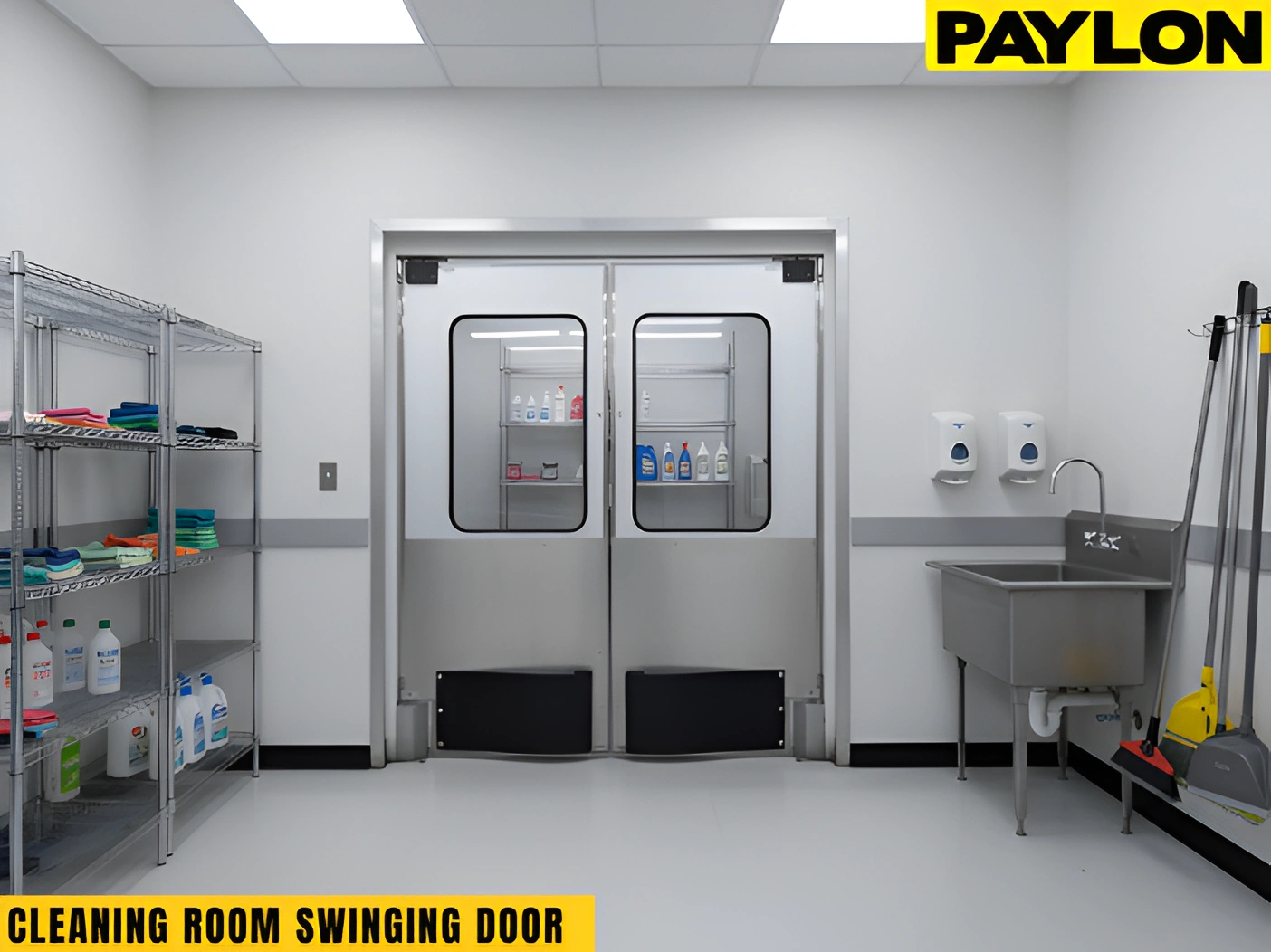
Cleaning rooms rely on consistent daily cleaning cycles, but frequent staff movement, carts, and task transitions can easily disrupt schedules. This article explains why cleaning routines fall behind, how door flow affects daily operations, and how facilities can compare options to support smoother cleaning cycles and stay on track.
Built for High-Use Cleaning Environments
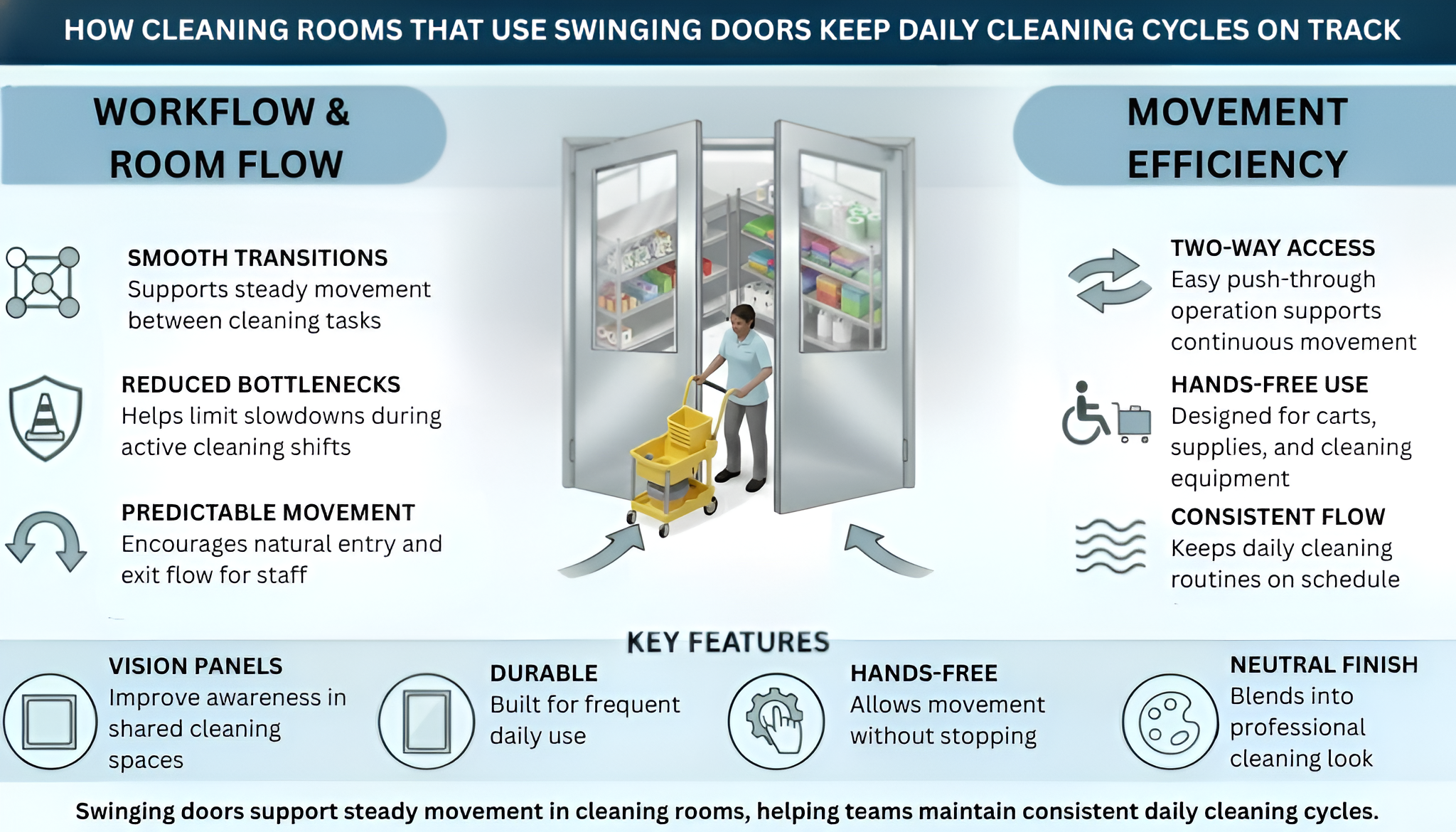
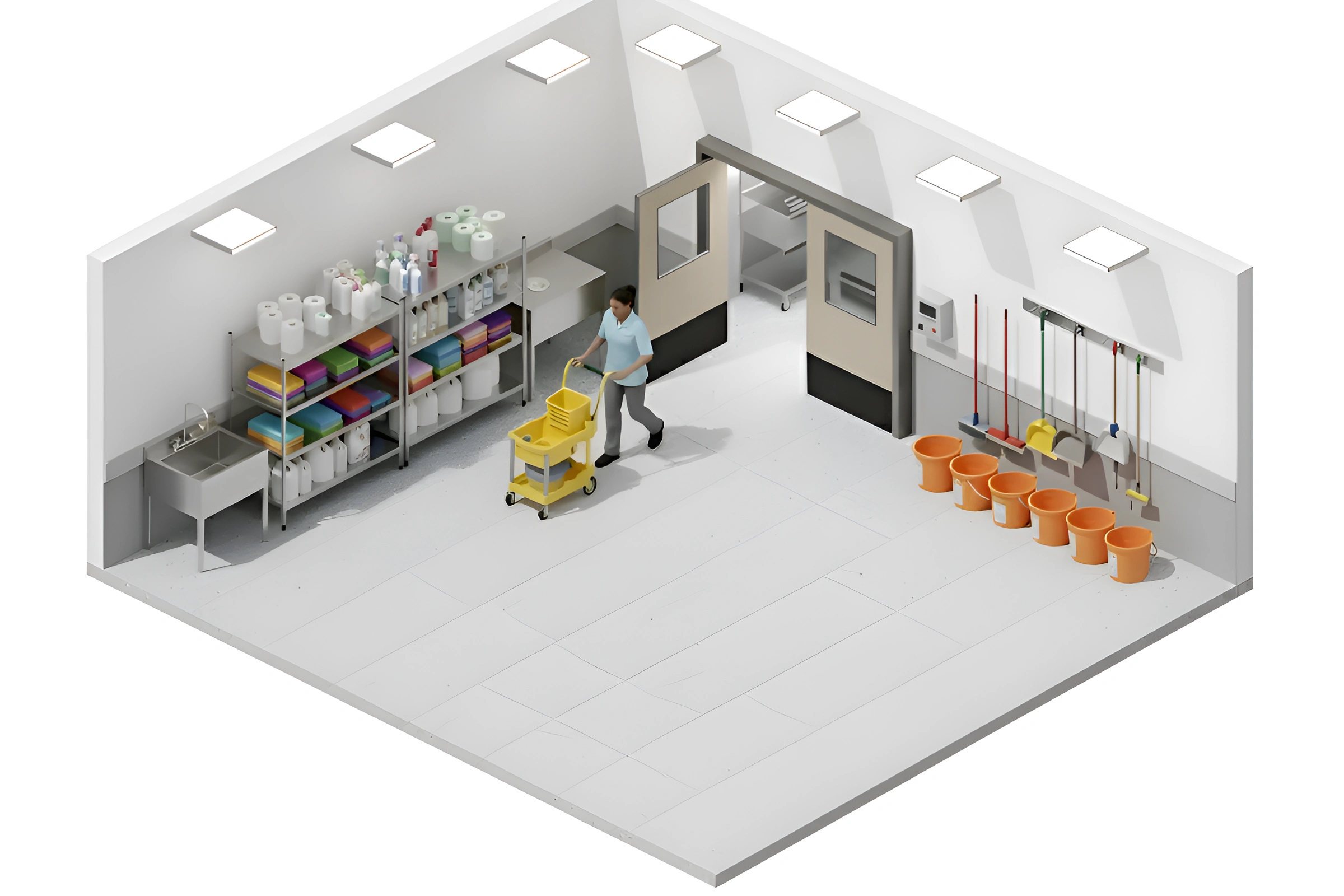
Cleaning rooms rely on steady routines to keep daily cleaning cycles on schedule. When staff are moving supplies, pushing carts, and transitioning between tasks, the right door choice can make a noticeable difference. Swinging doors support smoother movement, reduce interruptions, and help teams maintain momentum throughout the day. By choosing a door that matches the level of traffic and cleaning demand, facilities can keep sanitation workflows consistent and cleaning cycles on track.
Why Daily Cleaning Cycles Often Fall Behind
Even with well-planned routines, cleaning rooms face constant pressure during active shifts. Multiple tasks often happen at the same time, staff share limited space, and schedules leave little room for delays. These challenges are not the result of poor planning, but of how cleaning rooms operate in real working conditions.
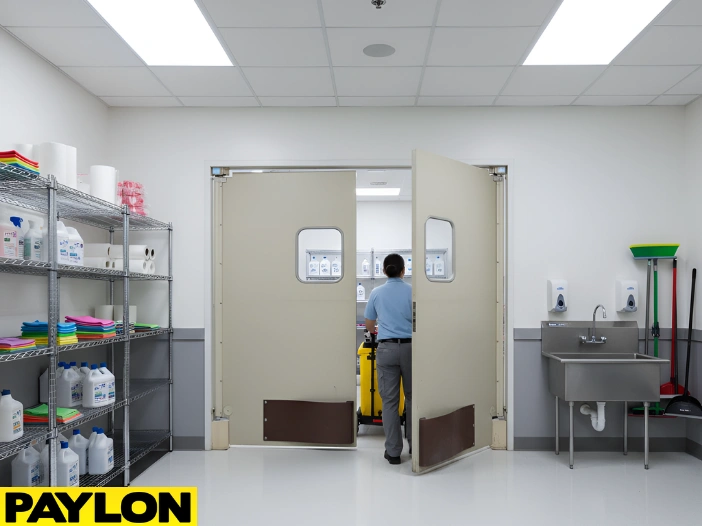
Constant Entry, Exit, and Task Transitions
Frequent Entry and Exit Throughout the Day
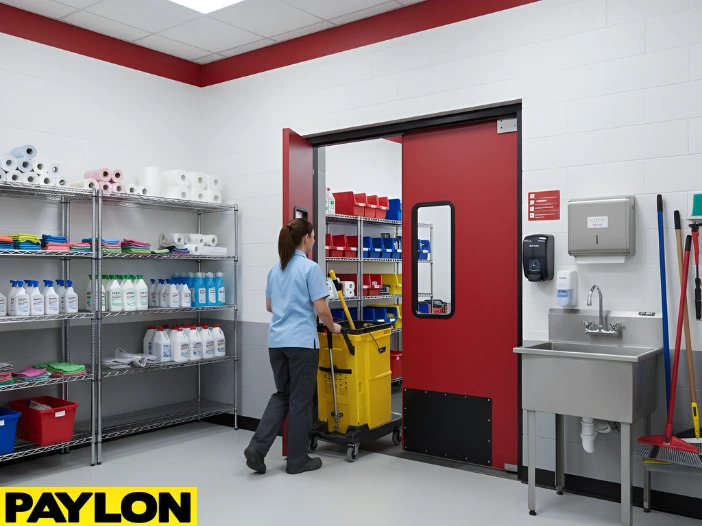
Cleaning rooms see steady movement as staff come and go to restock supplies, remove waste, and support ongoing tasks. This repeated entry and exit increases congestion around shared spaces and interrupts the natural flow of work, especially during busy periods.
Task Transitions Disrupt Cleaning Momentum
When cleaning routines overlap, moving from one task to another breaks rhythm. Each pause may feel small, but frequent transitions make it harder to maintain a consistent pace across repeated cleaning cycles.
Carts, Supplies, and Doorway Slowdowns
Carts and Supplies Increase Daily Friction
Cleaning staff regularly move carts, tools, and supplies between tasks. Handling equipment while navigating tight spaces adds effort and slows movement, particularly when routines repeat back to back.
Doorway Interruptions Add Up Over Time
Passing through doorways with carts or supplies often requires brief stops or adjustments. While each pause seems minor, these interruptions accumulate across multiple cleaning cycles, gradually affecting timing and making it harder to keep schedules on track.
Swinging Door Options That Keep Cleaning Cycles on Track
Once cleaning room demands are clear, the focus shifts to choosing door options that align with how the space is used day to day. Traffic levels, task overlap, and equipment movement all influence which door best supports consistent routines.
The PE-620ALC is well suited for cleaning rooms that follow predictable daily routines. It fits environments where staff movement is steady and cleaning cycles remain consistent throughout the day.
• Supports consistent staff movement during routine daily cleaning schedules
• Fits cleaning rooms with predictable foot traffic and limited equipment use
• Works well in spaces where steady pacing matters more than heavy throughput
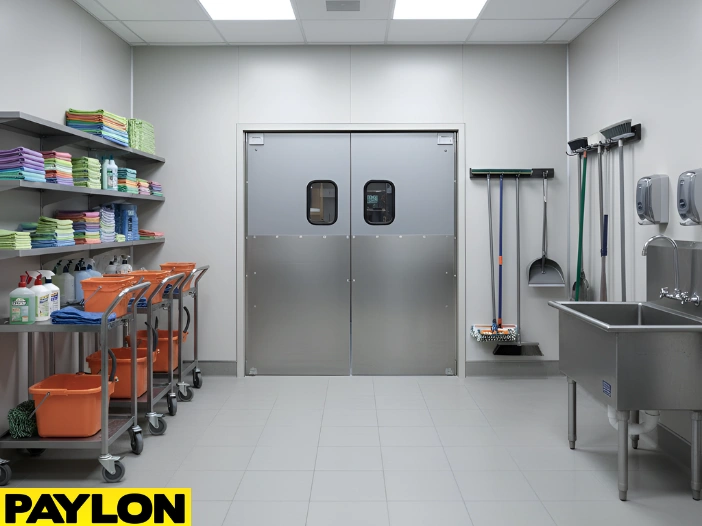
PE-710 for Light-Use Interior Openings
The PE-710 is a strong option for cleaning rooms where visibility plays a key role in coordination. It fits spaces where staff move between adjacent areas and need clear awareness of activity on both sides.
• Helps staff maintain awareness when moving between adjacent cleaning zones
• Fits rooms where sightlines support coordination during overlapping routines
• Suits environments balancing routine movement with active staff transitions
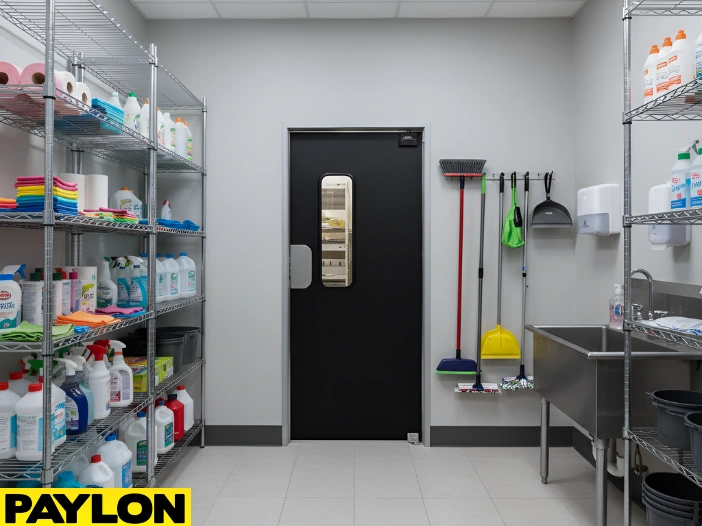
The PE-720 fits cleaning rooms that experience heavier daily use and frequent movement. It is a practical choice for spaces where carts, supplies, and staff are constantly in motion.
• Matches cleaning rooms with frequent entry, exit, and repeated daily routines
• Handles environments where carts and equipment move throughout each shift
• Fits spaces where cleaning cycles run back to back with minimal downtime
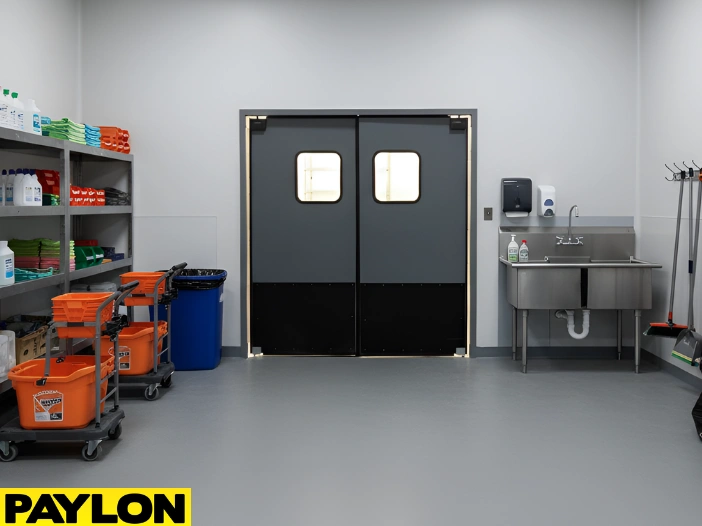
The PE-8000 is designed for cleaning rooms that rarely slow down during active shifts. It works well in areas that require wider openings and dependable performance under continuous use.
• Suits cleaning rooms with continuous movement and heavier daily demand
• Fits areas where wider openings support carts and larger cleaning equipment
• Supports long-term use in spaces that remain active across full shifts
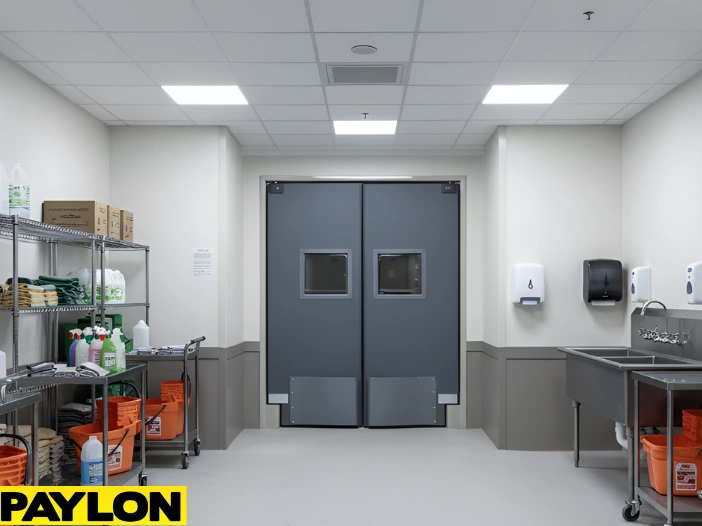
Choosing the Right Swinging Door for Your Cleaning Room
The table below provides a quick side-by-side reference to help match common cleaning room conditions with the most suitable swinging door option, based on daily use and traffic demands.
| Cleaning Room Need | PE-620ALC | PE-710 | PE-720 | PE-8000 |
|---|---|---|---|---|
| Daily cleaning cycles | ✓ | ✓ | ✓ | ✓ |
| Foot traffic only | ✓ | ✓ | ||
| Carts and supply movement | ✓ | ✓ | ✓ | ✓ |
| High-frequency cleaning | ✓ | ✓ | ||
| Wider openings needed | ✓ | ✓ | ||
| Visibility between rooms | Standard | Larger window | Standard | Optional |
| Best fit for | Routine cleaning rooms | Rooms needing more visibility | Busy, cart-heavy rooms | High-use cleaning environments |
This comparison is designed to help narrow options quickly, making it easier to identify which door aligns with how a cleaning room is used before moving into detailed planning or selection.
How Swinging Doors Support Smooth Daily Cleaning Movement
After comparing door options, it helps to understand how swinging doors function during active cleaning shifts. Their value comes from simple, practical mechanics that support movement without forcing staff to slow down or change how they work throughout the day.
| How Swinging Doors Function | Why It Supports Daily Cleaning Movement |
|---|---|
| ✅ Two-Way Door Movement | Allows staff to pass through from either direction without stopping or repositioning, helping maintain steady movement during busy cleaning shifts. |
| ✅ Hands-Free Transitions | Supports staff carrying supplies or guiding carts by removing the need to reach for handles, keeping natural motion between tasks. |
| ✅ Reduced Stop-and-Start Motion | Minimizes brief pauses at doorways, allowing cleaning routines to flow smoothly across back-to-back tasks throughout the day. |
| ✅ Consistent Movement During Active Shifts | Helps cleaning teams move continuously through shared spaces, reducing interruptions that can slow progress during repeated cleaning cycles. |
Together, these practical functions allow cleaning rooms to operate with fewer interruptions, supporting smoother daily movement without adding complexity to existing workflows.
Frequently Asked Questions
FAQs About Swinging Doors in Cleaning Rooms
Are swinging doors easy to clean and maintain in cleaning rooms?
Yes. Swinging doors for cleaning rooms are built with smooth surfaces that make regular wipe-downs and sanitation simple during daily cleaning routines.
Do swinging doors work well with carts and cleaning equipment?
Yes. Commercial swinging doors are commonly used in cleaning rooms where carts and equipment move between tasks, allowing staff to pass through without stopping or repositioning.
Which swinging door is best for frequent daily cleaning cycles?
It depends on how busy the cleaning room is. Moderate-use areas often do well with doors like the PE-620ALC or PE-710, while high-traffic rooms typically require options such as the PE-720 or PE-8000.
Can swinging doors help reduce delays during busy cleaning shifts?
Yes. Swinging doors for cleaning rooms support smoother movement during active shifts, helping limit small pauses that can slow progress across repeated tasks.
Should cleaning rooms use retail or industrial swinging doors?
In most cases, lighter-use cleaning rooms can use retail swinging doors, while cleaning rooms with carts, constant traffic, or back-to-back cycles are better suited for industrial swinging doors.
Are swinging doors suitable for cleaning rooms with overlapping tasks?
Yes. In cleaning rooms where multiple staff members work at the same time, swinging doors help manage two-way movement without creating congestion.
Do swinging doors take up extra floor space in cleaning rooms?
No. Swinging doors operate within the doorway, making them a practical choice for cleaning rooms where space is limited or shared.
Are swinging doors safe to use in active cleaning environments?
Yes. Commercial swinging doors are widely used in active workspaces and help reduce sudden stops at doorways, supporting safer movement throughout the room.
Can swinging doors be used between different cleaning zones?
Yes. Swinging doors work well between connected cleaning areas where staff frequently move between zones during daily routines.
Do swinging doors require special training for cleaning staff?
No. Swinging doors are easy to use and do not require special training, making them simple to integrate into existing cleaning workflows.
Are swinging doors compatible with frequent sanitation routines?
Yes. Swinging doors for cleaning rooms are designed to handle repeated cleaning and sanitation without affecting daily operation.
Can swinging doors help keep cleaning workflows consistent?
They can. By supporting continuous movement, swinging doors help cleaning teams maintain steady routines throughout the day.
Are swinging doors durable enough for daily cleaning operations?
Yes. High-use swinging doors are built for environments that operate daily and experience frequent movement from staff and equipment.
Do swinging doors slow down cleaning tasks?
No. Swinging doors are commonly used to support faster transitions between tasks by reducing the need to stop or adjust at doorways.
Can swinging doors be installed in existing cleaning rooms?
Yes. Most swinging doors can be installed in existing openings, making them a practical upgrade without major layout changes.
Are swinging doors noisy during frequent use?
Swinging doors are designed for smooth operation, which helps keep noise levels low even during repeated use throughout the day.
Do swinging doors support fast-paced cleaning schedules?
Yes. Cleaning rooms that follow tight schedules often use swinging doors because they support steady movement during active shifts.
Can swinging doors be used in narrow cleaning corridors?
Yes. Swinging doors work well in narrow spaces since they do not require extra clearance beyond the doorway itself.
Are swinging doors a good fit for shared cleaning rooms?
They are. In shared cleaning rooms, swinging doors help manage movement from multiple staff members without causing bottlenecks.
How do swinging doors fit into long-term cleaning room planning?
Swinging doors are a practical long-term choice for cleaning rooms that expect ongoing daily use and consistent activity over time.
Photo Gallery
Keeping Daily Cleaning Cycles Consistent
Keeping daily cleaning cycles on track ultimately depends on maintaining steady movement throughout the cleaning room. When transitions between tasks feel natural and uninterrupted, routines are easier to sustain across the day. Swinging doors support this consistency by fitting the pace and demands of the space without disrupting existing workflows. If schedules tend to slip or routines feel rushed, it may be worth evaluating which swinging door best aligns with how your cleaning room operates.
Cleaning Room Support Daily Movement