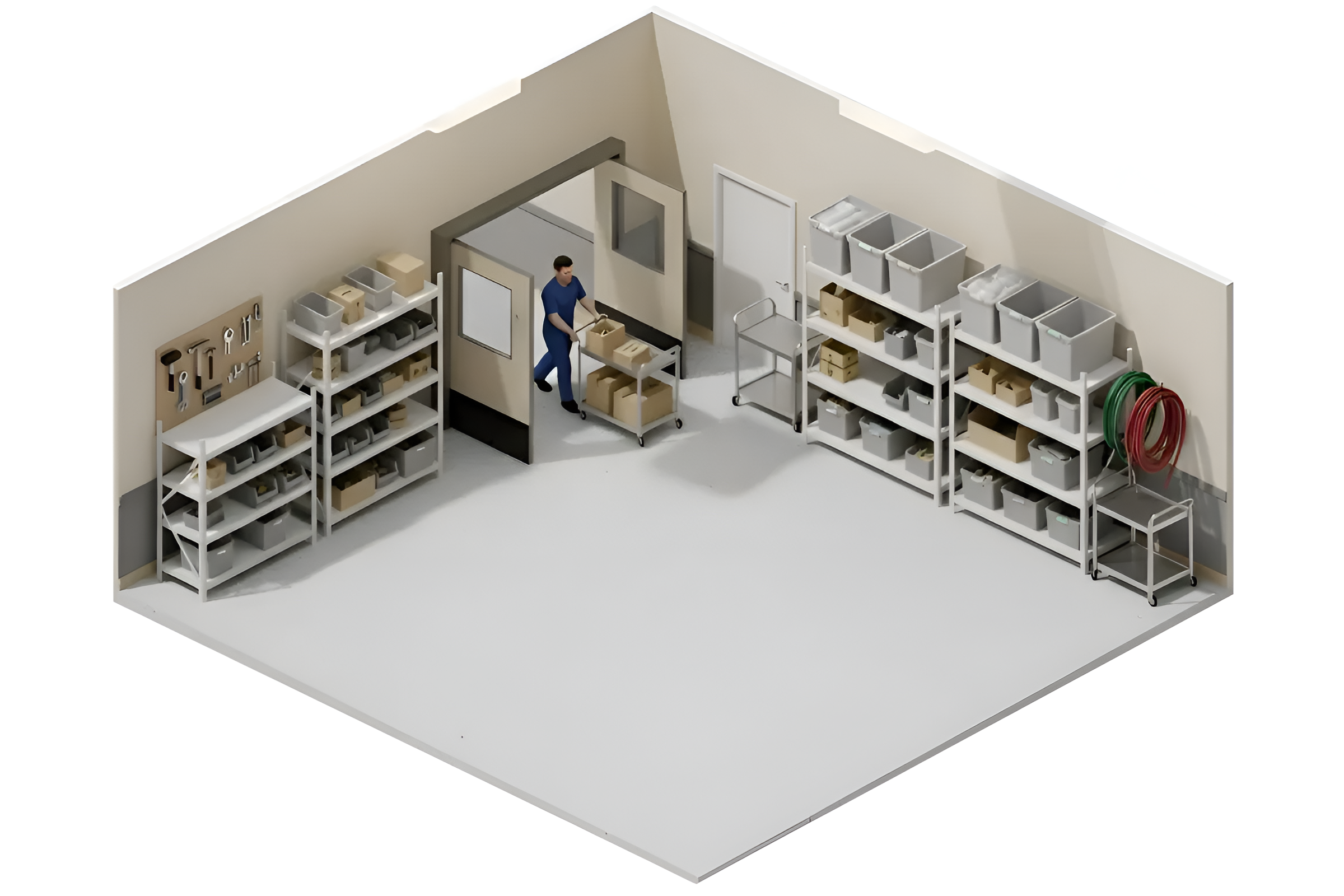
Equipment Storage Swinging Doors
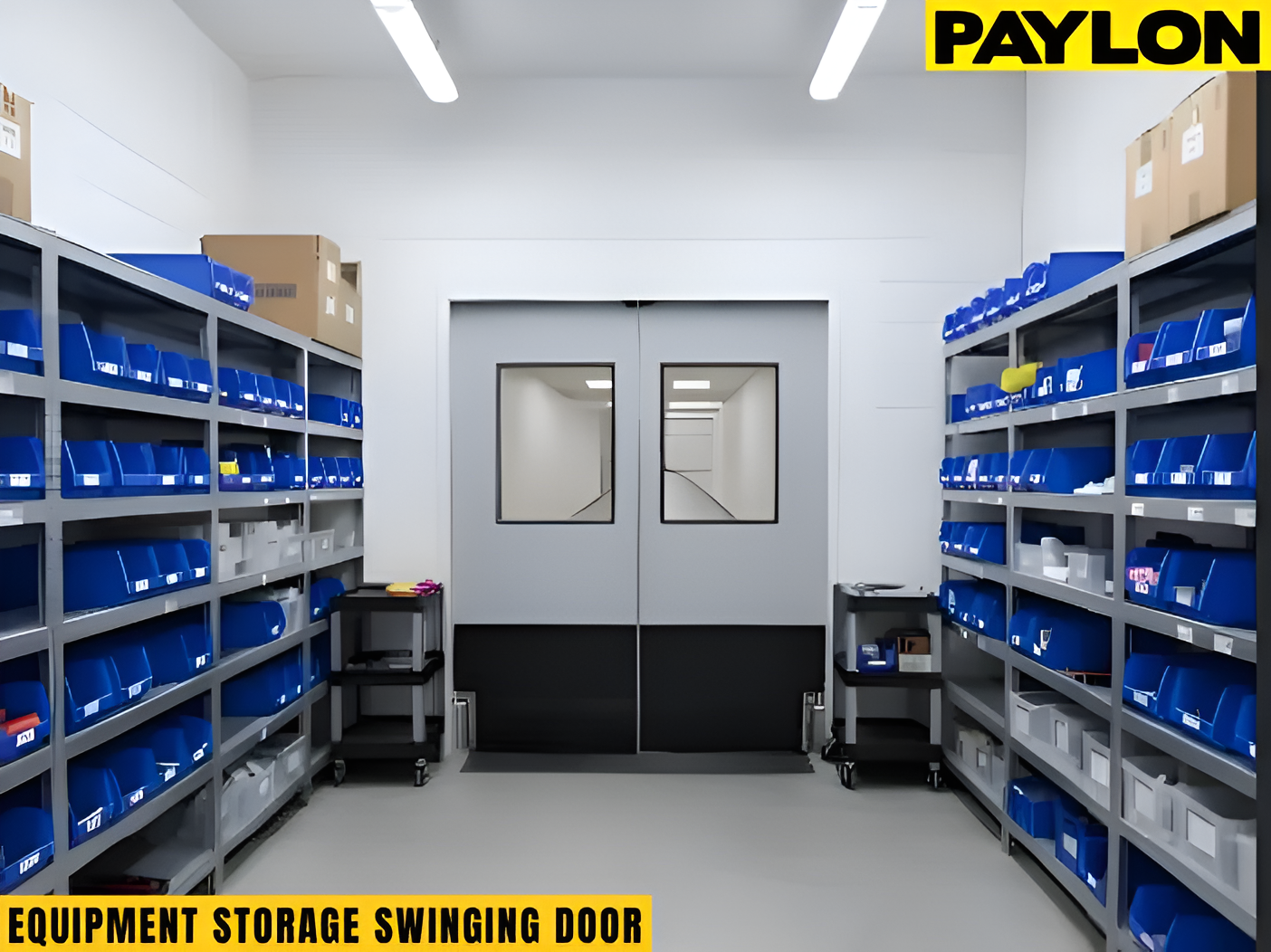
Equipment storage rooms often slow down daily work when access is restricted or awkward. These delays disrupt workflow and reduce staff efficiency, especially during busy periods. This article explains where access problems usually occur, how swinging doors help address them, and which door options work best for keeping equipment storage rooms moving without delays.
Built for Heavy-Use Storage Environments
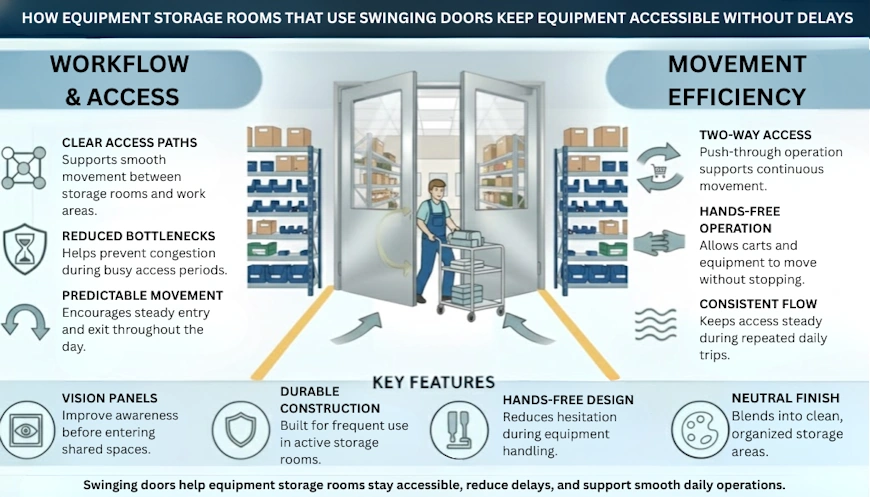
Equipment storage rooms see constant movement throughout the day. When access is slow, work slows down with it. This infographic shows how swinging doors help storage rooms stay accessible during busy use by allowing hands-free, two-way entry and reducing bottlenecks at the door. By matching the right swinging door to your storage room traffic, teams can move equipment faster, avoid interruptions, and keep daily operations running smoothly.
Where Access Delays Commonly Happen in Equipment Storage Rooms
Even in well-organized facilities, access delays tend to appear in the same areas. They usually come from everyday movement patterns that storage rooms are not set up to support efficiently, especially when staff are moving in and out throughout the day.
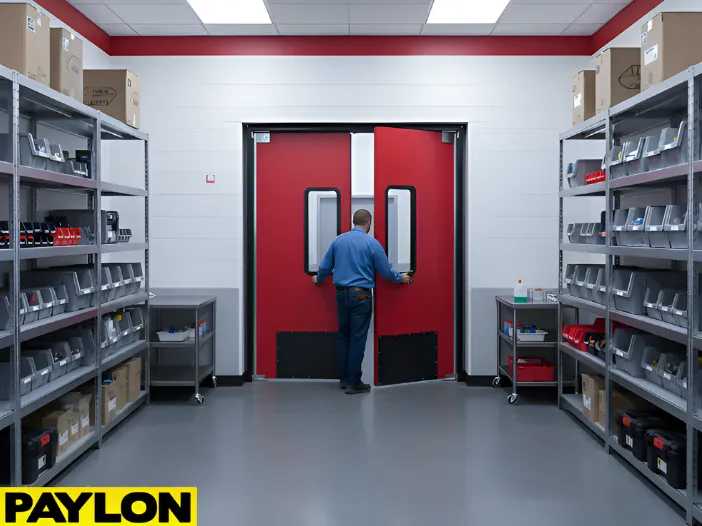
Traditional Doors Slow Repeated Entry and Exit
Stopping to Open the Door Slows Daily Movement
Traditional doors often require staff to stop, reach, and manually open them every time they enter or exit a storage room. Even when the delay feels minor, it interrupts momentum and slows down tasks that depend on quick access.
Repeated Pauses Add Up in High-Use Storage Areas
When this process happens repeatedly, those small pauses begin to add up. In storage rooms that see constant use, the door itself becomes a disruption rather than a tool that supports smooth, continuous movement.
Busy Traffic Turns Doorways into Bottlenecks
Carrying Equipment Makes Door Access More Difficult
Access issues increase when staff are carrying tools, equipment, or carts and have limited free hands. Opening and closing a traditional door becomes awkward in these moments, slowing movement and breaking the natural flow of work.
Shared Doorways Create Backups During Busy Periods
When multiple people move through the same doorway at once, backups form quickly. Instead of keeping work moving, the doorway becomes a bottleneck that slows access and interrupts nearby tasks.
Swinging Door Options That Keep Equipment Storage Rooms Moving
Once access challenges are identified, the next step is selecting a swinging door that matches how the storage room is used each day. Different rooms place different demands on access, movement, and visibility, which is why choosing the right option makes a noticeable difference.
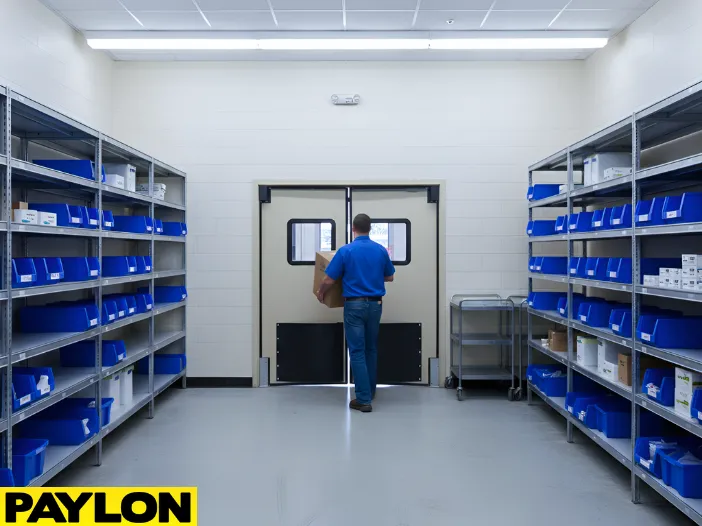
This option works well in equipment storage rooms that see regular use without extreme traffic spikes. It is a practical choice for spaces where consistency matters more than heavy-duty demands.
• Supports steady daily access without disrupting normal storage routines
• Fits equipment rooms with predictable traffic and consistent use
• Provides a practical option for spaces that need reliable movement
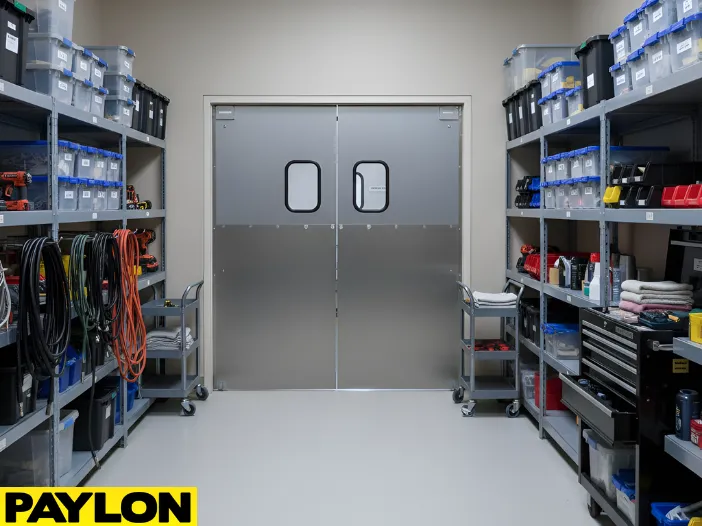
PE-710 for Busy Back-of-House Storage Areas
Storage rooms that support daily operations often require a door built for constant activity. This option is suited for environments where staff move in and out throughout the workday.
• Handles frequent staff movement during active work periods
• Supports storage rooms that are accessed repeatedly throughout shifts
• Works well in environments with ongoing equipment activity
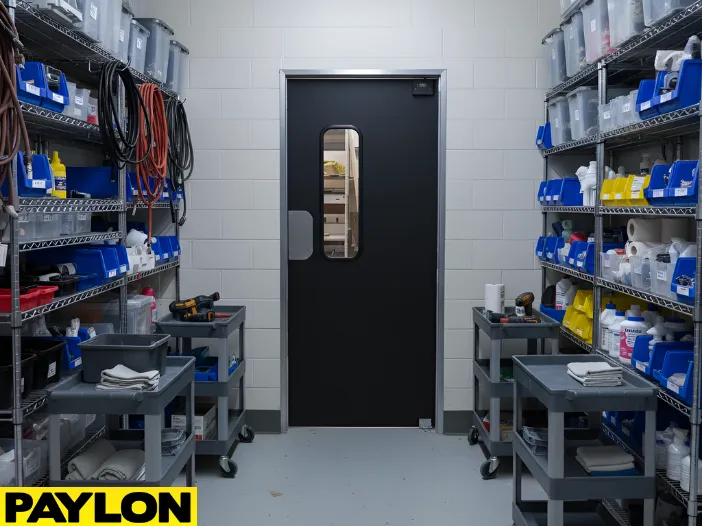
In shared storage areas, visibility can play a key role in preventing hesitation and slowdowns. This option helps staff understand what is happening on the other side of the doorway before entering.
• Improves awareness by allowing staff to see movement beyond the doorway
• Reduces hesitation when multiple users approach at the same time
• Supports smoother entry in shared or high-activity storage areas
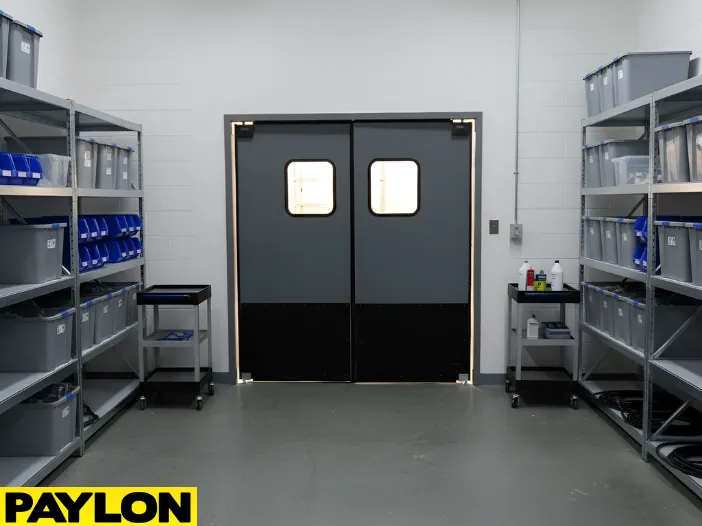
Some equipment storage rooms need wider access to accommodate larger items and heavier use. This option is built for spaces where standard access points are not enough.
• Accommodates larger equipment moving through wider access points
• Supports demanding use in heavy-use storage environments
• Maintains clear access during frequent equipment transfers
Swinging Door Options Compared for Equipment Storage Rooms
After knowing how each swinging door option supports different storage room needs, this table provides a quick side-by-side reference. It is designed to help you match door type to usage without sorting through detailed descriptions.
| Storage Room Need | Door Model | Why It Fits the Use Case |
|---|---|---|
| Everyday equipment access | PE-620ALC | Supports consistent access during regular use |
| Frequent staff movement | PE-710 | Built for repeated entry and exit throughout the day |
| Visibility into storage areas | PE-720 | Helps reduce collisions before entering |
| Heavy equipment or wide openings | PE-8000 | Handles demanding use and larger openings |
This comparison makes it easier to narrow down the right swinging door based on how your equipment storage room is used, helping you move forward with confidence before looking at how these doors perform during daily operation.
How Swinging Doors Prevent Delays During Daily Use
Once the right swinging door is in place, the impact becomes clear during everyday movement. These doors are designed to support how staff naturally move through equipment storage rooms, especially when access needs to stay quick and uninterrupted.
| Feature | Why It Matters in Equipment Storage Rooms |
|---|---|
| ✓ Hands-free, two-way access | Helps staff move through the doorway while carrying tools or equipment, so movement stays continuous during active tasks. |
| ✓ Faster movement during repeated trips | Keeps routine in-and-out trips quick, which helps teams stay on schedule when equipment is needed throughout the day. |
| ✓ Less waiting at entry points | Reduces slowdowns at the doorway by supporting steady movement when multiple staff members use the storage room. |
| ✓ Smoother flow between work areas and storage | Helps staff transition between work zones and equipment storage without interruptions, supporting a more consistent daily workflow. |
Together, these advantages show how swinging doors help equipment storage rooms stay accessible, keeping daily work moving without delays.
Frequently Asked Questions
FAQs About Swinging Doors in Equipment Storage Rooms
Are swinging doors practical for equipment storage rooms that use carts?
Yes. Swinging doors are commonly used in equipment storage rooms where carts are pushed in and out throughout the day. Models like the PE-710 swinging door support smooth movement without slowing staff down during routine access.
Do swinging doors hold up to daily use in busy storage areas?
They are built for repeated daily movement and are often installed in high-use storage rooms. Options such as the PE-620ALC swinging door are selected for spaces with consistent, predictable access.
Are swinging doors better than standard hinged doors for storage rooms?
In many facilities, swinging doors work better because they allow movement in both directions. This makes them a practical choice for storage rooms that require frequent access during the workday.
Can swinging doors help reduce delays during peak activity times?
Yes. Swinging doors are often chosen for storage rooms that see heavy use during peak hours because they support continuous movement without creating unnecessary pauses.
Which swinging door works best for heavy equipment access?
For heavy equipment or wider openings, the PE-8000 swinging door is commonly used. It is suited for storage rooms where large items are moved in and out regularly.
Are swinging doors suitable for narrow equipment storage rooms?
Many swinging door models are available in sizes that fit narrower openings. They are often selected for compact storage rooms where space efficiency matters.
Do staff need training to use swinging doors properly?
No. Swinging doors operate naturally and fit easily into daily routines. Staff typically adjust to them right away without additional instruction.
Can swinging doors be used in shared equipment storage rooms?
Yes. Swinging doors are often installed in shared storage rooms where multiple staff members need access throughout the day, helping movement stay organized.
Are swinging doors a good option for back-of-house storage areas?
They are commonly used in back-of-house environments where equipment and supplies are accessed repeatedly. The PE-710 swinging door is often selected for these settings.
Do swinging doors slow down access compared to open doorways?
Swinging doors are designed to support steady movement while still maintaining separation between spaces. They allow access without leaving doorways exposed or unmanaged.
Can swinging doors handle frequent equipment transfers during a shift?
Yes. Swinging doors are built for repeated use and are often installed in storage rooms that support ongoing equipment movement throughout the day.
Are swinging doors suitable for storage rooms near active work areas?
They work well in storage rooms located near work zones, helping staff move between spaces without disrupting nearby tasks.
Do swinging doors work well in storage rooms with predictable traffic patterns?
Yes. Models like the PE-620ALC swinging door are often used in storage rooms with steady, routine access and consistent daily use.
Can swinging doors be customized for different storage room needs?
Many swinging door options offer size and feature choices that match specific storage room layouts and access requirements.
Are swinging doors easy to maintain in equipment storage environments?
They are designed for durability and typically require minimal upkeep, making them a practical long-term solution for storage rooms.
Do swinging doors help improve overall workflow?
By supporting smoother movement between storage rooms and work areas, swinging doors help keep daily operations moving without unnecessary interruptions.
Are swinging doors appropriate for storage rooms used by multiple departments?
Yes. Swinging doors are often used in shared storage rooms where different teams access equipment throughout the day.
Can swinging doors help keep storage rooms more organized?
Smoother access reduces congestion at doorways, which helps storage rooms stay orderly during busy periods.
How do I choose the right swinging door for my equipment storage room?
Start by considering traffic volume, equipment size, and whether visibility or wider openings are needed. Each swinging door model supports a different use case.
Are swinging doors a long-term solution for equipment storage access?
They are commonly selected for long-term use in equipment storage rooms that require reliable, consistent access day after day.
Photo Gallery
A Simple Way to Keep Equipment Accessible Without Delays
Access delays in equipment storage rooms can quietly disrupt daily operations, especially in spaces that see frequent use. Swinging doors provide a simple, effective way to support smoother movement and maintain consistent access without unnecessary interruptions. By choosing the right swinging door based on room activity, traffic patterns, and equipment needs, teams can keep equipment accessible and daily work moving without delays.
Smooth Access in Equipment Storage Rooms