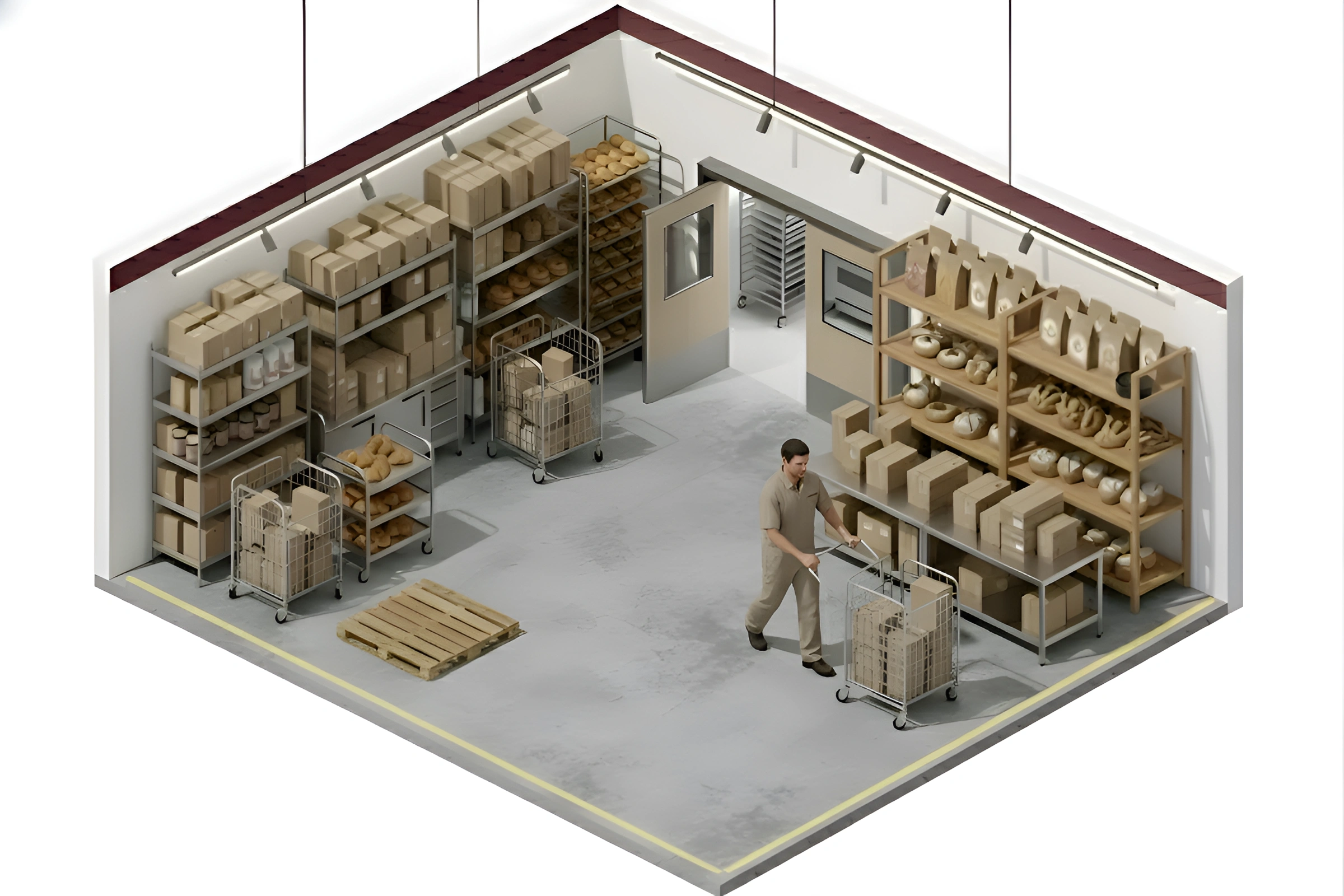
Mail Room Swinging Doors
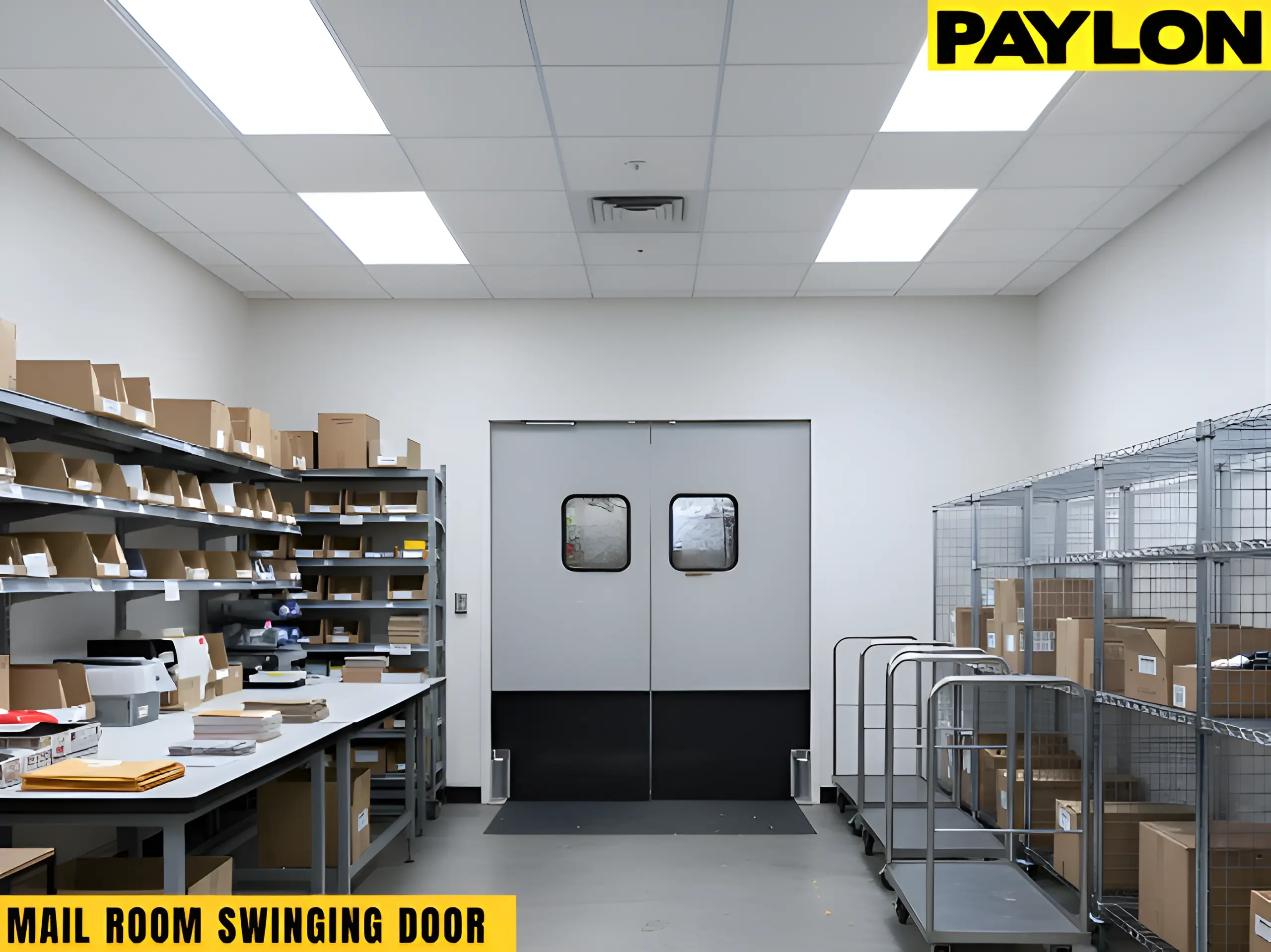
Busy mail rooms often struggle with slow package movement that disrupts daily operations. Swinging doors help keep packages moving smoothly by reducing interruptions between spaces. This article explains why mail room flow breaks down, reviews swinging door options and comparisons, outlines how they support smoother movement, and answers common questions to help teams make the right choice.
Designed for Busy Mail Rooms
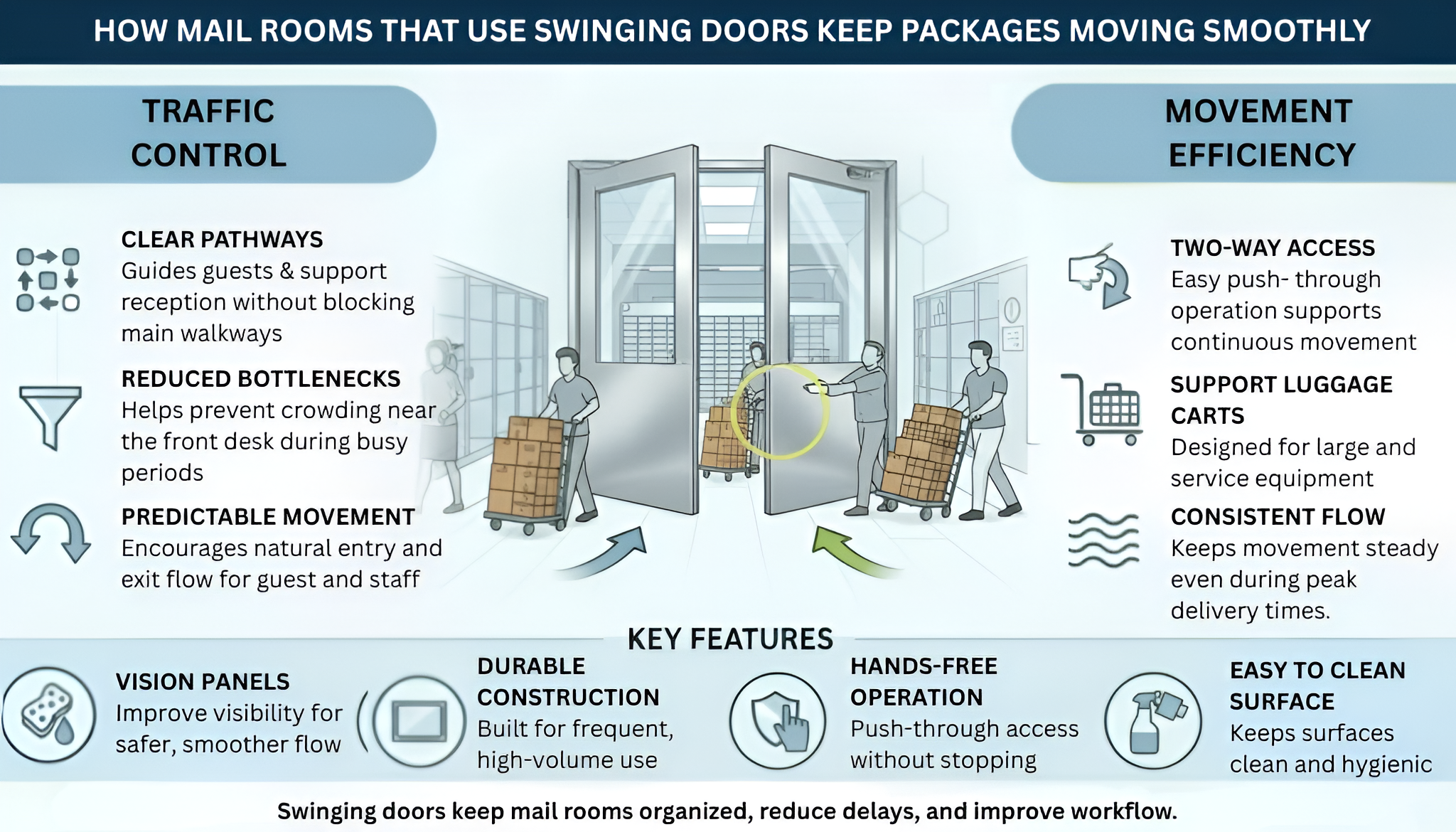
Busy mail rooms need more than just space to operate efficiently. When carts stop at doorways or traffic builds up, package flow quickly slows down. Choosing the right swinging door helps reduce these bottlenecks by supporting hands-free movement, better visibility, and steady two-way traffic. Matching the door type to your mail room’s traffic level makes it easier to keep packages moving smoothly while improving safety and daily workflow consistency.
Why Package Flow Breaks Down in Busy Mail Rooms
Even in well organized mail rooms, steady movement becomes harder as daily volume increases. Packages, carts, and staff often share the same pathways, and small friction points quickly affect how smoothly work gets done. Most slowdowns come from how people move through doorways and how traffic builds during busy periods.
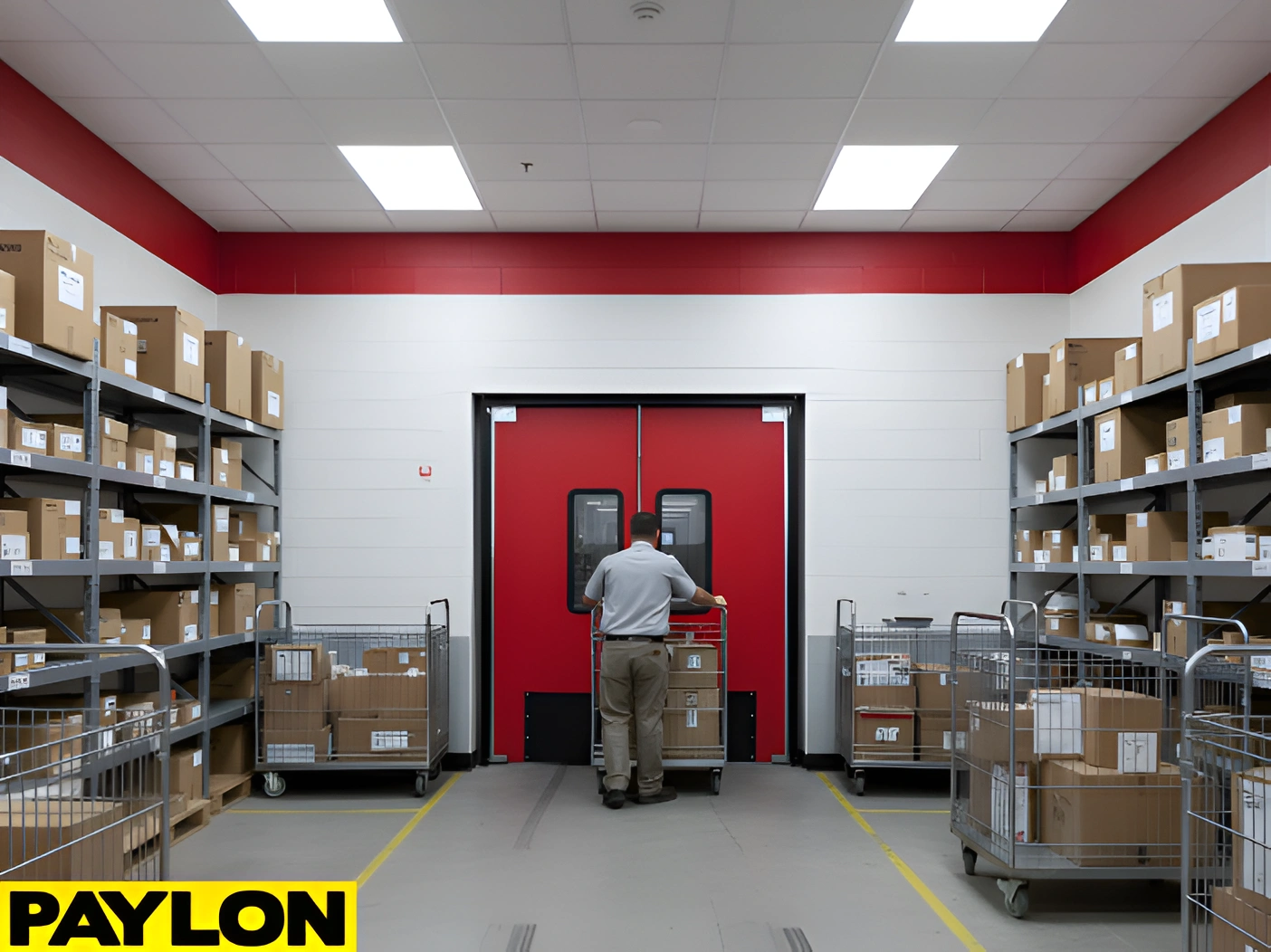
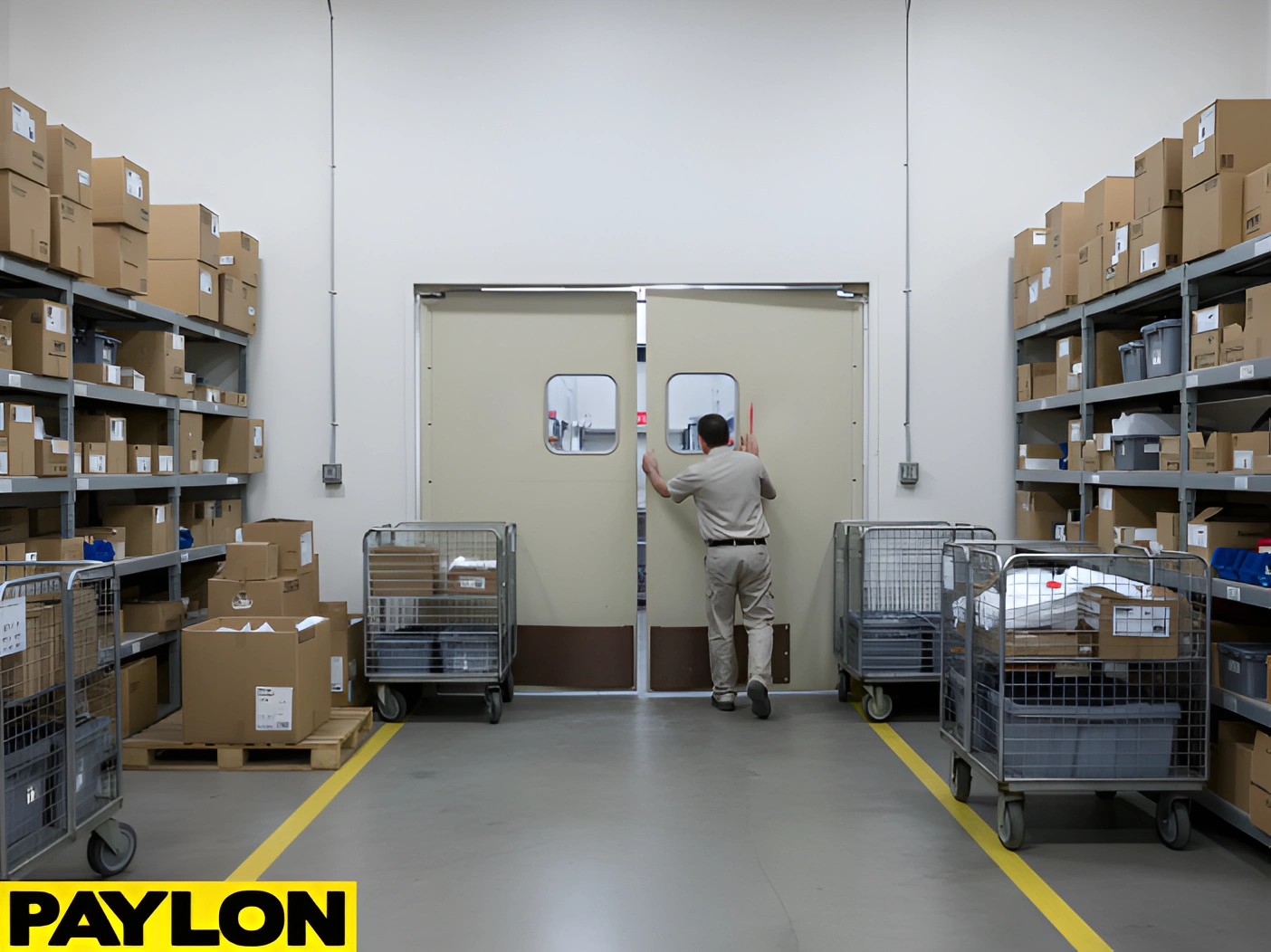
Doorway Bottlenecks Slow Movement When Hands Are Full
Doorways Create Natural Choke Points
Doorways are one of the most common places where package flow slows down in a busy mail room. When multiple people approach the same entry point, movement naturally narrows. This is especially noticeable in tighter spaces where carts, bins, and staff must pass through the same opening.
Hands-Full Movement Causes Brief but Repeated Delays
Staff moving carts or carrying packages often need extra time and space to pass through doorways. When one person pauses, others are forced to wait behind them. These interruptions may seem minor on their own, but repeated throughout the day, they reduce overall efficiency and disrupt steady movement between work areas.
Two-Way Traffic Causes Stop-and-Go Delays During Peak Periods
Mail Room Traffic Moves in Both Directions
Mail rooms rarely operate in a single direction. During delivery and pickup windows, staff enter and exit at the same time, often through the same access points. This constant back and forth increases hesitation as people approach shared spaces and try to coordinate movement.
Peak Activity Leads to Stop and Go Movement
As traffic builds, staff slow down to avoid collisions or wait for others to pass. These brief pauses interrupt the natural flow of packages and carts. While each delay may seem small, repeated throughout busy periods they begin to stack up, creating noticeable slowdowns across daily mail room operations.
Swinging Door Options That Support Smooth Mail Room Flow
Choosing the right swinging door can make a noticeable difference in how efficiently packages move through a mail room. Each model is designed to match specific traffic patterns and operational demands, helping staff maintain smooth, continuous movement while supporting safety and organization throughout daily operations. Below is an overview of the four main options and how they fit different mail room needs.
The PE-620ALC is designed for mail rooms that handle consistent daily activity without extreme traffic spikes. It fits spaces where visibility and dependable performance matter most for routine operations.
• Suited for mail rooms with steady, predictable daily activity
• Helps staff maintain awareness in shared or adjacent spaces
• Fits environments where consistency matters more than volume
• Common choice for facilities focused on smooth routine movement
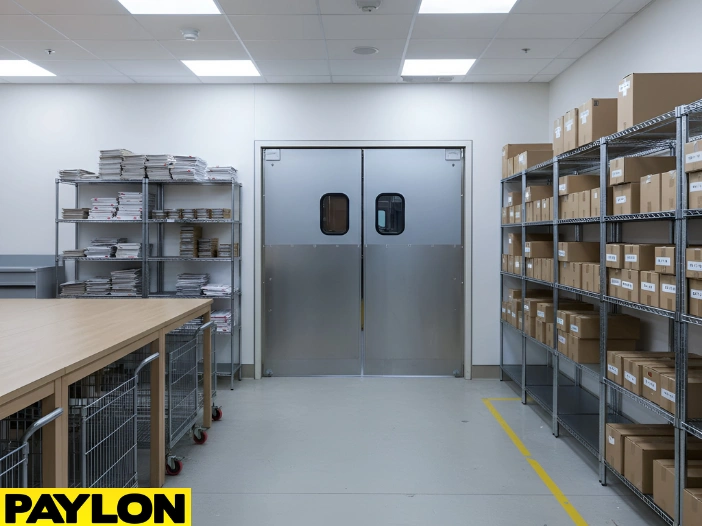
PE-710 for High Traffic and Frequent Cart Movement
The PE-710 is commonly used in mail rooms that experience heavier traffic throughout the day. It supports environments where carts and packages move continuously between work areas.
• Matches mail rooms with constant package and cart circulation
• Fits access points used repeatedly throughout the workday
• Supports operations where movement rarely slows down
• Often selected for busier mail rooms with ongoing deliveries
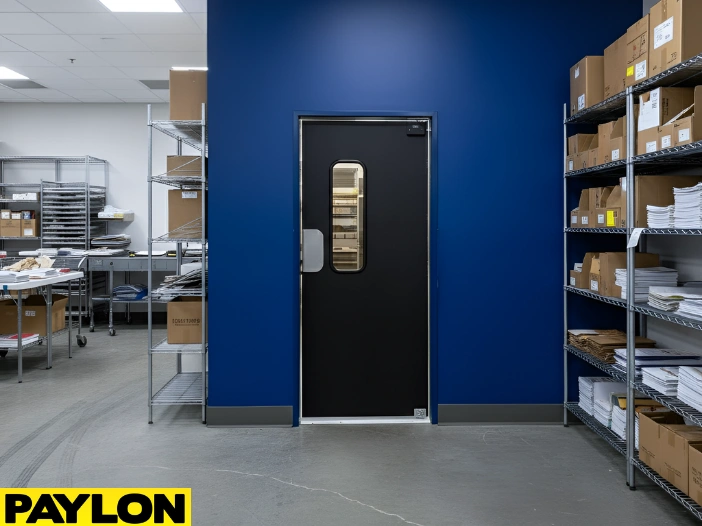
The PE-720 works well in mail rooms where traffic levels vary by time or task. It is a practical option for facilities that need flexibility across different workflows.
• Works well in mail rooms with varying traffic levels
• Fits layouts used by different teams or tasks during the day
• Supports multiple cart types using the same access points
• A flexible option for evolving mail room workflows
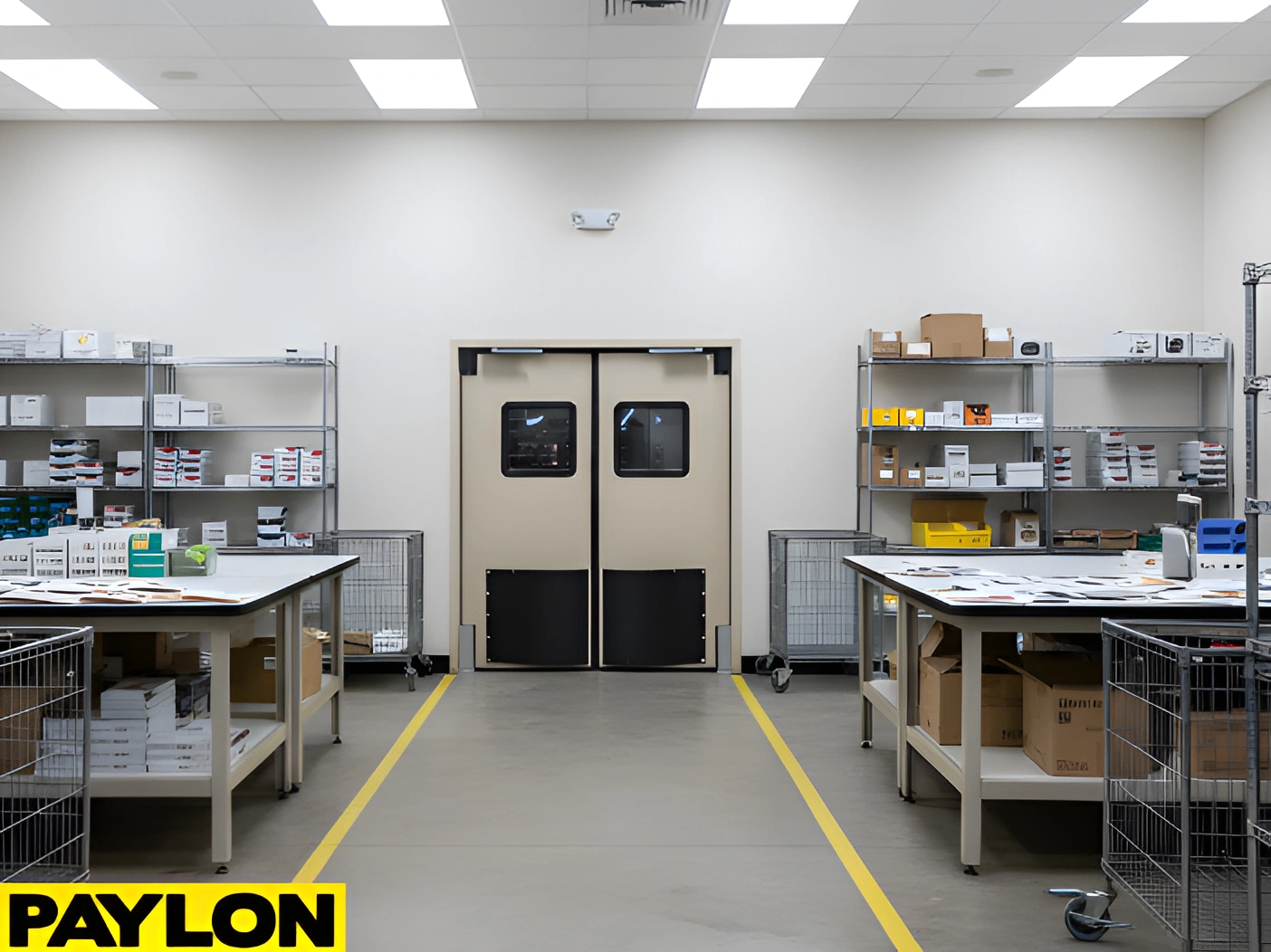
The PE-8000 is suited for mail rooms that operate at a higher intensity or for longer hours. It is often chosen when durability and consistent performance are critical.
• Intended for mail rooms with continuous, high-volume movement
• Fits facilities handling heavier loads or larger carts
• Supports long operating hours without frequent interruption
• Common in industrial or distribution-style environments
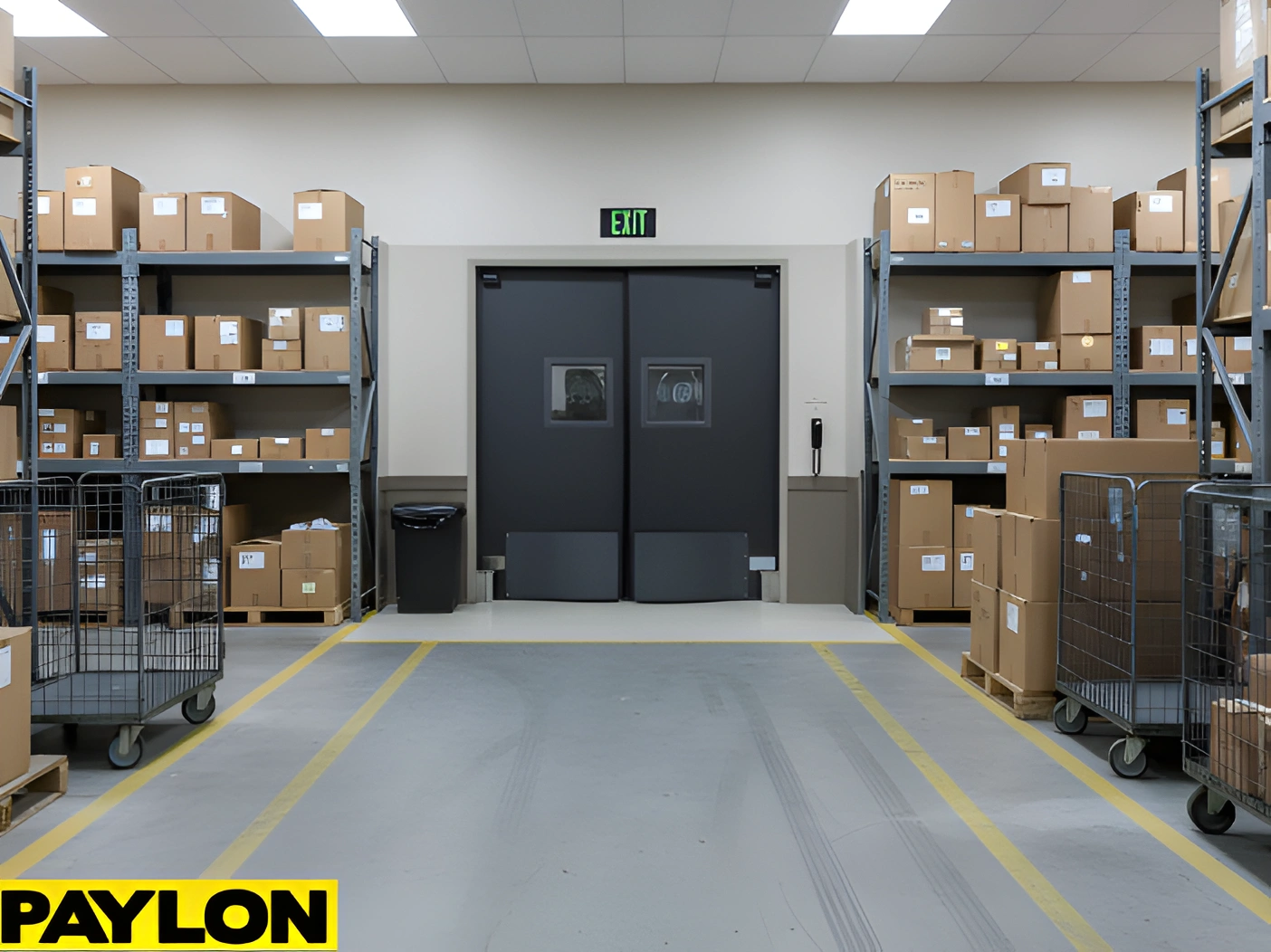
Which Swinging Door Fits Your Mail Room Traffic
After knowing the available swinging door options, it helps to compare them side by side. This table is designed to help mail room teams quickly match their traffic conditions with the door model that best fits their daily operations.
| Mail Room Traffic Level | Recommended Door Model | Best Use Case | Primary Benefit |
|---|---|---|---|
| Light to Moderate Traffic | PE-620ALC | Routine daily mail handling with steady, predictable movement | Clear visibility and dependable daily performance |
| High Traffic | PE-710 | Frequent cart and package movement throughout the workday | Reliable performance under repeated use |
| Mixed or Changing Traffic | PE-720 | Mail rooms with varying workloads or shared access points | Flexibility across different traffic patterns |
| Heavy or Industrial Use | PE-8000 | Constant movement, heavier loads, or extended operating hours | Dependable operation in demanding environments |
This comparison helps narrow down which swinging door aligns best with how traffic moves through your mail room. With the right option identified, it becomes easier to understand how swinging doors support smooth package movement during daily operations.
How Swinging Doors Keep Packages Moving Smoothly
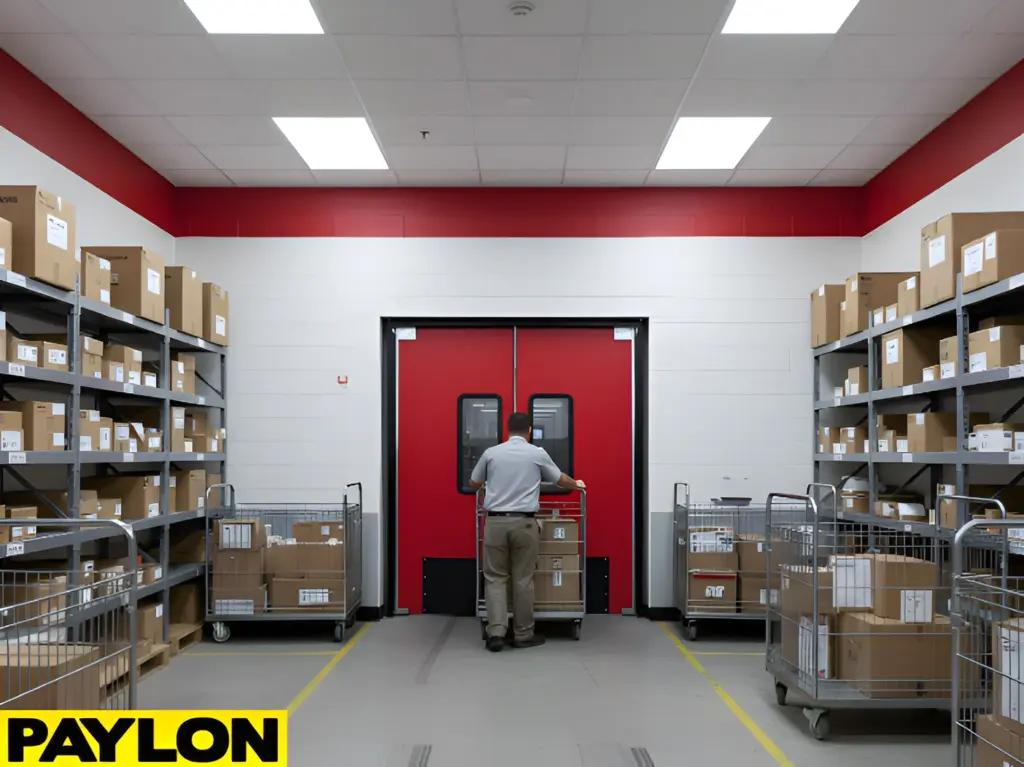
Once the right swinging door is in place, how it functions day to day makes a noticeable difference in mail room operations. These doors are designed to support steady movement through shared access points, helping teams move packages between spaces without unnecessary pauses or interruptions.
| Feature | Why It Matters in Mail Rooms |
|---|---|
| ✅ Two-Way Swing for Continuous Movement | Allows staff to move through doorways in either direction without stopping to reposition or check door orientation, supporting steady movement between mail room areas. |
| ✅ Hands-Free Access for Carts and Packages | Helps teams move boxes and carts through access points without reaching for handles, keeping movement simple and reducing unnecessary interruptions. |
| ✅ Self-Closing Action to Keep Access Points Clear | Returns to a closed position after each pass so doorways stay clear and consistent, helping transitions between spaces stay organized during daily operations. |
| ✅ Vision Panels for Better Awareness | Improves visibility at entry points by letting staff see activity on the other side before passing through, supporting confident movement in shared spaces. |
Together, these functions help mail rooms maintain steady package movement as staff move between work areas. By supporting natural motion and clear transitions, swinging doors play a key role in keeping daily operations organized and efficient.
Frequently Asked Questions
FAQs About Mail Room Swinging Doors
Are swinging doors safe for busy mail rooms?
Yes. Swinging doors are commonly used in active mail rooms because they support predictable movement through shared access points. Models like the PE-620ALC and PE-710 are often selected for environments where staff move in and out throughout the day.
Do swinging doors slow down package carts in mail rooms?
No. Swinging doors are chosen to support steady movement when carts and packages pass between spaces. Many facilities use models such as the PE-710 or PE-8000 to keep cart traffic moving without unnecessary stops.
Which swinging door works best for high-traffic mail rooms?
High-traffic mail rooms typically look at options like the PE-710 or PE-8000. These models are selected based on how often carts and packages move through the doorway during the day.
Can swinging doors handle frequent daily deliveries?
Yes. Swinging doors are commonly used in mail rooms with recurring deliveries. Facilities with steady daily volume often compare the PE-620ALC and PE-710 based on traffic frequency.
How do swinging doors compare to standard hinged doors in mail rooms?
Swinging doors allow movement from either direction, while standard hinged doors require opening from one side. This difference is why mail rooms often prefer swinging doors for internal package movement.
Are swinging doors suitable for mail rooms that use carts and bins?
They are frequently installed in cart-heavy mail rooms. Models like the PE-710 and PE-8000 are often considered when carts move through the same access points repeatedly.
Do swinging doors work well in shared mail room corridors?
Yes. Swinging doors are often used in shared corridors where staff move between sorting, storage, and delivery areas. Visibility-focused options like the PE-620ALC are commonly chosen for these spaces.
Can swinging doors be used in smaller mail rooms?
They can. Smaller mail rooms often choose models like the PE-620ALC or PE-720, depending on how traffic moves through the space during the day.
Do swinging doors require special training for staff?
No. Swinging doors are designed for intuitive use, which is why they are commonly used in facilities with rotating staff or delivery personnel.
Are swinging doors loud during normal mail room activity?
They are selected for active environments and typically operate quietly during routine use. This makes them suitable for mail rooms that stay busy throughout the day.
Can swinging doors help keep mail room access points organized?
Yes. By supporting consistent movement patterns, swinging doors help maintain clearer transitions between mail room areas.
Do swinging doors perform well during peak delivery periods?
They are often chosen specifically for peak periods. Facilities with heavy delivery windows frequently compare the PE-710 and PE-8000 to match peak usage demands.
Are swinging doors a good fit for multi-shift mail room operations?
Yes. Mail rooms that operate across multiple shifts often select swinging door models designed for repeated daily use.
Can swinging doors be installed between sorting and storage areas?
They are commonly installed between work zones where packages move back and forth. The PE-720 is often considered for spaces with mixed traffic patterns.
Do swinging doors require frequent maintenance in mail rooms?
Maintenance needs depend on usage levels, but swinging doors are commonly chosen for environments where reliability is important over long operating hours.
Are swinging doors durable enough for everyday mail room use?
Yes. Models like the PE-710 and PE-8000 are selected by facilities that need doors capable of handling daily movement without frequent downtime.
Can swinging doors reduce hesitation at mail room entry points?
They help create clearer expectations around movement through access points, which supports smoother transitions between spaces.
Are swinging doors customizable for different mail room needs?
Mail rooms typically select from different swinging door models based on traffic level, layout, and daily usage requirements rather than custom configurations.
Do swinging doors work for both staff and delivery drivers?
Yes. Swinging doors are often used by internal teams and external delivery personnel who share the same access points.
How do I choose the right swinging door for my mail room?
Choosing the right option starts with understanding daily traffic volume and delivery patterns. Many facilities compare models like the PE-620ALC, PE-710, PE-720, and PE-8000 to find the best fit.
Photo Gallery
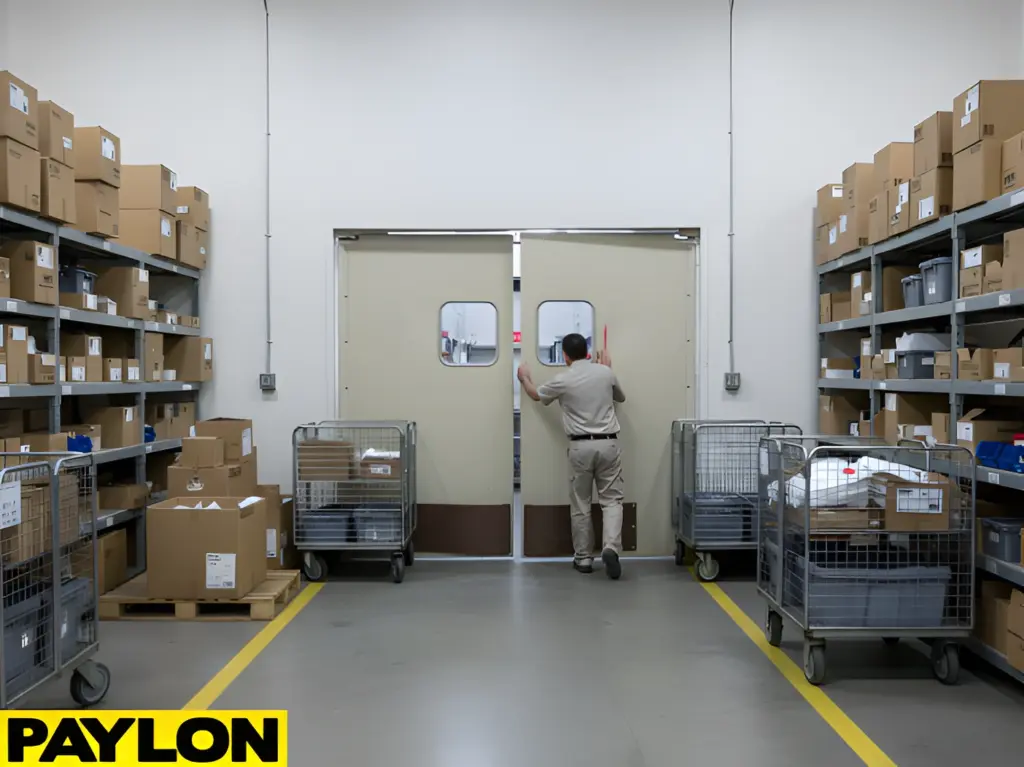
Keeping Mail Room Operations Moving Forward
Mail rooms operate more smoothly when movement stays consistent from one area to the next. Swinging doors support this consistency by allowing staff and carts to move between spaces without unnecessary pauses, even during busy delivery windows, helping create a workflow that feels more organized and easier to manage throughout the day. For mail rooms handling regular traffic or fluctuating volume, selecting a swinging door that aligns with how packages move is a practical next step toward improving overall efficiency and safety.
Efficient Mail Room Movement