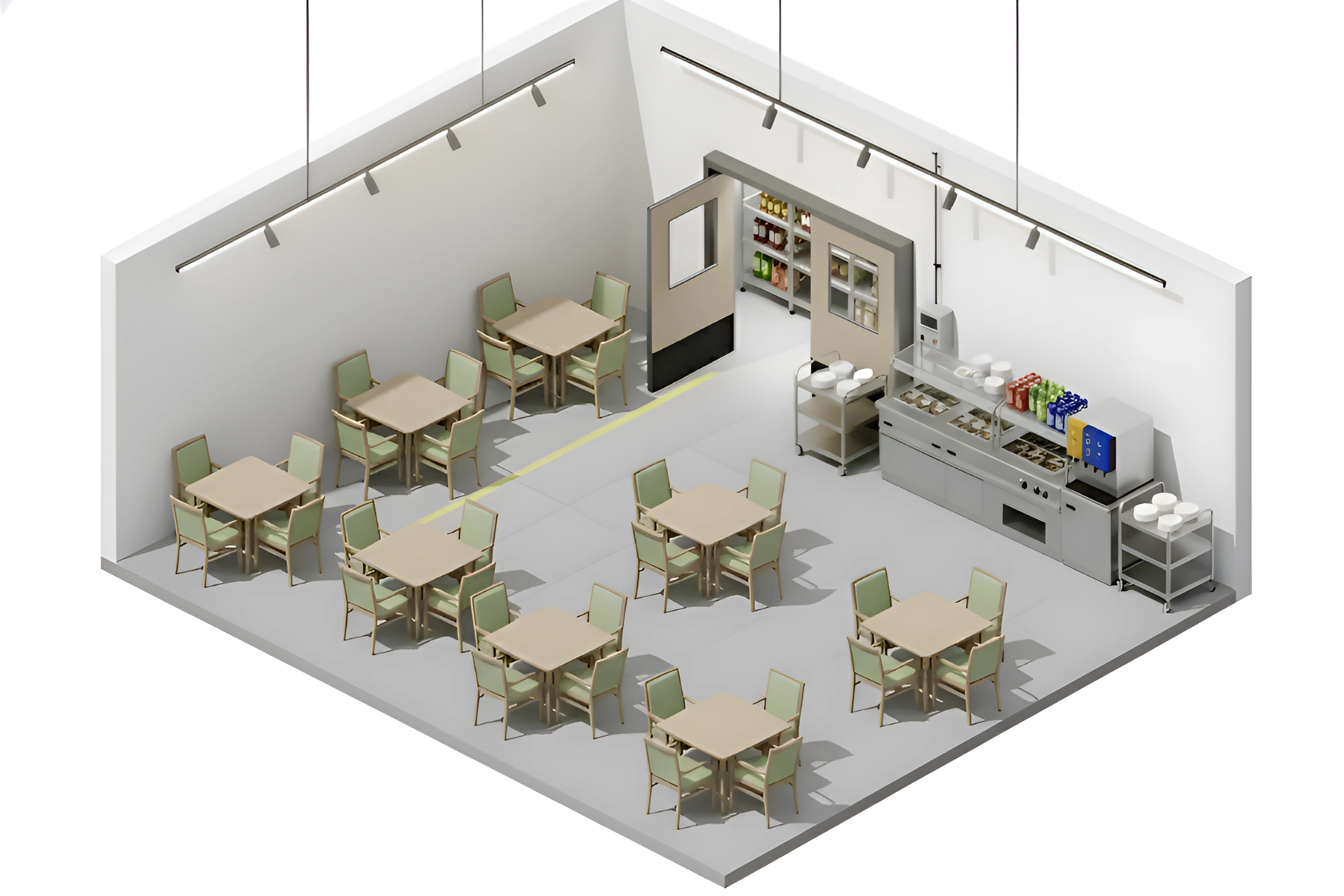
Nursing Home Swinging Doors
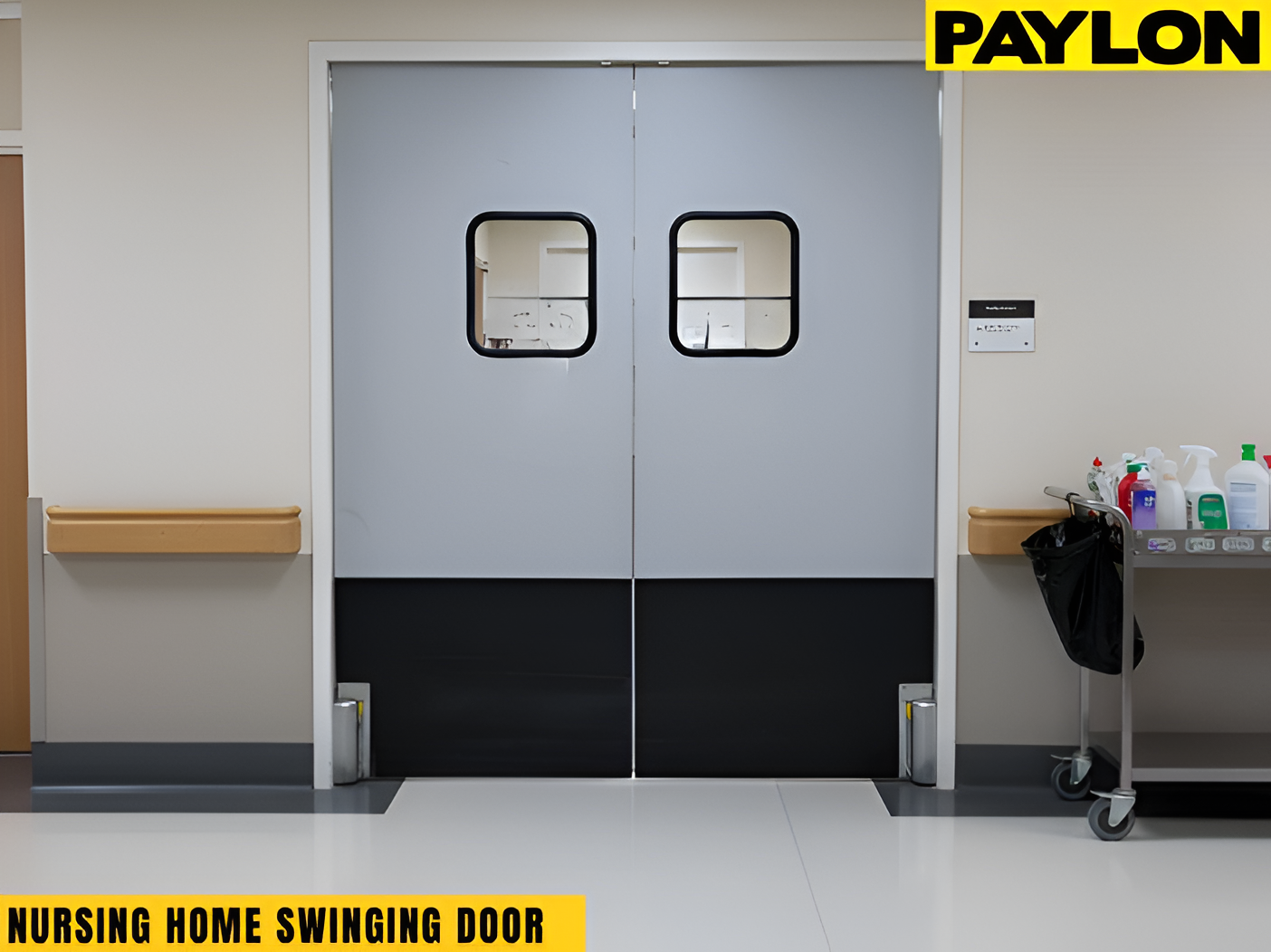
Safety, comfort, and smooth movement are essential in nursing homes. This article explains why easy access matters in care environments, how swinging doors support daily routines, where they are most effective inside a facility, and how choosing the right door can improve flow without disrupting resident care.
Designed for Care Facility Environments
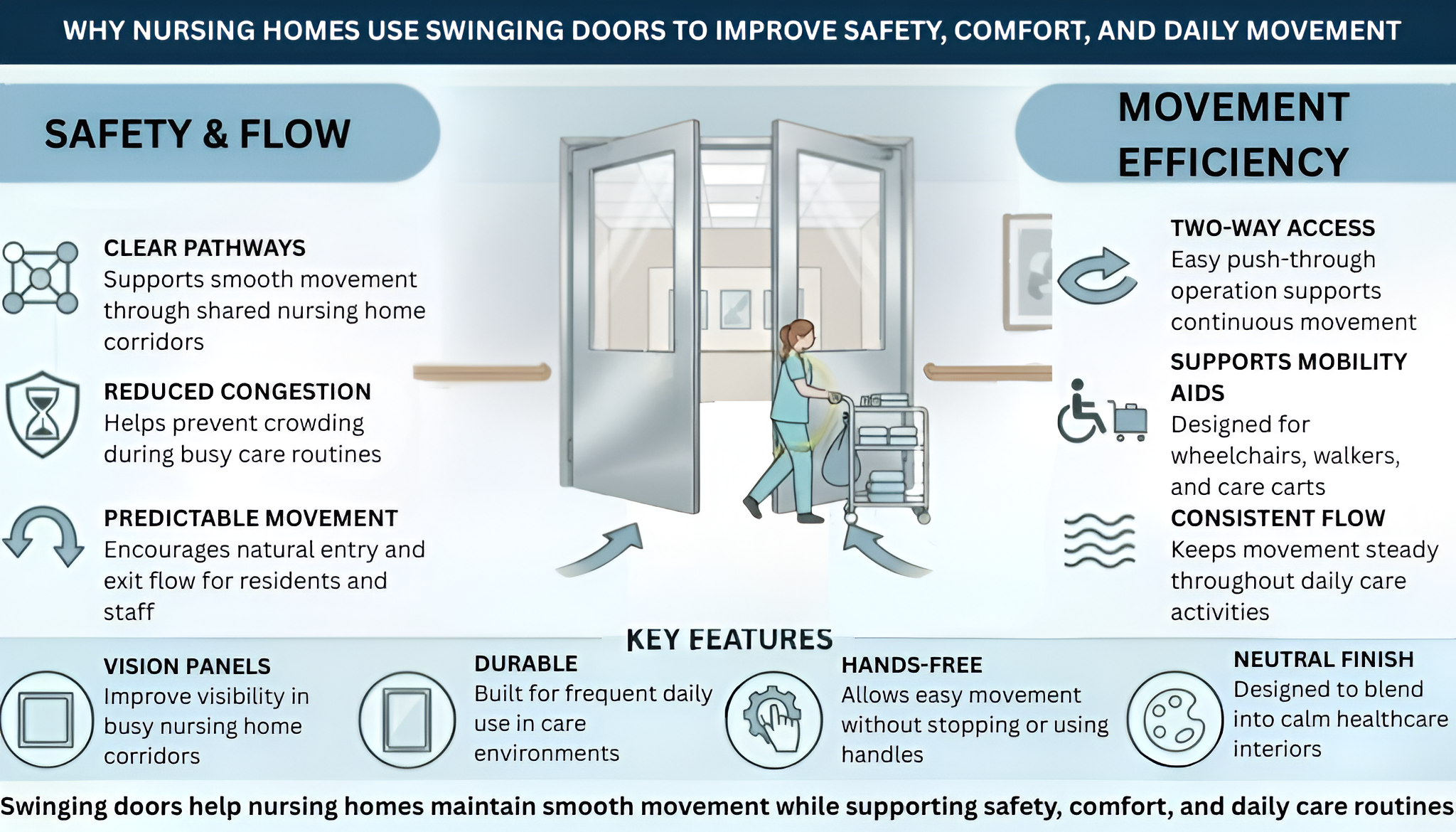
Swinging doors help nursing homes create safer, more comfortable spaces by supporting smooth daily movement for residents, staff, and equipment. Designed for frequent use, these doors reduce congestion, improve visibility, and make it easier to move through shared areas without disruption. When placed in the right locations, swinging doors improve workflow while supporting resident care and accessibility. The result is a calmer, more efficient environment that benefits everyone inside the facility.
Why Movement and Access Are Ongoing Challenges in Nursing Homes
Movement inside a nursing home is continuous and shared. Hallways and doorways are used by many people at once, often for different purposes, which makes smooth access difficult to maintain throughout the day.
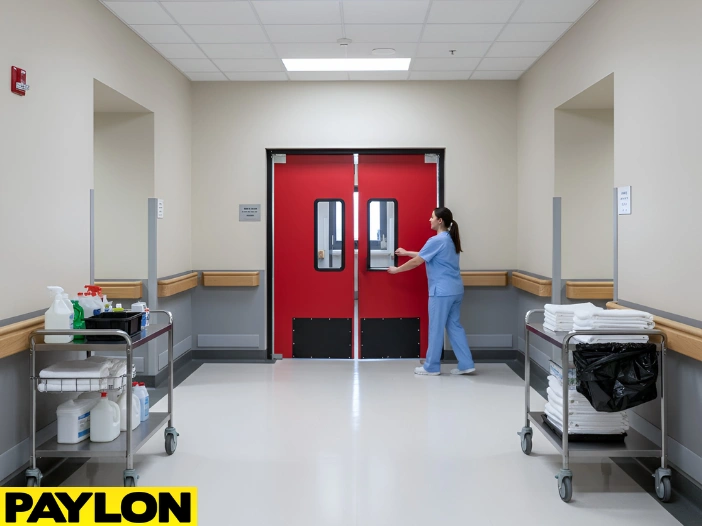
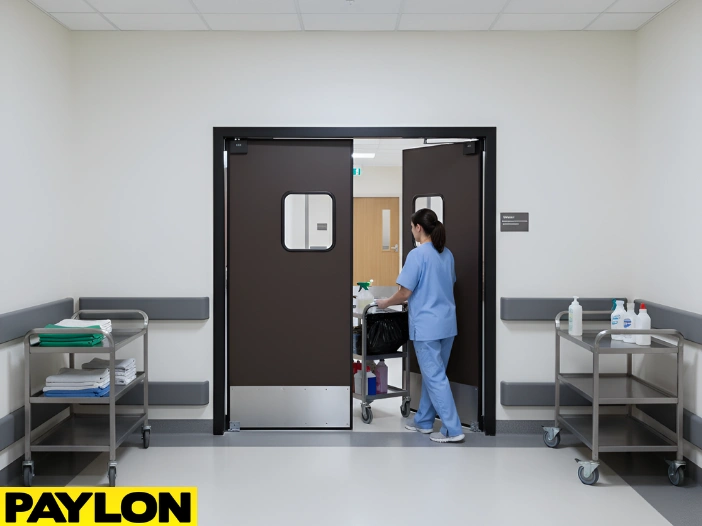
People Moving Through Shared Care Spaces
Caregivers Moving Between Rooms
Caregivers move frequently between resident rooms to provide care, respond to needs, and complete daily tasks. This constant back-and-forth places steady demand on doorways that must handle frequent use without slowing routines or interrupting care.
Residents and Visitors Sharing Common Spaces
Residents traveling to meals or activities and visitors arriving at different times add to overall foot traffic. These movements often overlap in hallways and entrances, increasing pressure on shared access points and making delays more likely.
Mobility Aids and Equipment Sharing Care Pathways
Mobility Aids Moving Through Care Areas
Wheelchairs and walkers are used throughout the day as residents move between rooms and common areas. These aids require clear, predictable pathways, especially in corridors where space is already limited.
Carts and Equipment Using the Same Corridors
Meal carts, supply carts, and medical equipment often move through the same corridors at the same time. When access points are not easy to navigate, movement can slow quickly, leading to congestion during already busy periods.
How Swinging Doors Improve Safety Comfort and Daily Movement
Swinging doors are designed to support how nursing homes function each day. By focusing on predictable movement, visibility, durability, and ease of use, they help care environments maintain smooth access without adding extra steps to daily routines.
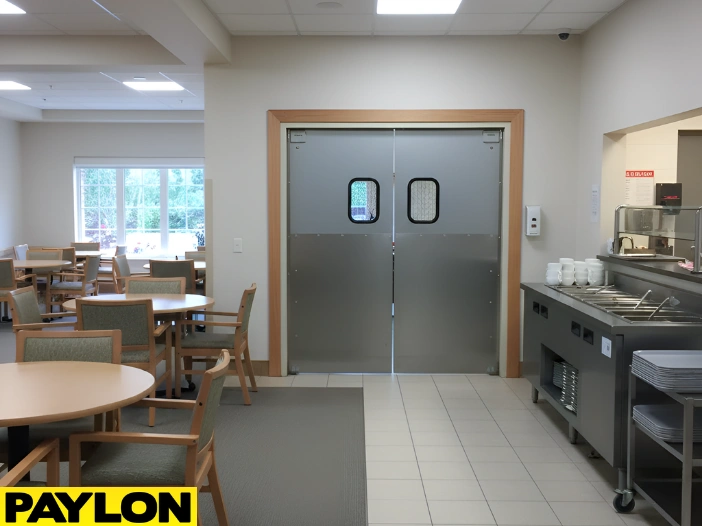
PE-620ALC is designed for areas in nursing homes where doorways experience frequent contact. It works well in dining spaces and other shared areas where movement is constant.
• Ideal for dining areas and service zones
• Built for repeated daily contact
• Helps protect doorways and nearby surfaces
PE-710 for Light-Use Interior Openings
PE-710 provides a lighter option for interior openings where smooth access is important. It supports easy movement without adding resistance for residents or staff.
• Suitable for interior corridors and staff access points
• Easy to push and operate
• Supports steady movement in lower-traffic areas
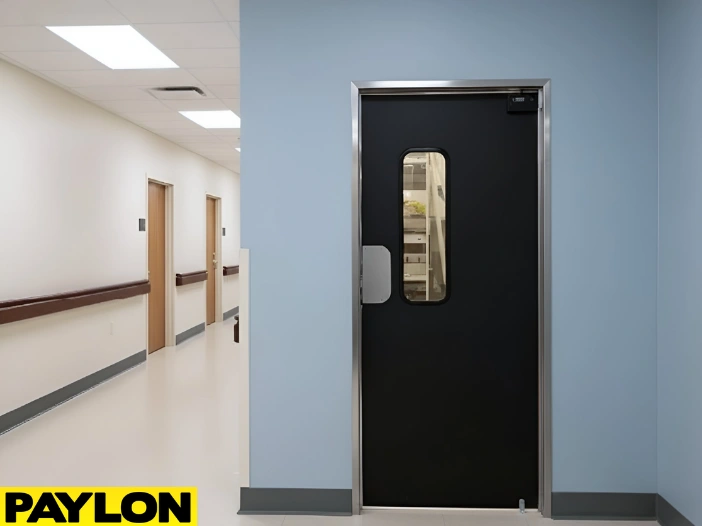
PE-720 is built to support consistent movement in shared corridors and common areas. Its balanced construction makes it a reliable choice for spaces used throughout the day.
• Designed for steady foot traffic
• Fits well in common areas and main passageways
• Supports daily use with minimal upkeep
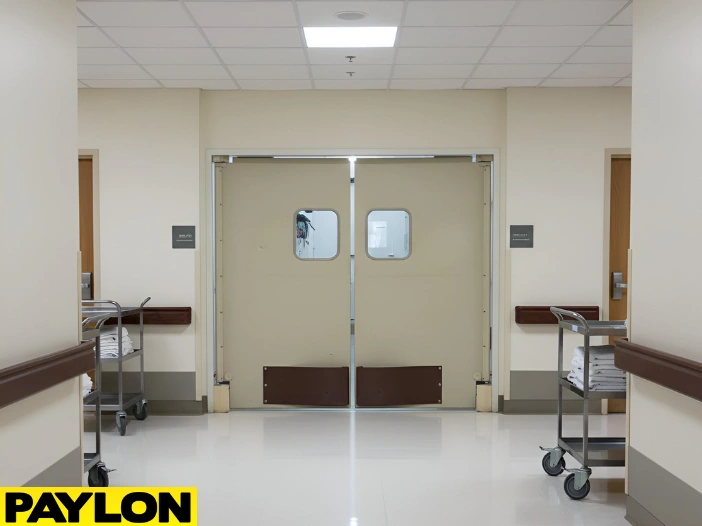
PE-8000 is suited for wider openings and areas that experience heavier movement and equipment use. It supports carts and supplies moving through service areas where durability matters.
• Ideal for service corridors and back-of-house spaces
• Handles frequent cart and equipment movement
• Built for areas with higher daily physical demand
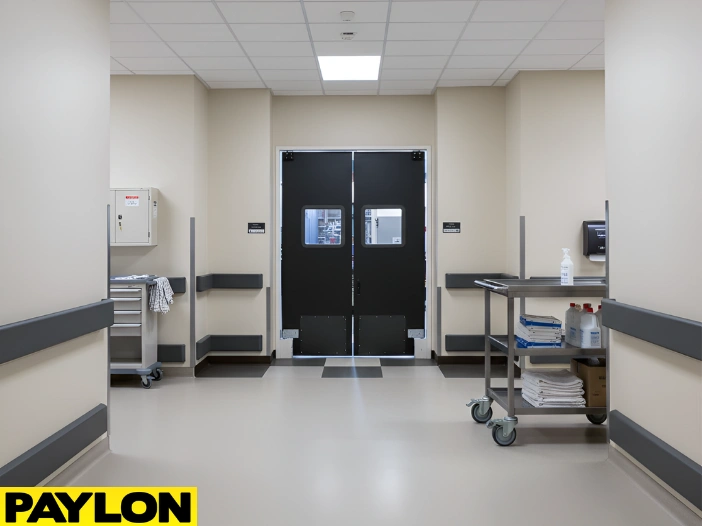
Matching Swinging Doors to Key Nursing Home Areas
After knowing how swinging doors support daily movement, safety, and comfort, the next step is applying those benefits to real spaces inside a nursing home. Different areas experience different types of use, so matching the right door to each location helps maintain smooth flow without adding unnecessary complexity.
| Nursing Home Area | Common Challenge | What to Look For | Suitable Door Type |
|---|---|---|---|
| Main Hallways | Constant traffic and equipment movement | Durable construction with smooth two-way swing | PE-720 |
| Resident Room Corridors | Hands-full staff movement | Lightweight design with easy operation | PE-710 |
| Dining Areas | Busy meal-time flow | Impact resistance and clear visibility | PE-620ALC |
| Therapy and Activity Rooms | Mixed foot and equipment traffic | Reliable swing action for steady use | PE-720 |
| Service and Back-of-House Areas | Larger carts and heavier use | Wide opening with heavy-duty construction | PE-8000 |
Choosing doors based on how each area functions helps nursing homes keep movement predictable and routines uninterrupted. With the right door placed in the right location, daily care activities can continue smoothly while supporting both staff efficiency and resident comfort.
Key Swinging Door Features That Matter in Nursing Homes
Choosing swinging doors for a nursing home involves more than selecting a door that opens and closes. Certain design features directly influence how safely and smoothly residents, staff, and equipment move through shared spaces. Understanding these features helps ensure doorways support daily routines without creating unnecessary obstacles.
| Door Feature | Why It Matters in Nursing Homes |
|---|---|
| ✓ Two-Way Swing for Smooth Passage | Helps staff, residents, and visitors move through doorways without stopping to pull or hold a door, supporting steady movement in busy care areas. |
| ✓ Vision Panels for Better Awareness | Improves visibility on both sides of the doorway, which can help reduce hesitation and make passing through shared corridors feel safer and more predictable. |
| ✓ Impact-Resistant Construction for Daily Use | Built to handle frequent contact throughout the day, helping protect doorways and surrounding areas in locations that see consistent movement. |
| ✓ Easy Push-Through Operation | Reduces effort for caregivers and supports smoother access for residents using mobility aids, while also helping carts and supplies move through doorways more easily. |
By focusing on the features that matter most in nursing homes, decision-makers can choose swinging doors that align with real operational needs. The right combination of design and durability helps maintain steady movement, reduce strain on caregivers, and support a safer, more comfortable care environment.
Frequently Asked Questions
FAQs About Swinging Doors in Nursing Homes
Are swinging doors safe for elderly residents in nursing homes?
Yes. Swinging doors are commonly used in nursing homes because they allow smooth, predictable movement. In shared care spaces, models like PE-720 are often chosen to support steady daily use.
Can swinging doors support wheelchairs and walkers in nursing homes?
Yes. Swinging doors allow easy push-through access, which works well for residents using wheelchairs or walkers. Wider openings may use options like PE-8000 to support both mobility aids and equipment.
Where are swinging doors most effective inside a nursing home?
Swinging doors are effective in hallways, dining areas, therapy rooms, and service spaces. Different areas often use different models, such as PE-710 for interior corridors and PE-620ALC for dining areas.
Are swinging doors suitable for nursing home hallways?
Yes. Main hallways see frequent daily movement, which is why doors like PE-720 are commonly used to handle steady traffic without disrupting routines.
Do swinging doors help caregivers move more efficiently?
Yes. Swinging doors make it easier for caregivers to move between rooms while carrying supplies or assisting residents. Interior areas often use PE-710 to support quick, easy passage.
Are swinging doors difficult for residents to open?
No. Swinging doors are designed to open with light pressure, helping residents move through shared spaces more confidently without added effort.
What type of swinging door works best in nursing home dining areas?
Dining areas typically use doors built for frequent contact and busy movement. PE-620ALC is often selected for these spaces due to its suitability for high-contact environments.
Can swinging doors be used in therapy and activity rooms?
Yes. Therapy and activity rooms often see mixed foot traffic and equipment movement. PE-720 is commonly used in these shared spaces to support consistent daily use.
Are swinging doors easy to clean in nursing homes?
Yes. Swinging doors are designed with smooth surfaces that support regular cleaning, which helps nursing homes maintain routine sanitation practices.
Do swinging doors require a lot of maintenance?
Maintenance needs are generally minimal and depend on how often the door is used. Choosing the right model for each area helps reduce long-term upkeep.
Can swinging doors help reduce hallway congestion?
Yes. Because they allow movement in both directions, swinging doors help people and equipment move through doorways without unnecessary pauses.
Are vision panels important for nursing home swinging doors?
Vision panels are often used in busy areas because they help people see approaching movement. This is especially helpful in hallways and shared corridors.
Can swinging doors be installed in existing nursing homes?
Yes. Swinging doors are commonly installed during renovations or upgrades and can be adapted to many existing openings.
What swinging door option works best for service and back-of-house areas?
Service areas that handle carts and supplies often use PE-8000, which is suited for wider openings and heavier daily use.
Are swinging doors appropriate for quieter interior spaces?
Yes. Lighter options like PE-710 are often used in interior corridors and lower-traffic areas where smooth access is still important.
What is the difference between retail and industrial swinging doors in nursing homes?
Retail swinging doors are typically used for interior spaces with lighter movement, while industrial swinging doors are chosen for wider openings and more demanding use.
How do I choose between retail and industrial swinging doors?
Consider how often the doorway is used, what moves through it, and whether carts or equipment are involved. For example, PE-620ALC fits dining areas, while PE-8000 suits service spaces.
Can swinging doors be customized for different nursing home areas?
Yes. Swinging doors are available in different sizes and configurations, allowing facilities to match doors to specific rooms and corridors.
Do swinging doors help create a calmer care environment?
Yes. When movement flows more smoothly, spaces feel more organized, which can support a calmer experience for residents and staff.
Are swinging doors a long-term solution for nursing homes?
Yes. When the correct models are selected for each area, swinging doors provide reliable performance that supports daily care routines over time.
Photo Gallery
Creating a Smoother, More Supportive Care Environment
Day-to-day movement shapes how nursing homes feel and function. When residents, caregivers, and equipment move through the building without friction, care routines stay on track and shared spaces feel calmer and more balanced. Selecting swinging doors that align with how each area is used helps maintain this flow while supporting comfort and safety throughout the facility. By choosing door solutions that match real operational needs, nursing homes can create an environment that better supports both daily care and long-term efficiency.
Support Daily Movement Inside Nursing Homes