
Pharmacy Swinging Doors
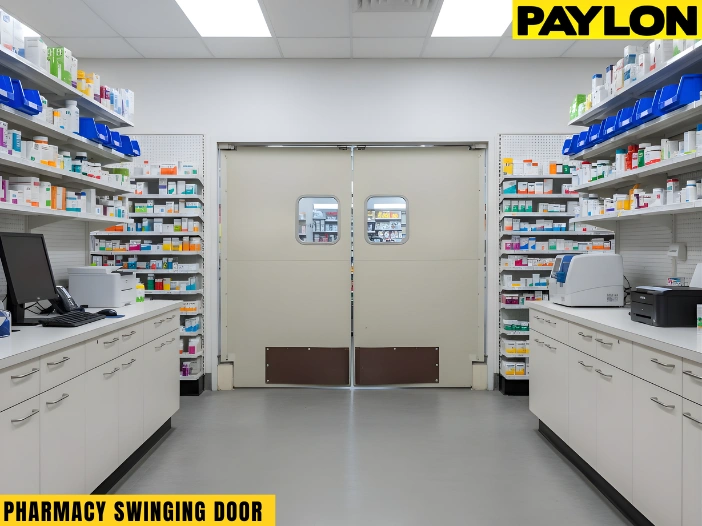
Interruptions behind the pharmacy counter are common due to constant staff movement between work areas, which can affect focus and accuracy. This article explains why these disruptions create challenges for pharmacies, how retail swinging doors help reduce interruptions, and which door options are commonly used. You will also find a quick comparison and answers to common questions to help guide decisions.
Engineered for Pharmacy Environments
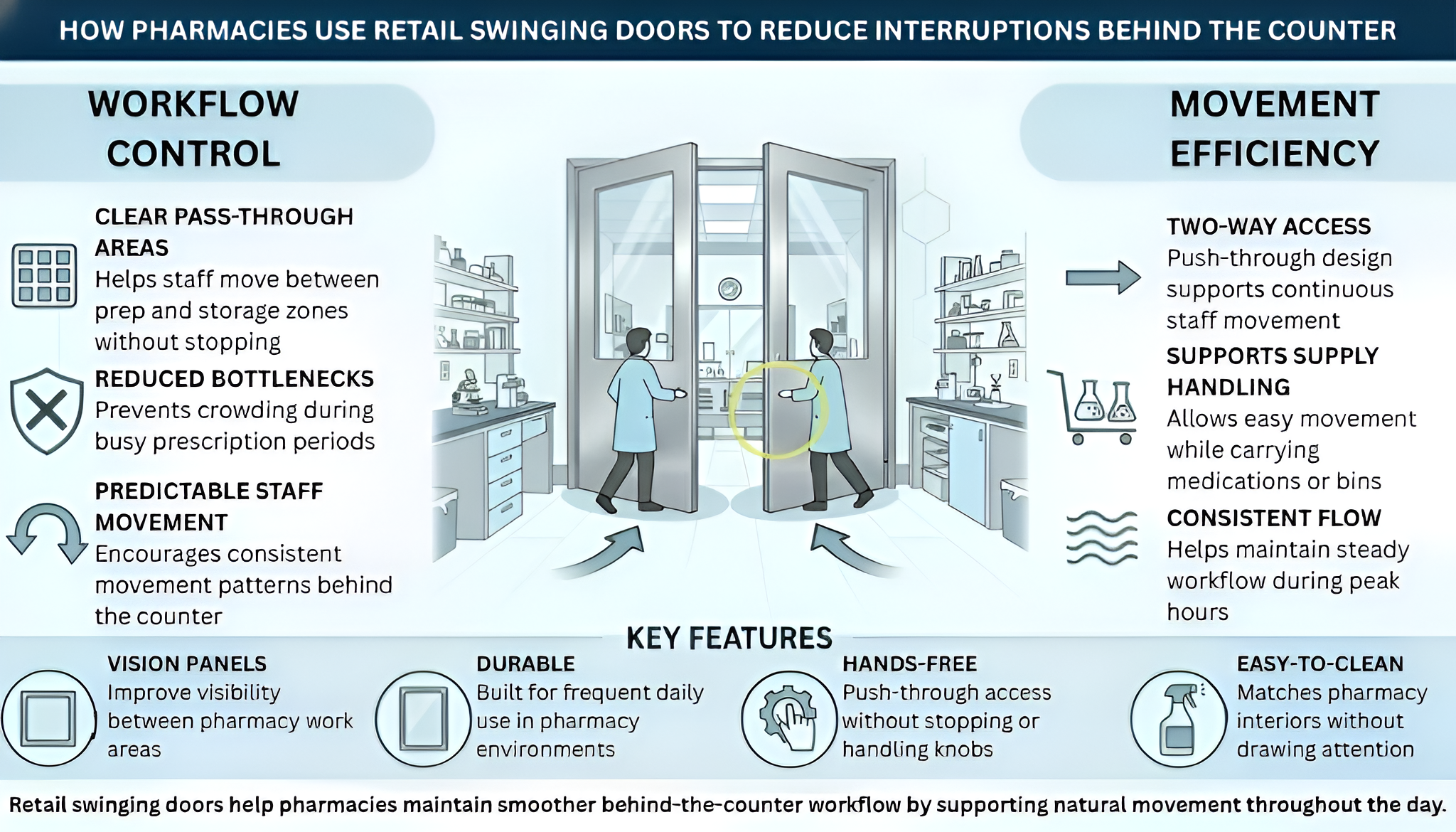
Interruptions behind the pharmacy counter can slow service and disrupt staff focus, especially during busy hours. Retail swinging doors help create smoother movement between work areas by allowing hands-free access and reducing unnecessary stops. By improving how staff move behind the counter, pharmacies can maintain better workflow, reduce congestion, and support a calmer, more efficient daily operation without changing how customers experience the front of the store.
Why Interruptions Behind the Counter Create Problems for Pharmacies
Behind-the-counter pharmacy work depends on consistency, focus, and smooth movement between work areas. When interruptions and congestion become part of the daily routine, they create challenges that affect both accuracy and service flow, especially during busy hours.

How Interruptions Affect Prescription Preparation and Daily Tasks
Interruptions Break Focus During Prescription Preparation
Prescription preparation requires steady attention and careful handling. When staff are interrupted by stop-and-go movement or limited access between work areas, concentration can break at critical moments. Even brief pauses can disrupt task flow, making it harder to stay focused and complete work efficiently.
Frequent Pauses Make Daily Pharmacy Tasks Harder to Manage
Routine behind-the-counter tasks also suffer when interruptions happen throughout the day. Small delays caused by restricted movement can make it harder to stay organized and maintain momentum. Over time, these repeated pauses slow the completion of daily responsibilities and increase the mental load on pharmacy staff.
Why Congestion Slows Service and Disrupts Staff Focus
Congestion Slows Service During Busy Pharmacy Hours
As activity increases, congestion between staff-only and customer-facing areas becomes more noticeable. Multiple staff members moving through the same narrow paths can create delays and force people to wait or change direction. These slowdowns affect service speed and make it difficult to keep work moving at a steady pace
.
Crowded Work Areas Disrupt Staff Focus and Workflow
When movement is restricted, workflow becomes less predictable behind the counter. Staff may feel rushed as they navigate crowded spaces while trying to complete tasks accurately. This environment makes it harder to maintain focus in an already active setting and adds unnecessary pressure during the busiest parts of the day.
Retail Swinging Door Options That Work Well in Pharmacy Environments
After knowing where smoother movement is needed behind the counter, pharmacies often look for door options that fit how their space is used day to day. The following retail swinging doors are commonly used in pharmacy environments based on layout needs, traffic flow, and durability requirements.
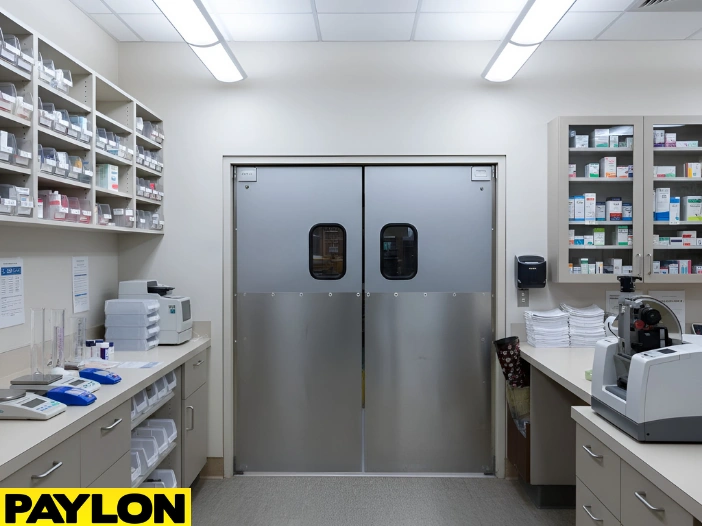
The PE 620ALC is frequently used in behind-the-counter pharmacy spaces where staff need durability while maintaining awareness of nearby activity.
• Supports frequent daily use in active work areas
• Helps maintain visibility between prep and service zones
• Fits well in spaces where staff need clear visual awareness
• Often chosen for its clean, professional appearance
PE 710 for Pharmacies With Steady Staff Movement
The PE 710 is a practical choice for pharmacies that experience consistent staff movement throughout the day.
• Designed for repeated back-and-forth movement
• Supports smooth transitions between pharmacy work areas
• Works well in layouts with predictable traffic patterns
• Commonly used where reliability matters most
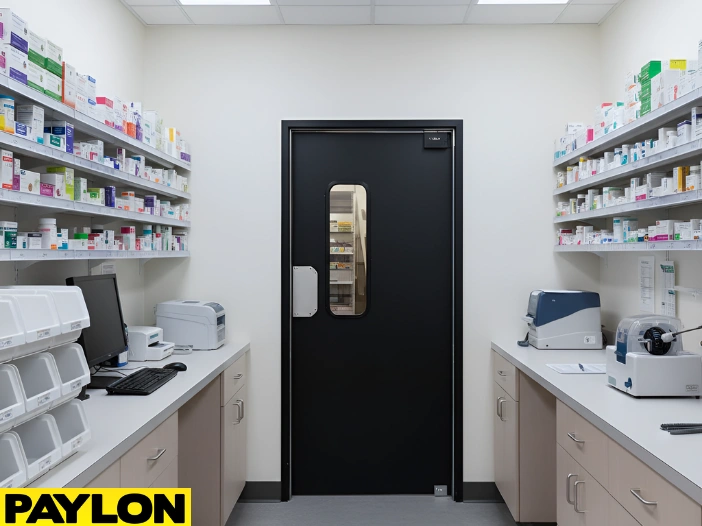
The PE 720 is commonly used in pharmacies with multiple internal areas that see varying levels of activity.
• Adapts well to changing traffic patterns
• Supports flexible pharmacy layouts
• Fits spaces that shift in use throughout the day
• Often used where versatility is important
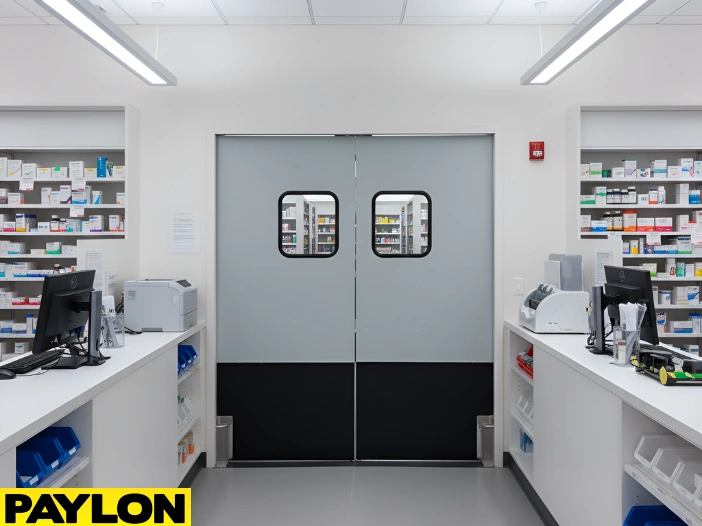
The PE 8000 is typically used in pharmacy environments with heavier internal movement and more demanding daily use.
• Built to handle frequent movement in busy areas
• Supports continuous workflow in high-activity spaces
• Well suited for larger or more active pharmacy layouts
• Chosen where added durability is needed

Choosing the Right Retail Swinging Door for Your Pharmacy
After knowing common retail swinging door options used in pharmacy environments, a quick comparison can help clarify which model aligns best with specific layout needs. This section is designed to support quick decision-making without getting into technical details, making it easier to match door options to daily pharmacy operations.
| Swinging Door Model | Best Fit for Pharmacies That Need | Why It Works Well |
|---|---|---|
| PE 620ALC | Durable doors behind the counter | Maintains smooth movement while supporting clear sightlines |
| PE 710 | Doors for steady daily staff traffic | Handles frequent use without slowing workflow |
| PE 720 | Doors for mixed-use internal areas | Adapts well to changing traffic levels |
| PE 8000 | Heavy-duty doors for high-traffic spaces | Minimizes interruptions in more demanding environments |
This side-by-side view helps pharmacy teams quickly narrow down options based on how their space is used, making it easier to choose a retail swinging door that supports smooth daily workflow without overcomplicating the decision.
How Retail Swinging Doors Reduce Interruptions Behind the Counter
After comparing different swinging door options, it helps to understand how these doors function day to day behind the pharmacy counter. Retail swinging doors reduce interruptions by changing how staff move through the space, especially at busy transition points between work areas.
| Feature | Why It Matters Behind the Pharmacy Counter |
|---|---|
| ✅ Hands-free, two-way movement | Staff can move between prep, storage, and service zones without stopping to turn a handle, helping task flow stay steady during active periods. |
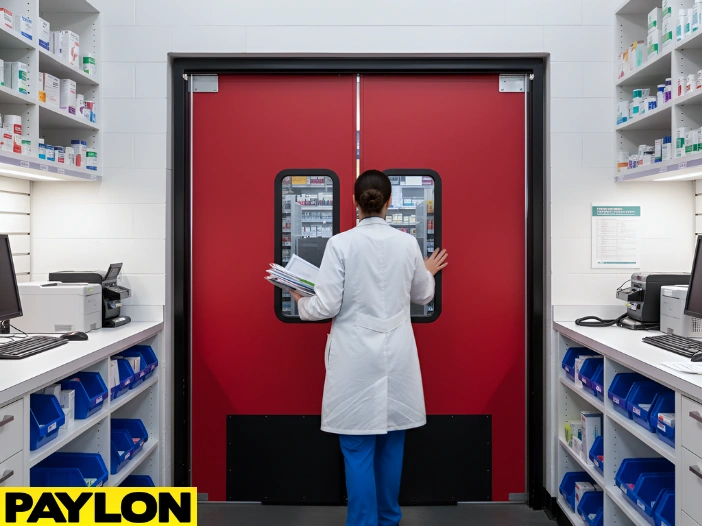
| ✅ Fewer stops when carrying items | When staff are carrying medications, supplies, or paperwork, they can pass through more naturally instead of setting items down or adjusting grip to open a door. |
| ✅ Work zones stay separated without blocking access | Pharmacies can keep staff-only areas defined while still allowing quick access between spaces, so movement stays controlled without creating a hard barrier. |
| ✅ Smoother transitions during peak periods | As behind-the-counter activity increases, easier pass-through at key openings helps transitions stay orderly and reduces slowdowns at common pinch points. |
Together, these features help pharmacies manage movement behind the counter more effectively, making daily operations feel more structured and easier to maintain without disrupting the customer-facing experience.
Frequently Asked Questions
Frequently Asked Questions About Swinging Doors in Pharmacies
How do retail swinging doors help reduce interruptions behind the pharmacy counter?
Retail swinging doors allow staff to move between prep, storage, and service areas without stopping to open a traditional door. This reduces pause points that commonly interrupt tasks behind the pharmacy counter.
Are retail swinging doors suitable for behind-the-counter pharmacy work areas?
Yes. Retail swinging doors are commonly used in behind-the-counter pharmacy areas because they support frequent staff movement while keeping work zones clearly defined.
Which retail swinging door models are commonly used in pharmacies?
Pharmacies often use models like the PE 620ALC for behind-the-counter areas, the PE 710 for steady daily staff movement, the PE 720 for mixed-use spaces, and the PE 8000 for higher-traffic internal areas.
Can retail swinging doors support smooth staff movement during busy pharmacy hours?
Retail swinging doors support smoother staff movement during busy hours by allowing continuous pass-through between work areas without creating bottlenecks at access points.
How do retail swinging doors affect daily pharmacy workflow?
By reducing stop-and-go movement between pharmacy work zones, retail swinging doors help staff move through tasks more consistently throughout the day.
Where are retail swinging doors typically installed in a pharmacy?
Retail swinging doors are commonly installed between behind-the-counter areas, prescription prep spaces, storage rooms, and staff-only corridors.
Do retail swinging doors block visibility in pharmacy environments?
Some models, such as the PE 620ALC, are often used in areas where maintaining visibility between spaces is important for staff awareness and coordination.
Are retail swinging doors practical for smaller pharmacy layouts?
Yes. Retail swinging doors are frequently used in smaller pharmacy layouts because they allow efficient movement without requiring extra clearance space.
Can retail swinging doors handle frequent daily use in pharmacies?
Many pharmacy environments use doors like the PE 710 or PE 8000 because they are designed to support repeated daily movement in active work areas.
Do retail swinging doors interfere with the customer-facing side of the pharmacy?
No. Retail swinging doors are typically installed in staff-only areas and are designed to support back-of-house movement without affecting the customer experience.
Are retail swinging doors easy to use when staff are carrying medications or supplies?
Yes. Retail swinging doors allow staff to move through openings while carrying medications, supplies, or paperwork without needing to free a hand.
Can retail swinging doors help organize pharmacy work zones?
Retail swinging doors help define boundaries between different pharmacy work areas while still allowing easy access for staff.
Are retail swinging doors suitable for pharmacies with changing traffic levels?
Yes. Models like the PE 720 are commonly used in pharmacies where some areas experience lighter use while others become busier at different times of day.
Do retail swinging doors require complex operation in pharmacy settings?
No. Retail swinging doors operate through simple push movement, making them easy for pharmacy staff to use throughout the day.
Can different retail swinging doors be used in different pharmacy areas?
Yes. Pharmacies often use different door models based on how each area is used, such as choosing a PE 620ALC behind the counter and a PE 8000 in higher-traffic staff corridors.
Do retail swinging doors help manage congestion behind the pharmacy counter?
Retail swinging doors help manage congestion by keeping access points open and reducing the need for staff to stop or wait while moving between areas.
Are retail swinging doors durable enough for pharmacy environments?
Many retail swinging door models are designed for environments that require consistent performance and durability under daily use, including pharmacies.
Can retail swinging doors be used in pharmacies with mixed-use internal spaces?
Yes. Pharmacies with prep areas, storage rooms, and staff corridors often use retail swinging doors to support movement across different types of internal spaces.
How do retail swinging doors support smoother transitions between pharmacy tasks?
By allowing uninterrupted movement between work zones, retail swinging doors help staff transition between tasks without unnecessary pauses.
How can a pharmacy choose the right retail swinging door model?
Choosing the right retail swinging door depends on the pharmacy layout, traffic patterns, and how each area is used. Reviewing door options like the PE 620ALC, PE 710, PE 720, and PE 8000 can help guide that decision.
Photo Gallery
Creating a More Consistent Workflow Behind the Pharmacy Counter
Behind-the-counter interruptions can make pharmacy work more challenging, especially in busy environments where staff move constantly between work areas. Retail swinging doors support a more natural flow between spaces, helping pharmacies maintain consistency throughout the day. By improving how behind-the-counter areas connect, pharmacies can support a more organized operation without affecting the customer-facing side of the store, making it worthwhile to explore swinging door options that fit their layout and daily traffic patterns.
Smoother Staff Movement
