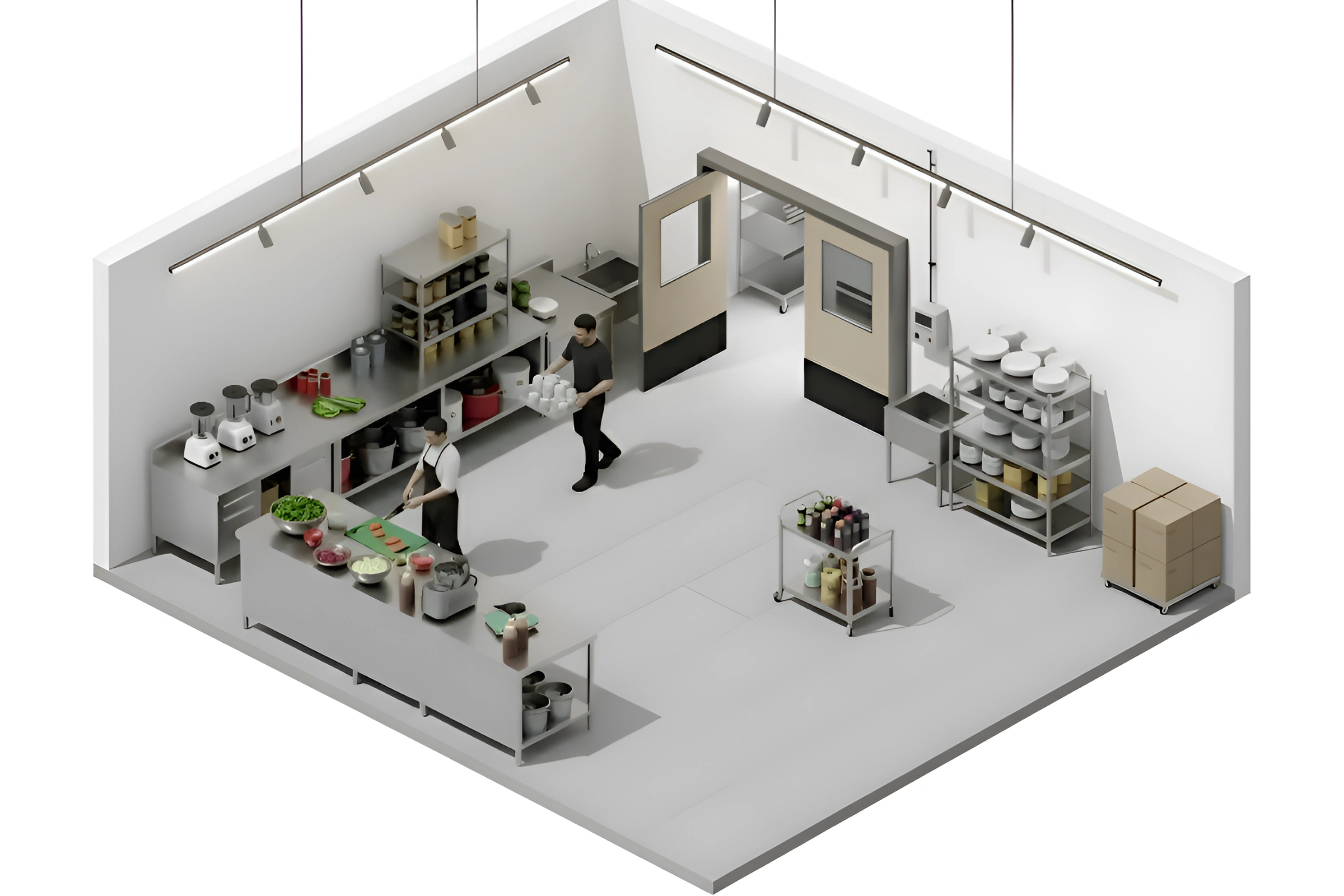
Staff Area Swinging Doors
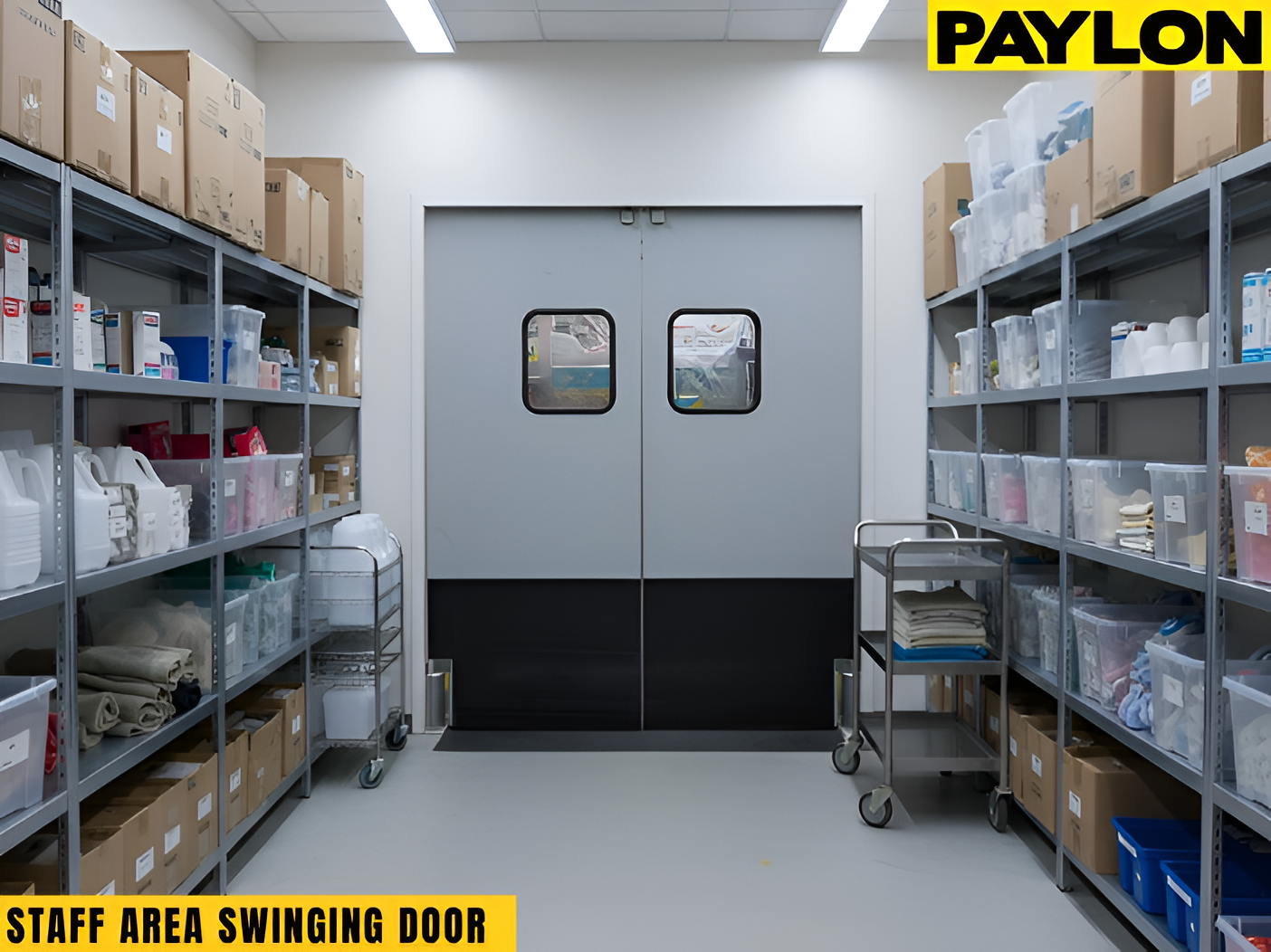
Behind the scenes, staff areas see nonstop movement throughout the day. Employees cross paths, carts and supplies share narrow access points, and standard doors can slow progress during busy shifts. Staff areas that use swinging doors manage this flow more smoothly. This article explains why traffic becomes an issue, which swinging doors suit different traffic levels, and how the right setup supports smoother daily movement.
Built for High-Traffic Staff Areas
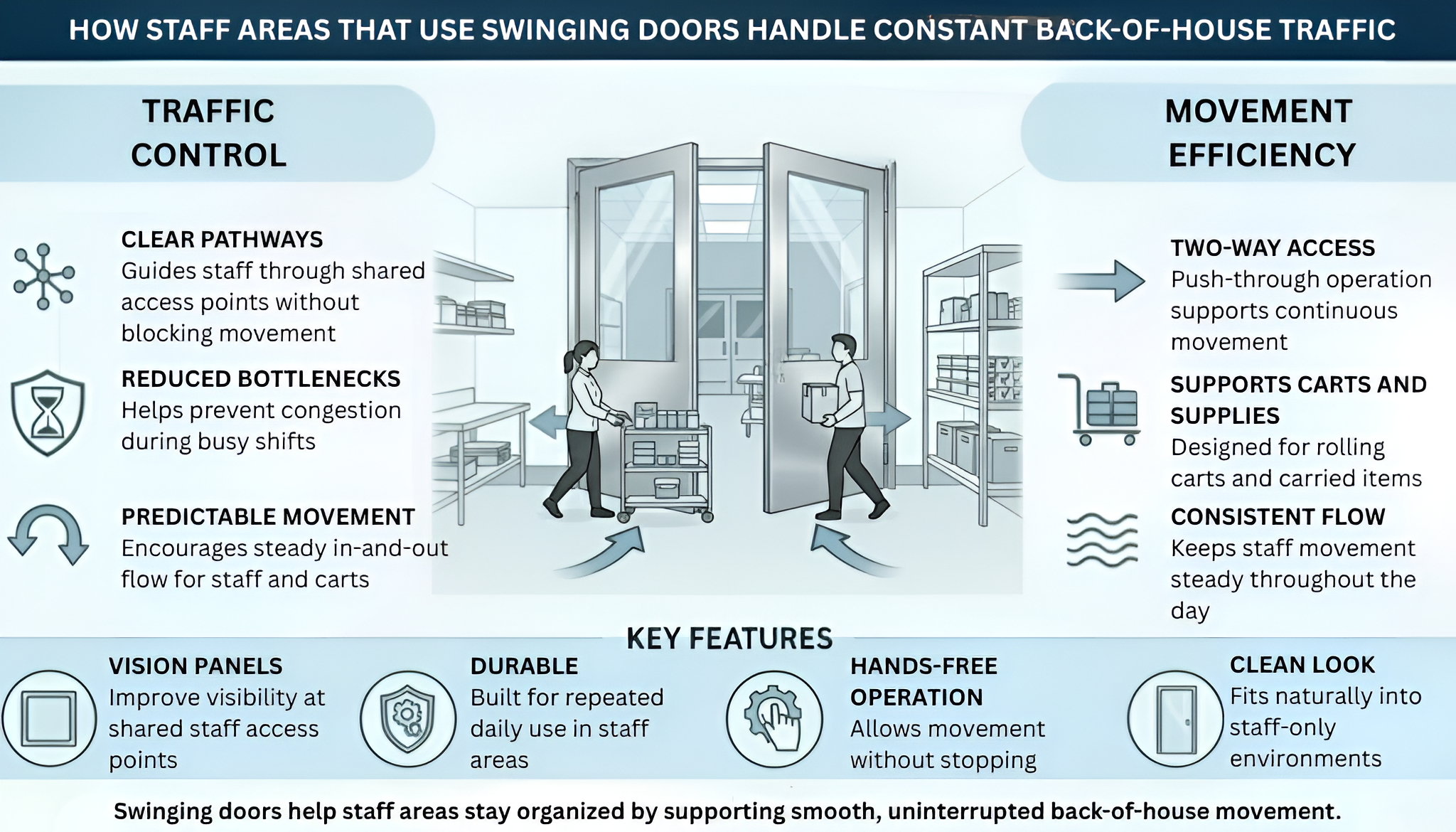
Staff areas often deal with constant back-of-house traffic, especially during busy shifts. When employees, carts, and supplies move through the same access points, standard doors can quickly slow things down. Swinging doors are designed to support continuous movement, helping staff move in and out without stopping. By reducing interruptions and congestion at doorways, swinging doors help staff-only areas stay organized, accessible, and better prepared for daily demands.
Why Back-of-House Traffic Becomes a Problem in Staff Areas
As activity increases, doorways often become the first point where movement slows down. During busy shifts, staff areas rely on quick transitions between spaces. When access points are not built for constant use, even simple movement can start to feel restrictive.
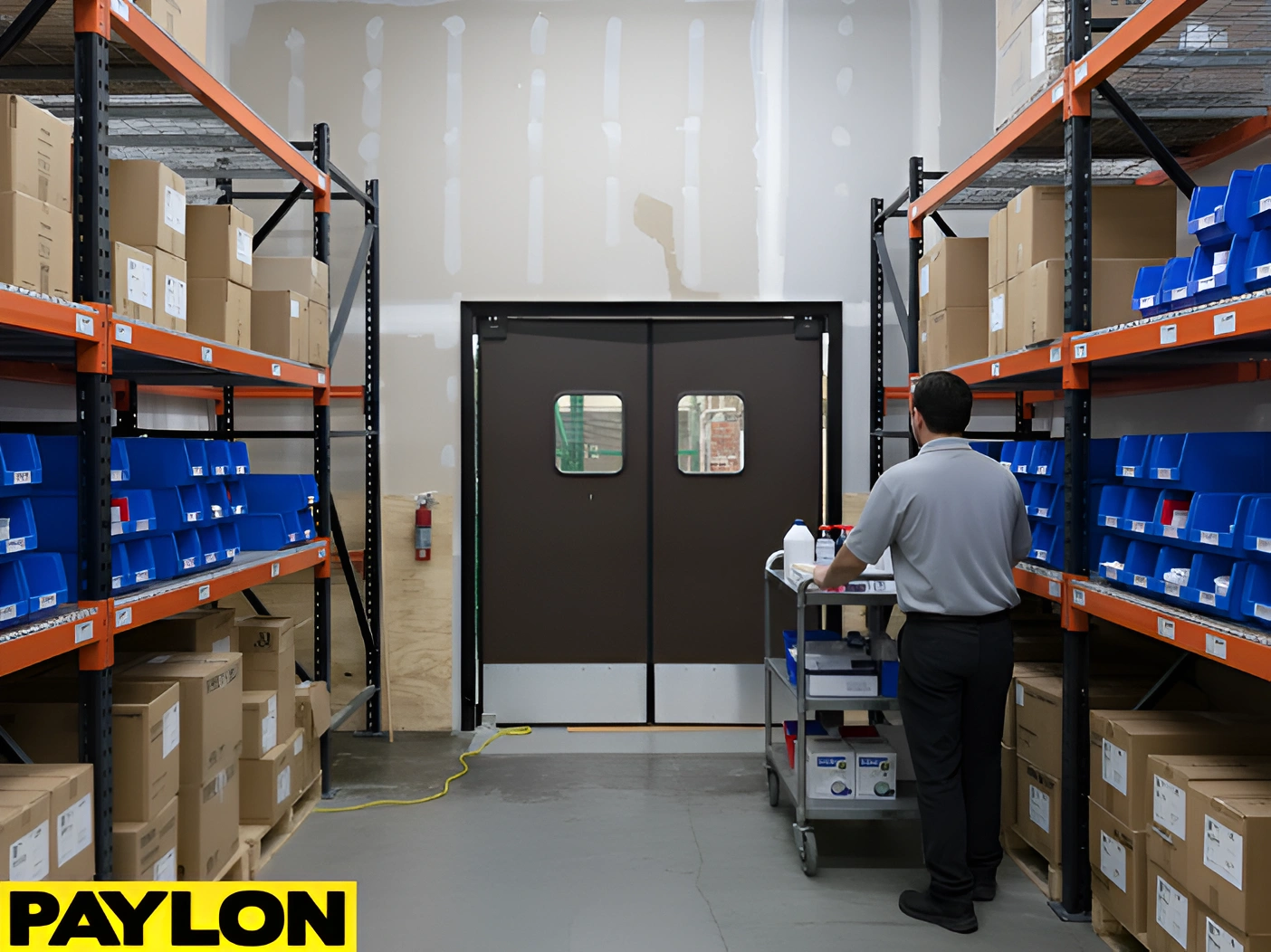
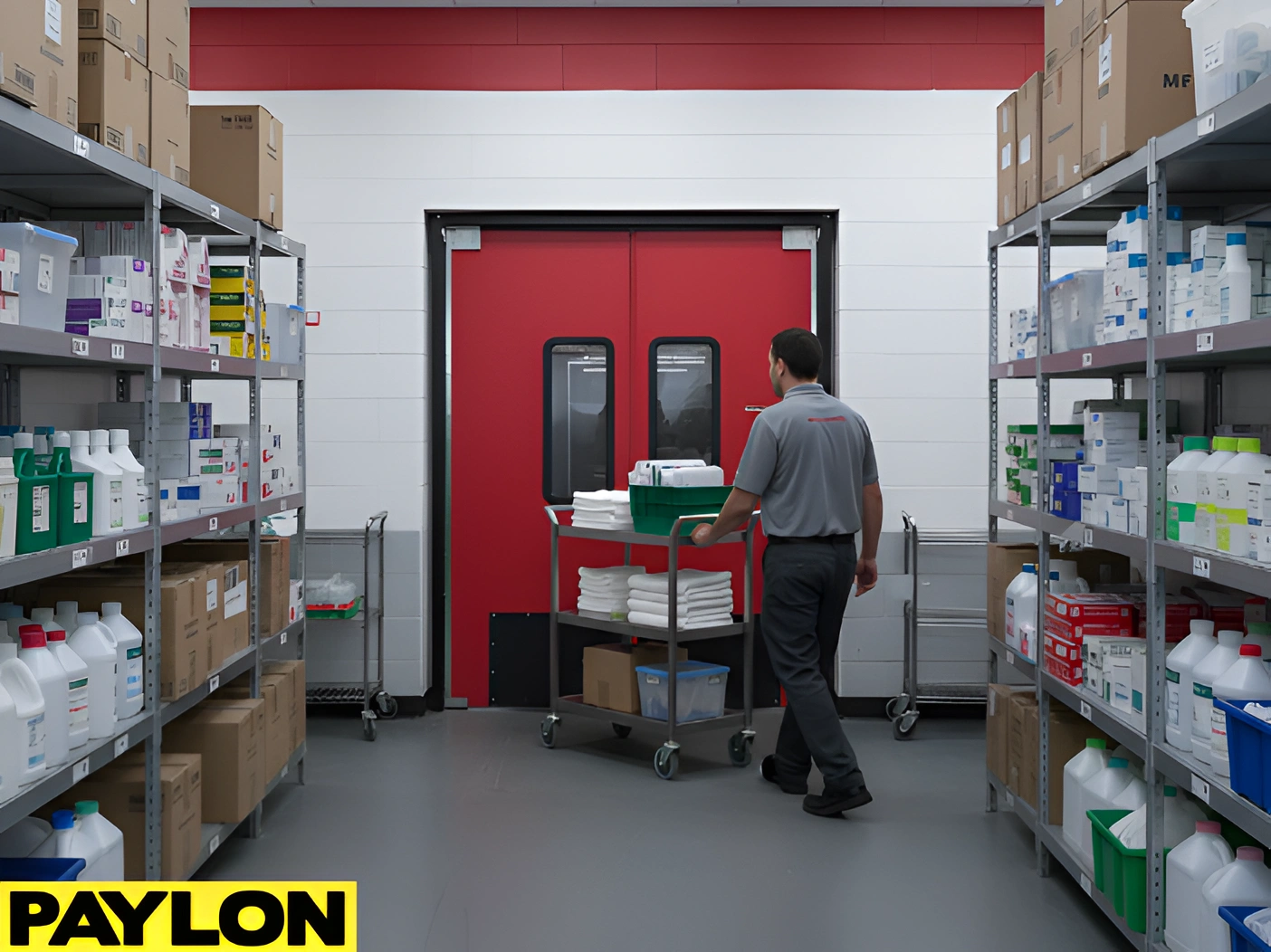
Standard Doors Disrupt Flow and Break Staff Momentum
Standard Doors Force Staff to Slow Down
Standard doors require staff to stop at every pass-through. Employees must reach, pull, or push the door open before moving forward, often while carrying supplies or guiding carts. These repeated pauses interrupt the natural pace of work and make everyday tasks take longer than they should.
Repeated Stops Break Momentum During Daily Tasks
When these slowdowns happen again and again, movement becomes fragmented. Instead of steady motion, staff experience frequent starts and stops that disrupt focus. Over time, routine back-and-forth movement becomes harder to maintain, especially in staff areas where timing matters.
Shared Doorways Turn Constant Traffic Into Bottlenecks
Doorways Become Shared Choke Points
As traffic continues to build, doorways turn into shared access points. Staff approaching from opposite directions hesitate, carts wait for clearance, and narrow openings limit how many people can pass at once. What should be quick movement becomes a source of delay.
Bottlenecks Build as Traffic Continues
These small delays may seem minor at first, but they add up quickly. Congestion spreads beyond the doorway into nearby work areas, affecting how the entire staff area functions during busy periods.
Swinging Door Options That Help Staff Areas Handle Constant Traffic
Once doorway pressure becomes consistent, selecting the right swinging door depends on how much traffic moves through the space each day. These options are commonly used in staff areas and are matched to different levels of daily movement.
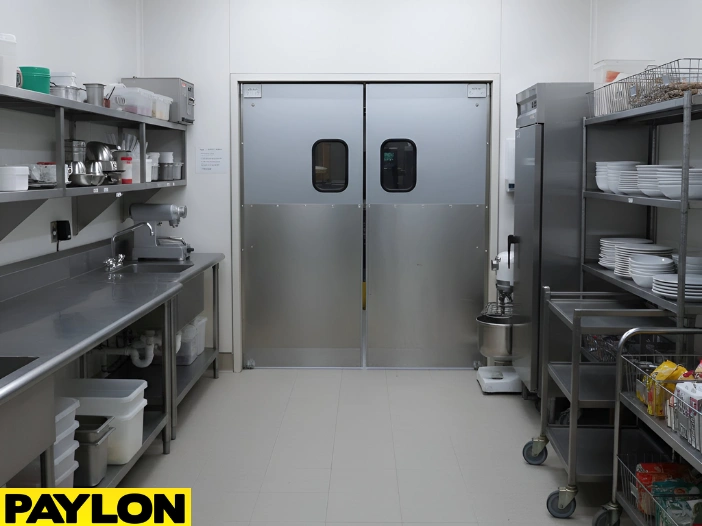
This option is commonly used in staff areas where movement stays steady but manageable. It fits spaces that need smooth access while maintaining a clean and professional appearance.
• Supports regular in-and-out movement without being oversized
• Maintains clear sightlines between connected spaces
• Common in kitchens, café back areas, and smaller staff corridors
PE-710 for High-Traffic Retail Staff Areas
This model is designed for staff areas that stay busy throughout the day. It works well when foot traffic increases and staff need dependable access between spaces.
• Handles repeated movement during long retail shifts
• Fits stockrooms and retail back-of-house access points
• Chosen when daily staff traffic is consistent and frequent
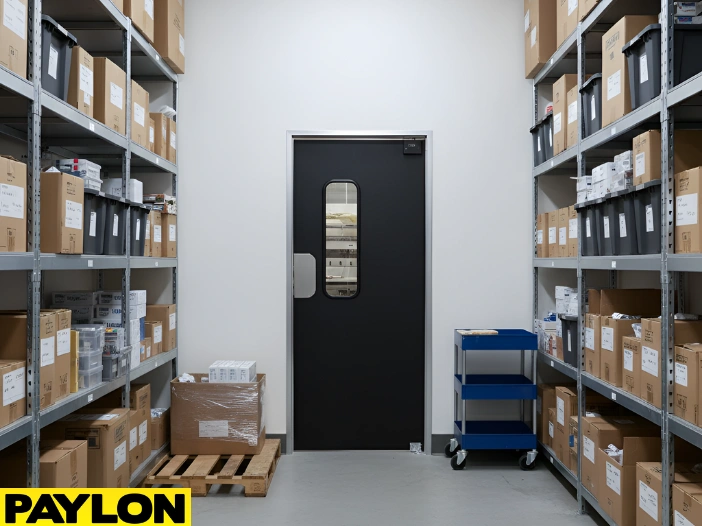
This option is well suited for commercial staff areas with consistent daily use. It provides reliable performance without stepping into heavy industrial construction.
• Built for steady back-and-forth staff movement
• Works well in shared storage and multi-use staff zones
• Selected for environments with predictable daily traffic
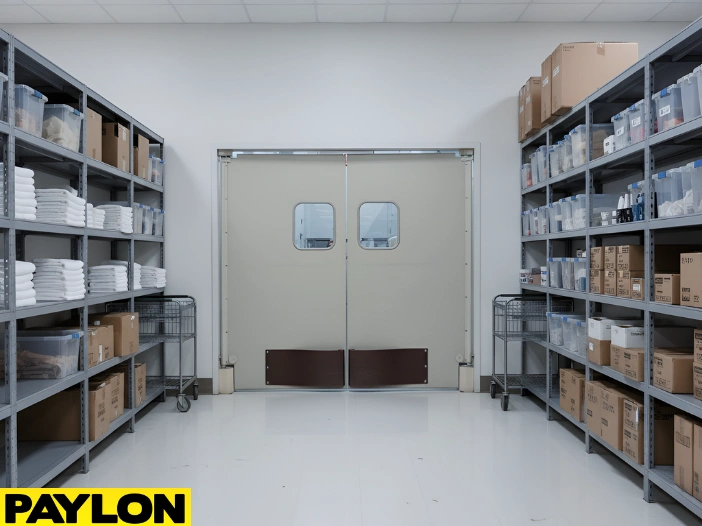
This model is built for staff areas that operate under demanding conditions every day. It suits spaces where carts, equipment, and continuous movement place greater stress on doorways.
• Supports carts, equipment, and heavier moving loads
• Common in receiving areas and industrial staff zones
• Used where durability is critical under constant daily use
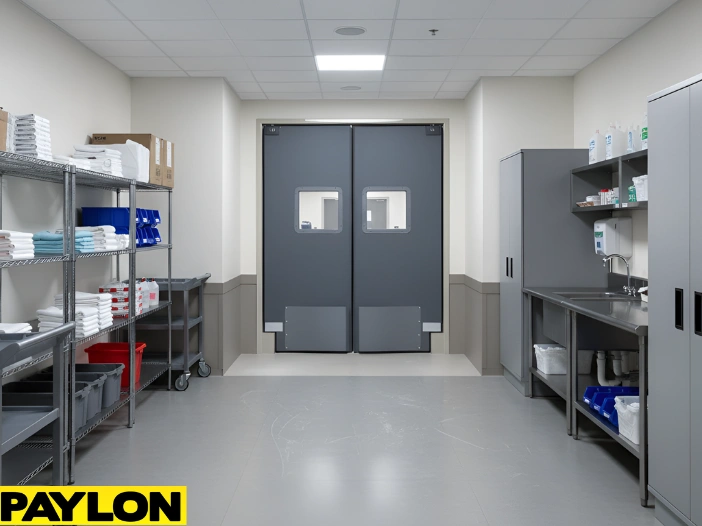
Choosing the Right Swinging Door for Staff Area Traffic
After knowing the swinging door options available for staff areas, the next step is matching each option to real-world traffic conditions. This comparison focuses on how different staff areas are used day to day, making it easier to identify which swinging door best supports consistent movement without slowing work down.
| Staff Area Condition | Recommended Swinging Door | Best For | Why It Works |
|---|---|---|---|
| Light to moderate daily movement | PE-620ALC | Kitchens, cafés, smaller staff corridors | Smooth access with visibility without overbuilding |
| Busy retail staff areas | PE-710 | Stockrooms, retail back-of-house paths | Handles frequent use while improving awareness |
| General commercial staff areas | PE-720 | Storage rooms, multi-use staff zones | Balanced performance for everyday movement |
| Heavy carts and equipment | PE-8000 | Industrial staff areas, receiving zones | Designed for constant traffic and heavier impact |
This table helps narrow the decision by focusing on traffic patterns rather than technical details. By aligning the door choice with how a staff area is actually used, it becomes easier to select a solution that supports movement throughout the workday.
How Swinging Doors Improve Daily Movement in Staff Areas
Once the right door setup is in place, daily movement becomes easier to manage. Swinging doors change how staff move through shared access points by allowing motion to continue naturally instead of forcing pauses during routine tasks. The features below show how swinging doors support smoother, more efficient movement in active staff areas.
| Feature | Why It Matters in Staff Areas |
|---|---|
| ✅ Two-Way Movement | Helps staff pass through from either direction without stopping to open or reposition a door, supporting a steady pace between spaces. |
| ✅ Hands-Free Access | Makes it easier to move through openings while carrying supplies or pushing carts, so work continues without unnecessary interruptions. |
| ✅ Improved Visibility | Helps staff anticipate movement from the other side, reducing hesitation and improving awareness at busy access points. |
| ✅ Staff and Public Area Separation | Creates a clear boundary between staff-only and public spaces while keeping behind-the-scenes movement fast and unobstructed. |
Together, these features help staff areas stay organized and functional during busy periods. By supporting steady movement without blocking access, swinging doors make it easier for teams to move between spaces while keeping daily operations on track.
Frequently Asked Questions
FAQs About Swinging Doors in Staff Areas
Are swinging doors suitable for constant back-of-house traffic in staff areas?
Yes. Swinging doors are commonly used in staff areas where back-of-house traffic continues throughout the day and needs to stay uninterrupted.
Which swinging door is best for busy staff areas with frequent daily movement?
Busy staff areas typically need doors built for repeated use. Options like PE-710 or PE-720 are often chosen based on how consistent the traffic is.
How do swinging doors help reduce staff bottlenecks in shared access points?
They allow movement from both directions at the same time, which helps prevent pauses when staff meet at the doorway.
Can swinging doors separate staff-only areas from customer spaces effectively?
Yes. Swinging doors create a clear boundary between staff and customer areas while still allowing quick access behind the scenes.
Are swinging doors durable enough for carts and equipment used daily?
Yes. For staff areas that handle carts or equipment, heavy-use options like PE-8000 are commonly selected to support constant movement.
What type of swinging door works best for light to moderate staff traffic?
Staff areas with lighter to moderate movement often align well with PE-620ALC, especially where visibility and a clean appearance matter.
Are swinging doors a good option for narrow staff corridors?
Yes. Swinging doors are often used in narrow staff corridors because they allow access without requiring extra clearance space.
Do swinging doors require staff to stop and open them by hand?
No. They are designed to open through contact, which is helpful when staff are carrying items or pushing carts.
Are swinging doors only used in industrial staff areas?
No. Swinging doors are widely used in retail, hospitality, food service, and general commercial staff environments.
Can swinging doors handle two-way traffic at the same time?
Yes. Supporting two-way movement is one of the main reasons swinging doors are used in active staff areas.
Do swinging doors help staff move more efficiently during peak shifts?
They help maintain a steady pace by reducing the need to stop, wait, or reposition at doorways.
Are swinging doors suitable for stockrooms and storage areas?
Yes. Stockrooms frequently use options like PE-710 or PE-720 to support repeated in-and-out movement during restocking.
How do swinging doors improve awareness in busy staff areas?
Clear sightlines help staff see approaching movement, which improves awareness at shared access points.
Can swinging doors be used in areas with frequent deliveries?
Yes. Staff areas that receive regular deliveries often rely on swinging doors to support continuous movement of supplies.
Are swinging doors difficult to maintain in busy environments?
They are designed for regular daily use and typically require minimal routine maintenance.
Which swinging door is best for general commercial staff areas?
PE-720 is often chosen for general commercial staff areas where movement is consistent but not industrial in nature.
Can swinging doors connect multiple back-of-house spaces?
Yes. They are commonly used to connect storage rooms, prep areas, and other staff-only spaces.
Do swinging doors slow staff down during high-traffic periods?
No. They are designed to support movement even when traffic increases during busy times.
Are different swinging doors available for different traffic levels?
Yes. Options like PE-620ALC, PE-710, PE-720, and PE-8000 are selected based on how much traffic a staff area handles.
How do I choose the right swinging door for my staff area?
The best choice depends on traffic volume, what moves through the doorway, and how often the door is used each day.
Photo Gallery
Keeping Staff Areas Moving Without Slowdowns
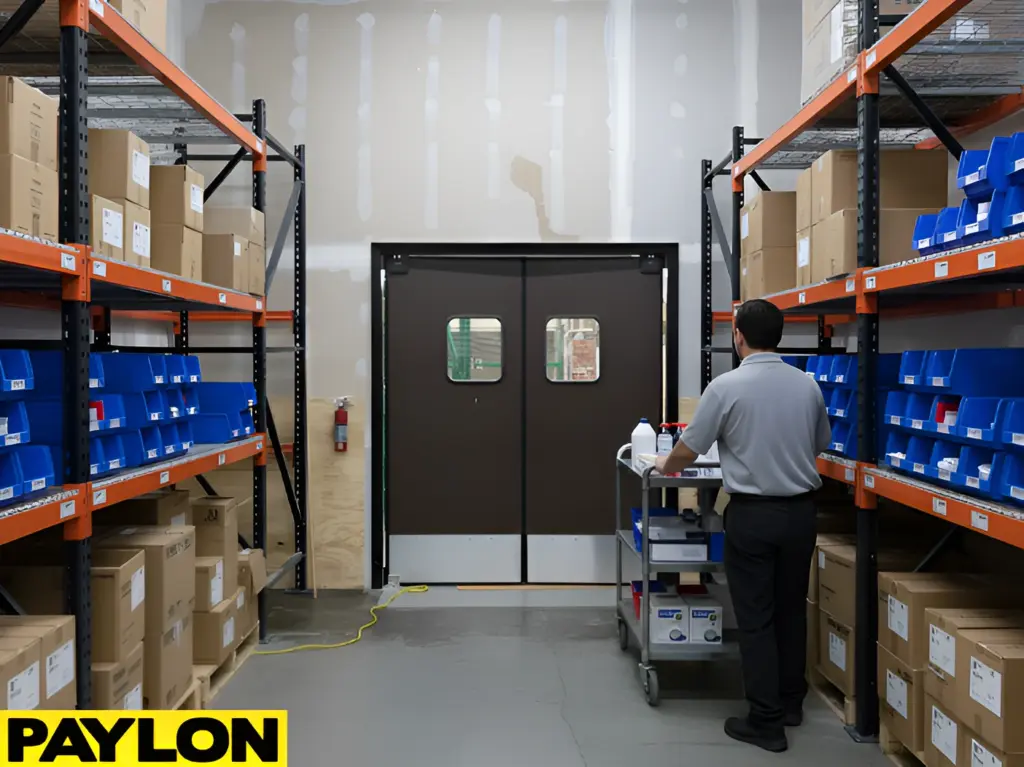
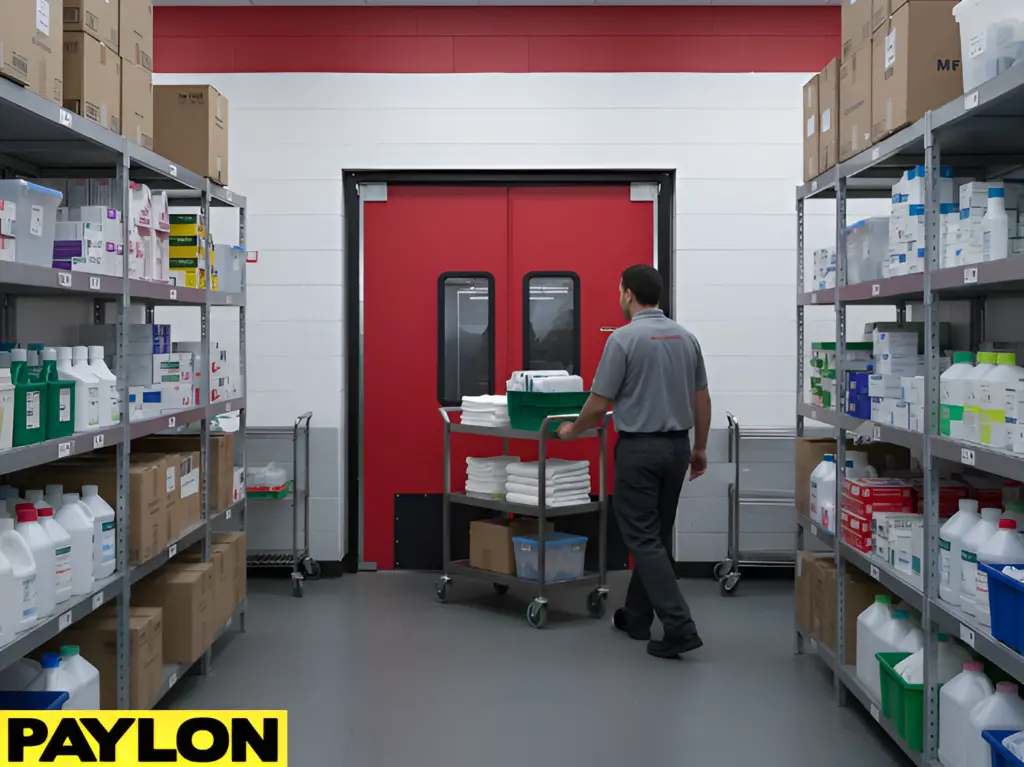
Staff areas work best when movement feels natural and predictable throughout the day. Matching the right swinging door to how a space is actually used helps staff move between areas with less friction and fewer slowdowns. Whether traffic is light, steady, or heavy, choosing an option aligned with daily demands makes a noticeable difference in how smoothly staff-only areas function. Exploring swinging door options based on traffic level is a practical next step toward improving back-of-house flow.
Back-of-House Movement