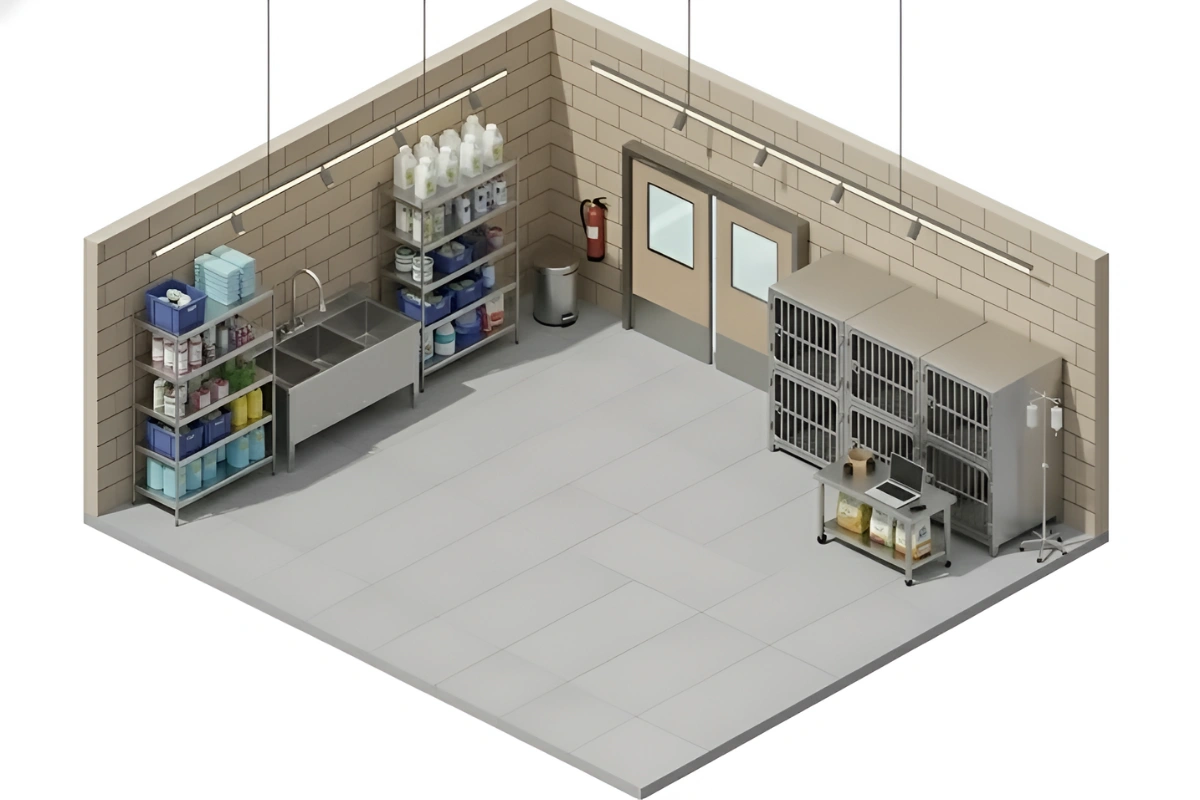
Animal Facilities Swinging Doors
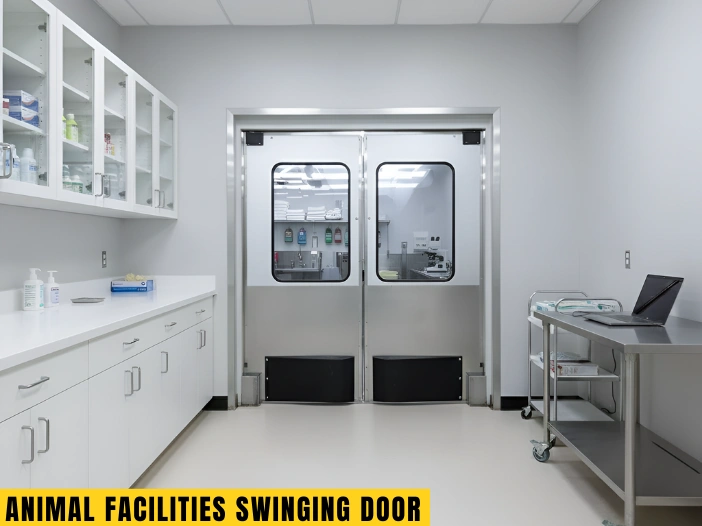
Animal facilities manage constant movement, frequent cleaning, and strict hygiene standards, making smooth workflows essential. Swinging doors help support cleaner and more efficient daily operations by reducing touchpoints and improving overall flow. This guide covers the key benefits of these doors, recommended PE-Series models, a comparison table, how to choose the right option, common FAQs, and a helpful conclusion.
Designed for Clean Facility Use
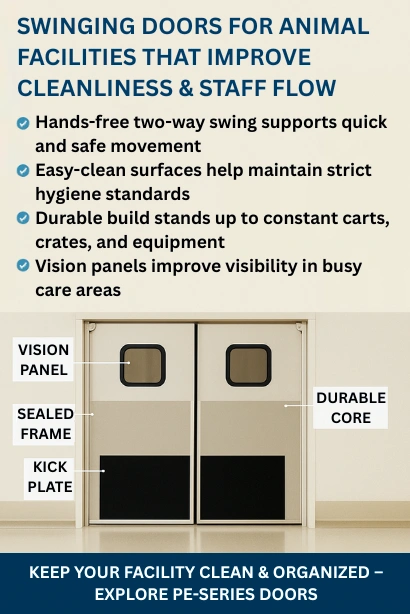
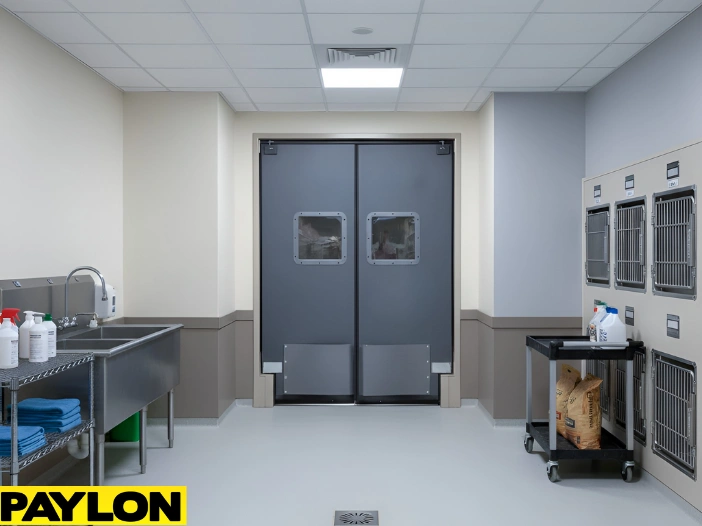
Animal facilities deal with constant movement, daily cleaning, and strict hygiene requirements. Swinging doors offer a practical solution by allowing hands-free access, smoother staff flow, and safer visibility in busy areas. Their durable, easy-clean design supports both animal safety and efficient operations. Choosing the right PE-Series door helps facilities maintain cleaner, more organized spaces that streamline everyday tasks for staff and improve overall care environments.
Key Benefits of Swinging Doors in Animal Facilities
With so much activity happening throughout the day, animal facilities need door solutions that support movement, cleaning routines, and overall safety. Swinging doors offer features that help staff work more confidently while keeping care areas organized. Below are the benefits that make these doors a practical fit for busy care environments
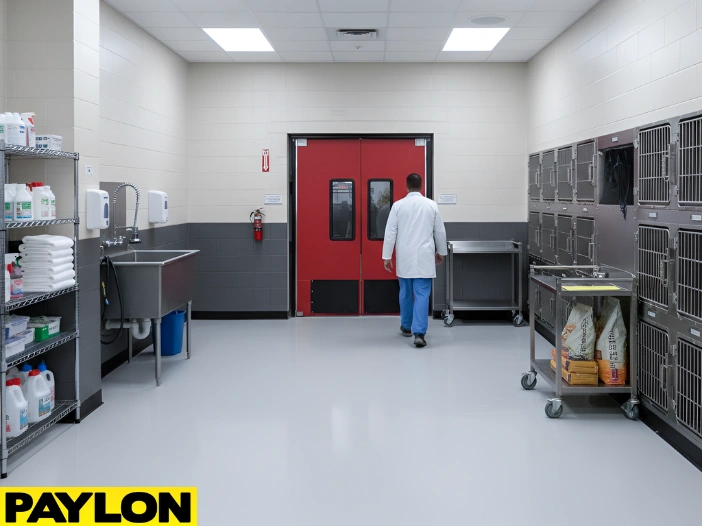
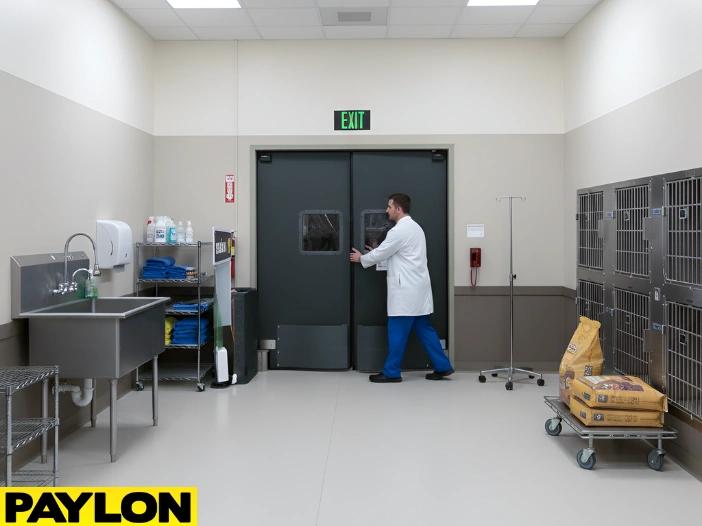
Improved Movement and Better Hygiene
Improved Movement for Busy Staff
Swinging doors help staff move more easily when they are carrying animals, supplies, or cleaning tools. The smooth two-way swing lets them pass through without stopping, which keeps daily tasks running at a steady pace. This design supports faster routines and helps prevent delays during busy times in the facility.
Better Hygiene in High-Cleaning Areas
These doors limit the need to touch handles, which is helpful during quick transitions and frequent cleaning cycles. This detail helps maintain tidy care areas where staff must limit unnecessary contact. It works well in spaces that require repeated sanitation throughout the day.
Durable Design and Safer Visibility
Built for Constant Activity in Care Areas
These doors are constructed to handle frequent use in rooms where activity rarely slows down. Their surfaces are simple to wipe and maintain, which makes it easier for teams to stay on top of sanitation routines. This helps create care areas that remain steady and dependable during busy shifts.
Safer Visibility in Busy Spaces
Clear vision panels show who is approaching from the other side, which helps reduce bumps or accidents in narrow hallways and care rooms. This added visibility makes movement smoother for both staff and animals, especially in areas where quick transitions happen often.
Recommended Swinging Door Models for Animal Facilities
Every facility has different room setups and activity levels, so choosing the right door model helps support smoother routines. The PE-Series offers several options that fit well in animal care environments. Below are the models that work especially well in these settings and how each one supports day-to-day needs.
This model is a good match for small clinics and light-care rooms. It supports steady activity without feeling oversized for the space. PE-620ALC offers a balanced option for teams who need a dependable door that handles daily use comfortably.
• Ideal for light and moderate traffic
• Works well in compact areas
• Practical for everyday routines
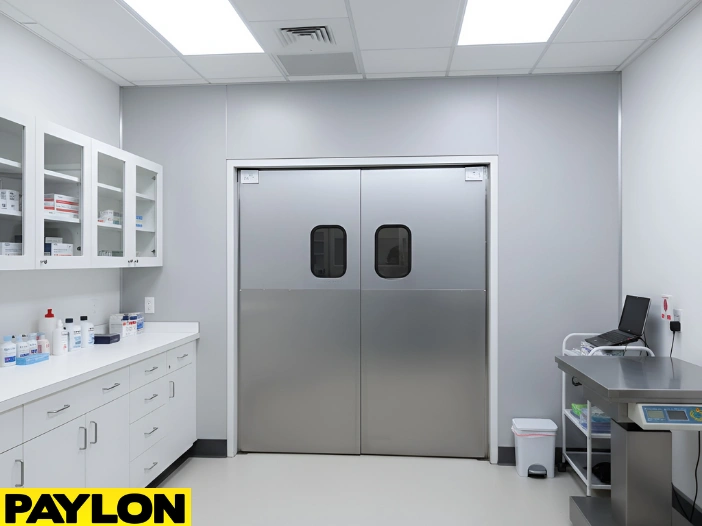
PE-710: Steady, Reliable Use for Busy Staff Corridors
The PE-710 fits well in hallways and supply areas where staff transition often. Its build supports consistent movement between rooms without slowing anyone down. This model is a reliable choice for facilities that need a door suited for regular activity.
• Suited for steady daily foot traffic
• Great for staff corridors
• Supports organized room to room flow
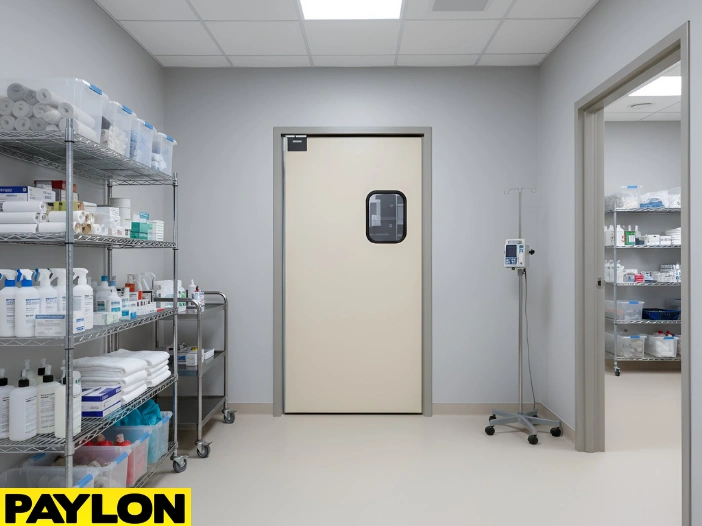
This model works best in shelters, grooming rooms, and cleaning areas. It handles more frequent activity and adapts well to rooms where teams work with animals and equipment throughout the day. PE-720 provides stronger support for busier zones.
• Handles heavier daily activity
• Useful for active care areas
• Performs well with repeated transitions
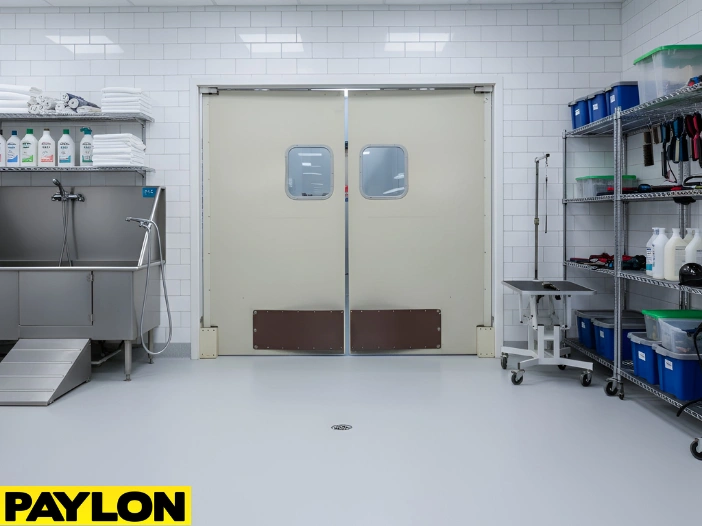
PE-8000 is built for large facilities like kennels, farms, and research spaces. It supports rooms that manage ongoing movement and higher workloads. This model fits environments that depend on equipment ready durability and steady operational use.
• Designed for high demand spaces
• Works well in wide or tall openings
• Supports constant daily activity
Which PE-Series Door Fits Your Facility
Choosing the right swinging door becomes much easier when you can quickly compare how each model fits different areas of an animal facility. The table below highlights which spaces each model works best in, the traffic levels they handle, and the key advantage that sets them apart. Use this at-a-glance guide to match each option to your facility’s needs.
| Door Model | Best For | Traffic Level | Key Advantage |
|---|---|---|---|
| PE-620ALC | Small vet clinics and light-care rooms | Light to Medium | Lightweight design that fits well in compact spaces |
| PE-710 | Busy hallways and supply rooms | Medium | Strong core that supports steady daily activity |
| PE-720 | Shelters, grooming zones, and cleaning rooms | Medium to Heavy | Built to handle higher activity and equipment movement |
| PE-8000 | Large shelters, kennels, farms, vivariums | Heavy | Industrial strength for nonstop use in demanding environments |
This comparison makes it easier to see how each model aligns with different room types and activity levels. With a clear understanding of your facility’s daily pace and layout, you can choose the PE-Series door that best supports your workflow. In the next section, we will look at the key factors to consider when selecting the right door for your space.
How to Choose the Right Swinging Door for Your Facility
Choosing the right swinging door becomes much easier when you focus on the specific needs of each room in your facility. The points below highlight the key factors that can guide your decision and help you select a model that fits your daily routine and space requirements.
| Factor | Why It Matters for Your Facility |
|---|---|
| Assess Your Traffic Level | Look at how often staff move in and out of the room throughout the day. Some areas stay steady, while others experience heavier activity. Understanding the traffic level helps you choose a door that can keep up with your pace without feeling oversized or underbuilt for the space. |
| Think About Cleaning Schedules | Rooms that require frequent cleaning may benefit from a door that supports quick wipe-downs and easy upkeep. Consider how often sanitation happens in that area so you can choose a model that fits smoothly into your regular maintenance routine. |
| Measure Your Doorway and Surrounding Space | Take note of the width, height, and any nearby obstacles around the doorway. Narrow hallways, tight corners, or wide openings can all affect which model will work best. Proper measurements help ensure a comfortable fit and smooth daily use. |
| Match the Door to Your Equipment Needs | If your team regularly moves cages, crates, or carts, select a door that aligns with the type of equipment used in that room. This helps prevent awkward movement or strain and creates a smoother experience for staff throughout the day. |
| Consider Noise Sensitivity for Animals | Some rooms benefit from a quieter environment to help reduce stress for animals. Keeping noise levels in mind can guide you toward a door that feels more suitable for calm or sensitive care areas. |
These considerations make it easier to narrow down which swinging door will work best for your facility’s layout and daily pace. Once you understand your traffic patterns, cleaning routine, available space, equipment movement, and noise needs, selecting the right PE-Series model becomes a much more straightforward choice.
Frequently Asked Questions
FAQs About Swinging Doors in Animal Facilities
Are swinging doors safe to use around animals in care rooms?
Yes. Models like the PE-620ALC and PE-720 have a controlled swing that helps prevent sudden movement around animals. Their balanced design supports calm and safe transitions in busy areas.
Which swinging door model is best for high-traffic animal facilities?
The PE-720 and PE-8000 are ideal for kennels, grooming rooms, and busy corridors. Both withstand repeated movement from staff, carts, and animals.
Do swinging doors help reduce noise that may stress animals?
Yes. PE-Series doors operate quietly, which helps maintain a calmer environment in grooming rooms, treatment areas, and intake spaces.
How often should swinging doors be cleaned in animal facilities?
Cleaning schedules follow each room’s sanitation routine. Models like the PE-620ALC, PE-710, and PE-720 have smooth surfaces that clean quickly between cycles.
Can swinging doors help control odors in vet clinics or shelters?
Yes. Models with optional seals, such as the PE-710 and PE-720, help limit airflow changes that spread odors in treatment and cleaning rooms.
Which swinging door works best for compact vet clinics?
The PE-620ALC is a great fit for exam rooms, prep areas, and small corridors due to its lightweight build and efficient movement.
Are swinging doors durable enough for rooms with heavy cage or cart movement?
Yes. The PE-720 and PE-8000 are reinforced for crates, carts, and frequent transitions in kennels and grooming zones.
Do swinging doors improve safety for staff in narrow hallways?
They do. Clear visibility panels on models like the PE-620ALC and PE-710 help staff avoid collisions in tight spaces.
Can these doors handle frequent transitions between wet and dry rooms?
Yes. PE-Series doors are built for washdown rooms, holding areas, and cleaning zones where moisture is common.
Will swinging doors withstand constant daily use in larger shelters?
The PE-8000 is designed for nonstop use in high-capacity facilities like farms, research centers, and large kennels.
Are swinging doors a good fit for grooming rooms where staff carry animals often?
Yes. The PE-720 provides hands-free movement, helping groomers move easily when carrying animals or tools.
Can these doors reduce distractions for animals during busy hours?
Yes. Their smooth, controlled swing helps avoid sudden noise or visual surprises that might startle animals.
How do I know which door strength is right for my facility?
Light-care areas work well with the PE-620ALC, while heavier activity zones benefit from the PE-720 or PE-8000.
Are there designs that help prevent accidental openings from curious animals?
Yes. PE-Series models have stable swing resistance that helps prevent animals from pushing doors open easily.
Do swinging doors help manage airflow between animal care rooms?
They help limit sudden air shifts. Models like the PE-710 or PE-720 support better odor control and comfort across rooms.
Can these doors be installed in wide or tall openings?
Yes. The PE-8000 handles larger doorway sizes often used in barns, kennels, and research facilities.
Do swinging doors help maintain smoother staff workflows?
Yes. The hands-free entry supports quick transitions between tasks in grooming rooms and sanitation areas.
Are swinging doors compatible with washdown cleaning routines?
They are. PE-Series surfaces resist moisture and clean easily during frequent sanitation cycles.
Which door works best for mixed-use animal facilities with varied traffic levels?
Many facilities use a combination: PE-620ALC for light rooms, PE-710 for steady activity, and PE-720 or PE-8000 for heavy-use zones.
How do swinging doors support safer movement when staff carry animals or supplies?
The two-way swing allows staff to move without stopping or shifting their grip, which helps maintain safe and efficient movement.
Photo Gallery
Making the Right Choice for Your Facility
Swinging doors give animal facilities practical support by helping teams manage busy routines with less effort. After reviewing the benefits, recommended PE-Series models, and the key factors that guide a good selection, it becomes easier to match each door to the needs of specific rooms and workflows. If you’re considering an upgrade for cleaner, more efficient movement in your space, exploring the PE-620ALC, PE-710, PE-720, or PE-8000 can help you find the right fit. Feel free to reach out if you’d like guidance choosing the model that best supports your facility’s daily needs.
Clean Facility Layout