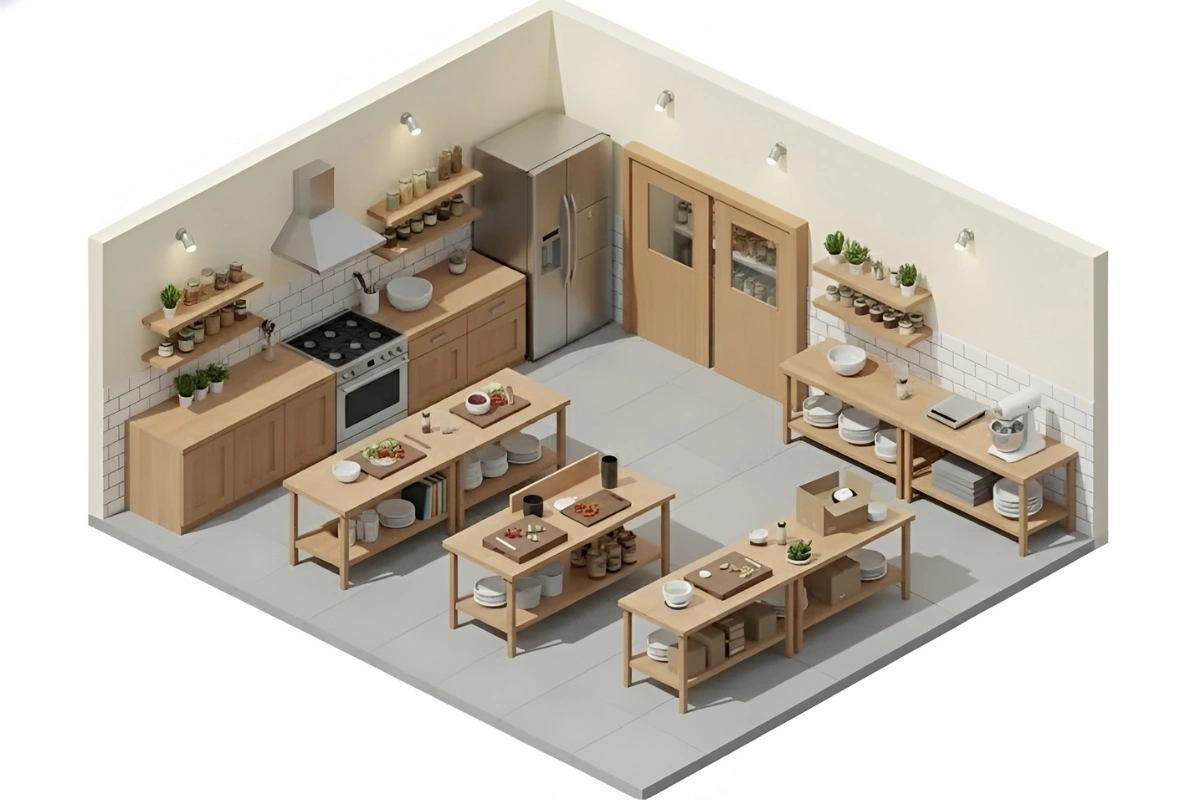
Kitchen Swinging Doors
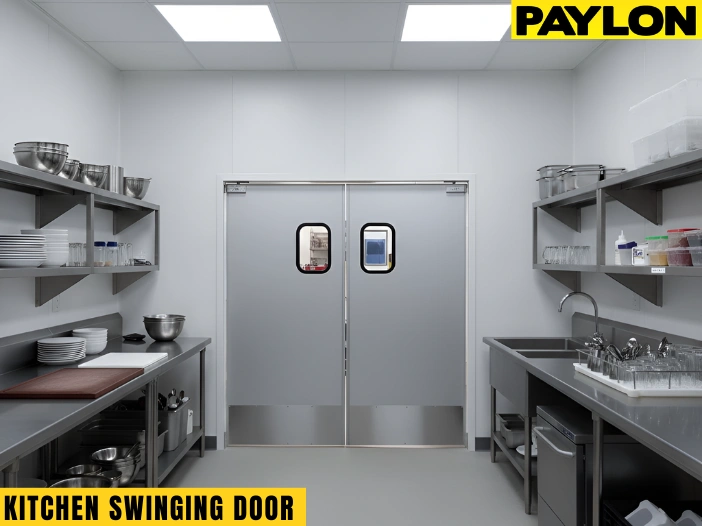
Swinging doors provide a fast, efficient way for kitchen staff to move between prep areas, storage rooms, and service zones without slowing down or touching a handle. In commercial environments where speed and safety matter, these doors help streamline workflow, reduce congestion, and support consistent hygiene. This article breaks down their core benefits, compares leading PE-series commercial models, and answers the most common questions kitchen managers have when choosing a replacement door.
Designed to Improve Busy Kitchen Workflow
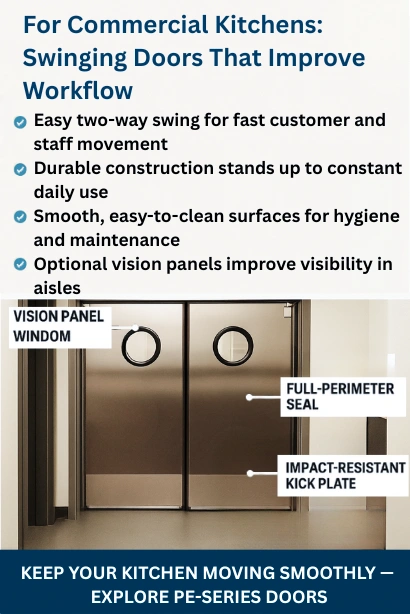
Commercial swinging doors give busy kitchens a faster, safer way to move between prep, storage, and service areas without slowing staff down. Models like the PE-510ALC, PE-510HPL, PE-625HPL, and PE-630HPL offer options for light, moderate, or heavy traffic, making them a practical upgrade for restaurants, cafés, and retail food-service spaces. Each door supports smoother workflow, better separation of zones, and long-lasting durability that helps operations stay efficient throughout the day.
How Swinging Doors Improve Movement and Efficiency
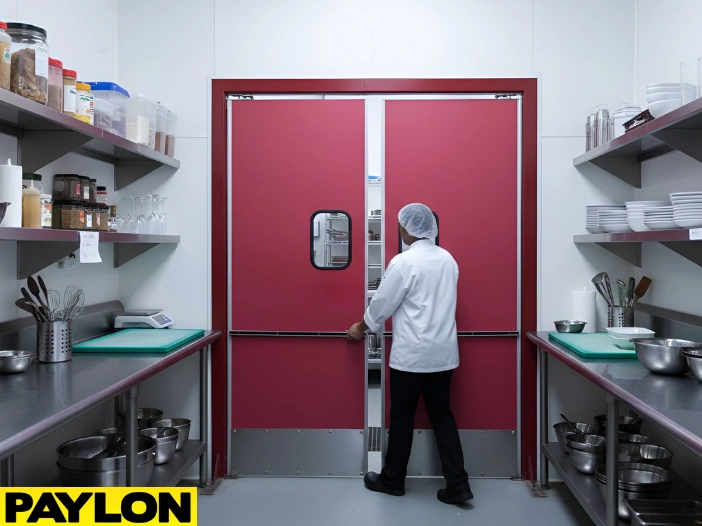
Swinging doors help busy commercial kitchens stay organized and fast-moving by removing the small delays that slow staff down during service. Their smooth, push-through design keeps traffic flowing naturally, even when multiple team members are moving between prep, cook, and service areas. Below are two key ways they improve daily operations in fast-paced food-service environments.
Smoother Flow in High-Traffic Work Areas
How Two-Way Swing Reduces Congestion
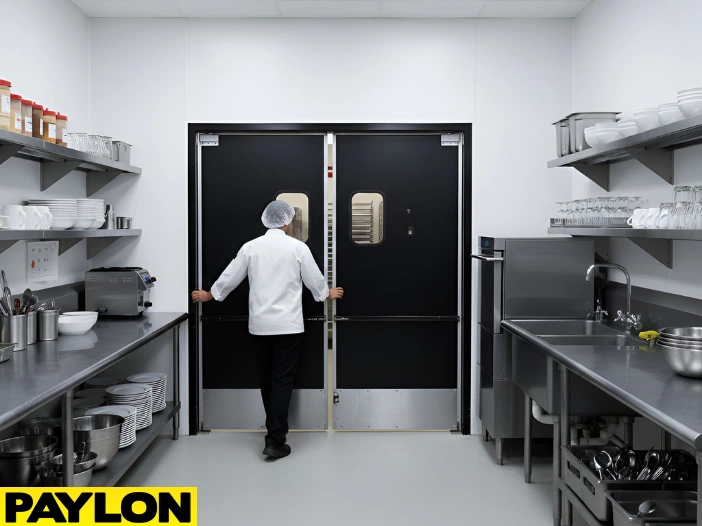
Commercial swinging doors open in both directions, allowing cooks, servers, and prep staff to pass through without stopping or shifting their pace. This constant motion prevents bottlenecks during rush hours and keeps the workflow more predictable, especially in narrow corridors or compact back-of-house layouts.
How Swinging Doors Keep Work Zones Accessible
Because staff can walk through without reaching for a handle, movement stays fluid even when hands are full. This makes shared spaces, like pass-through areas, dish stations, or walk-in entrances, feel more open and manageable during peak volume.
Easier Movement When Carrying Trays, Boxes, or Equipment
How Swinging Doors Support Hands-Full Tasks
In a commercial kitchen, team members constantly carry ingredients, trays, and equipment. A gentle push is all it takes to move through a swinging door, helping staff stay focused and efficient without breaking their rhythm.
How Self-Closing Keeps the Workspace Organized
After someone passes through, the door returns to position automatically, helping maintain separation between prep areas, dish zones, and hallways. This supports safety, hygiene, and order, essential in commercial environments where multiple tasks happen at the same time.
Best Commercial Swinging Door Models for Busy Kitchen Environments
Every commercial kitchen has its own pace and workflow, and choosing the right swinging door helps support that daily movement. The models below are built for restaurant, café, catering, and retail back-of-house environments where constant traffic, sanitation, and durability matter. These four PE-series options provide reliable performance and long-term value for commercial operations of all sizes.
The PE-510ALC is a dependable choice for everyday commercial use. It offers smooth swing action and a clean, professional look, making it ideal for prep rooms, dish stations, and light-to-moderate traffic zones.
• Reliable for steady daily kitchen activity
• Easy-to-clean surface supports hygiene routines
• Great for restaurants needing a practical, no-frills upgrade
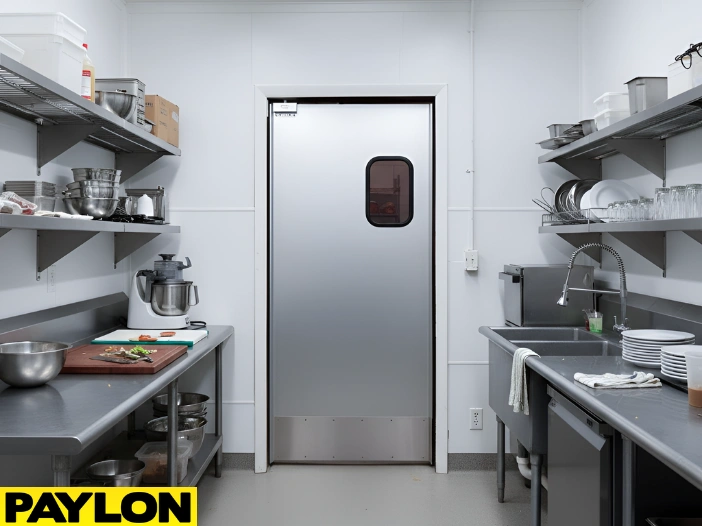
PE-510HPL — For Facilities Prioritizing Sanitation and Easy Cleaning
The PE-510HPL features a high-pressure laminate finish that resists stains, moisture, and frequent wipe-downs. It’s perfect for environments with strict cleanliness requirements such as cafés, commissaries, and quick-service kitchens.
• Durable HPL surface designed for heavy cleaning
• Stays visually appealing even with constant use
• Ideal for kitchens that sanitize multiple times per shift
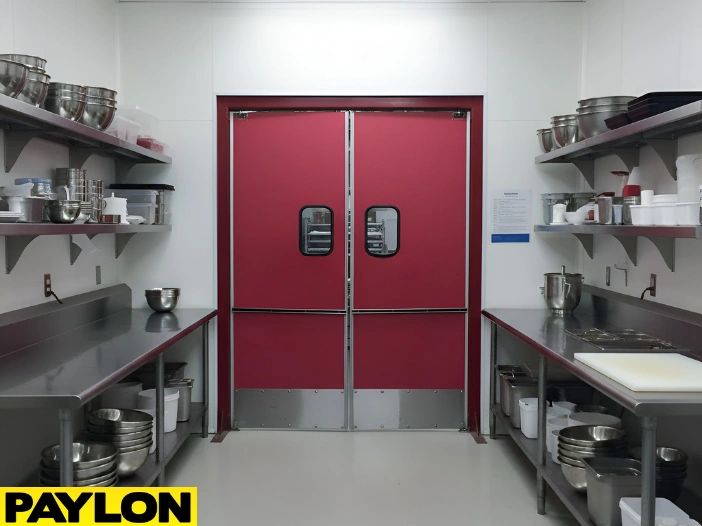
The PE-625HPL offers greater impact resistance for kitchens that never slow down. Its reinforced design holds up well against carts, tray movement, and fast-paced staff flow.
• Stronger construction for nonstop commercial activity
• Excellent for kitchens with tight corridors and fast movement
• A long-lasting option that reduces wear and tear
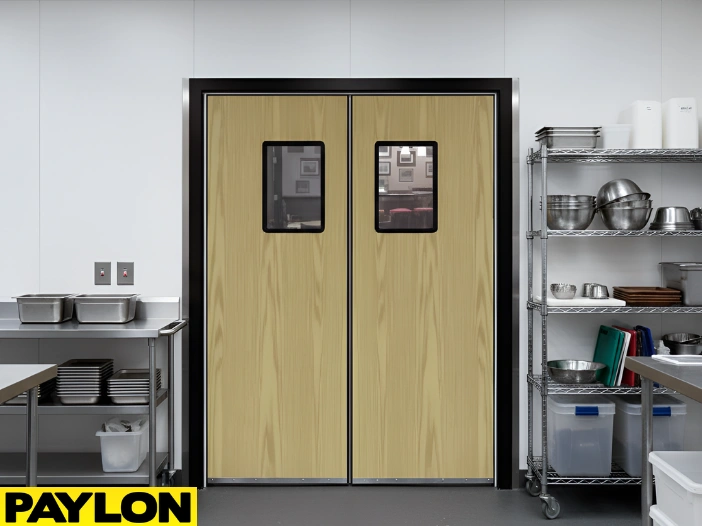
The PE-630HPL is built for the most demanding commercial environments. It delivers maximum durability, making it ideal for large restaurants, production kitchens, and spaces where doors take repeated impact throughout the day.
• High-performance build engineered for constant traffic
• Minimal maintenance needed over time
• Best choice for operations requiring long-term reliability
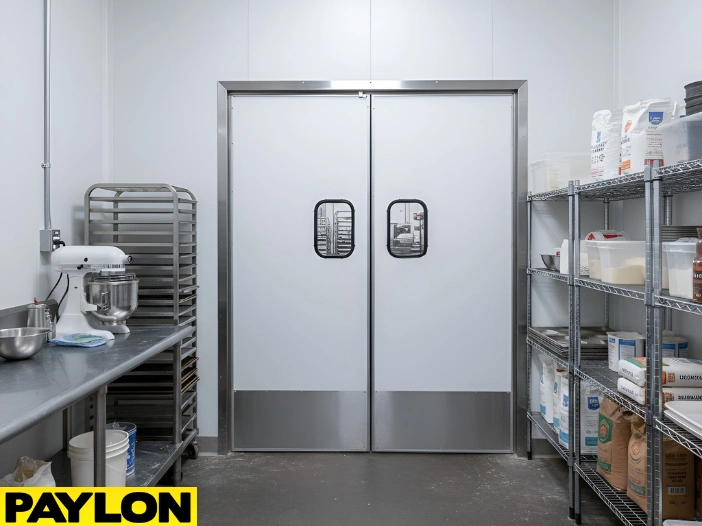
Choosing the Right Commercial Swinging Door Model
Selecting the right swinging door for your commercial kitchen becomes easier when you can compare each model side by side. The table below highlights what each PE-series option is designed for, along with the key advantage it brings to fast-moving food-service and back-of-house operations. This quick overview helps managers match their traffic level, workflow patterns, and durability needs with the door that supports their daily routines best.
| Model | Best For | Key Strength | Daily Benefit |
|---|---|---|---|
| PE-510ALC | Standard prep and service areas | Balanced durability | Smooth, reliable swing action |
| PE-510HPL | High-sanitation kitchens | High-pressure laminate finish | Easy cleaning, stays presentable all day |
| PE-625HPL | High-traffic commercial environments | Reinforced construction | Holds up under nonstop staff movement |
| PE-630HPL | Demanding, heavy-duty kitchen operations | Maximum long-term durability | Reduced wear, ideal for constant impact and use |
This quick comparison makes it easier to narrow down the model that best supports your kitchen’s traffic patterns, sanitation needs, and long-term durability requirements. With each option built for specific commercial demands, you can confidently choose the door that aligns with your operation’s daily workflow.
What Businesses Should Check Before Choosing a Commercial Swinging Door
Before selecting the right swinging door for your commercial kitchen, prep area, or service corridor, it helps to look at a few practical details in your space and workflow. These points make it easier to choose a door that fits your operation, supports staff movement, and performs reliably during peak hours.
| What to Check | Why It Matters in Commercial Spaces |
|---|---|
| Doorway clearance | Check that there is enough room for the door to swing without hitting prep tables, carts, racks, or nearby equipment. Proper clearance keeps movement smooth and prevents bottlenecks when the kitchen gets busy. |
| Activity level in the workspace | Think about how often employees pass through the area. Light, moderate, or high traffic helps determine whether a standard model like the PE-510ALC is enough, or if your operation needs something reinforced, like the PE-625HPL or PE-630HPL. |
| Team size and workflow patterns | Larger teams make more frequent trips between prep zones, cold storage, and service lines. Understanding when and how staff move helps you choose a door that supports steady, predictable flow. |
| Match to the right model |
Use the comparison table to match your space demands and traffic level with the right commercial swinging door: • PE-510ALC for balanced daily use • PE-510HPL for sanitation-focused kitchens • PE-625HPL for high-traffic environments • PE-630HPL for heavy-duty, nonstop operations |
Choosing based on real workflow needs ensures a long-lasting upgrade that keeps your commercial space running efficiently.
Frequently Asked Questions
Frequently Asked Questions About Commercial Swinging Kitchen Doors
Will swinging doors fit my existing commercial doorway?
Most commercial kitchens can accommodate a swinging replacement door. PE-series models like the PE-510ALC can be sized for standard openings or customized for prep areas, storage rooms, or service corridors.
Are swinging doors safe for fast-moving staff and equipment?
Yes. Commercial swinging doors use controlled, smooth motion to prevent slamming, making models like the PE-625HPL safe in high-traffic areas.
Do commercial swinging doors require special installation?
Installation is similar to other commercial interior doors. A professional ensures proper swing clearance and alignment so the door performs reliably under heavy daily use.
Are swinging doors noisy in a busy kitchen?
No. PE-series doors are built with quiet-operating hardware to reduce noise during peak hours.
How do I clean and maintain a commercial swinging door?
PE and HPL models offer smooth, nonporous surfaces designed for quick wipe-downs and routine sanitation, ideal for food-service environments.
Do swinging doors work well in small commercial kitchens?
Yes. Push-through movement keeps staff flowing smoothly in tight prep spaces or narrow corridors without pausing to use a handle.
Can swinging doors help separate prep, cooking, and service zones?
They provide a soft barrier that improves workflow while still allowing fast movement between departments.
Do commercial swinging doors offer vision panels?
Many PE-series models include vision panels to improve visibility, reduce collisions, and support safe back-of-house traffic.
Are finish or color options available for branding or compliance?
Yes. Commercial swinging doors offer multiple finish options to match branding or cleanliness standards, including HPL finishes for sanitation-focused spaces.
Are these doors durable enough for nonstop commercial use?
Absolutely. Models like the PE-630HPL are designed for continuous, heavy-duty movement in busy restaurants, commissaries, and production kitchens.
Do swinging doors help control airflow or temperature?
They provide moderate separation to help maintain cooler prep areas and warmer service lines, though they are not sealed thermal barriers.
Can swinging doors be customized for unique openings?
Yes. PE-series doors can be configured for oversized entries, double-door setups, cold-storage transitions, or irregular layouts.
Will the door swing too freely in a busy workspace?
No. Commercial swing tension is engineered to stay controlled and predictable during constant push-through traffic.
Are swinging doors easy for new or inexperienced staff to use?
Yes. Push-through access requires no handles, reducing bottlenecks and helping new staff adapt quickly during rush periods.
Do commercial swinging doors return to center on their own?
Yes. PE-series doors self-center after each pass, keeping entryways clear and professional-looking.
Can these doors withstand frequent sanitation cycles?
They are built for detergent-based cleaning, hot kitchen environments, and repeated wipe-downs throughout the day.
Do swinging doors help reduce clutter or blockages?
Because they self-close, they help keep pathways clear and prevent doors from being left open during busy service times.
Can I add kick plates or bumpers for better protection?
Yes. Many PE and HPL models offer kick plates and bumpers ideal for kitchens that use carts, trays, or heavy equipment.
Will swinging doors interfere with nearby equipment?
Not when sized correctly. Proper clearance ensures doors swing freely without affecting refrigeration units, prep tables, or dish station equipment.
How long do commercial swinging doors last?
With proper fitting and regular cleaning, models like the PE-630HPL provide long-term durability even in high-impact, demanding environments.
Choosing the Right Kitchen Swinging Door
The best swinging door for your kitchen depends on how your team works each day. For balanced daily use, the PE-510ALC is a dependable fit. Sanitation-focused spaces benefit from the easy-clean PE-510HPL, while high-traffic back-of-house areas perform better with the reinforced PE-625HPL. For nonstop, heavy-duty operations, the PE-630HPL delivers the strongest long-term durability. Choosing the right model ensures smoother movement and a more efficient workspace.
Improve Kitchen Flow and Efficiency