Laboratory Swinging Doors
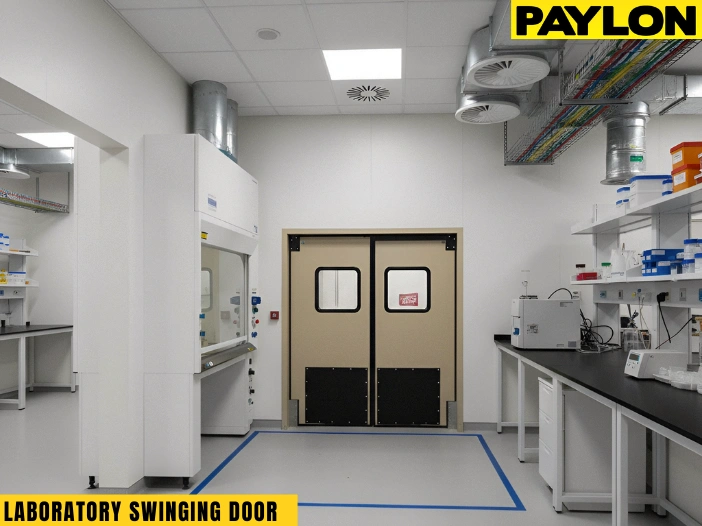
Maintaining strict clean area separation is a constant challenge in laboratory environments with ongoing staff and equipment movement. This article explains why clean separation is critical, how swinging doors support controlled movement, compares door options for different lab needs, and outlines how laboratories can choose the right setup with confidence.
Built to Protect Clean Zones in Laboratories
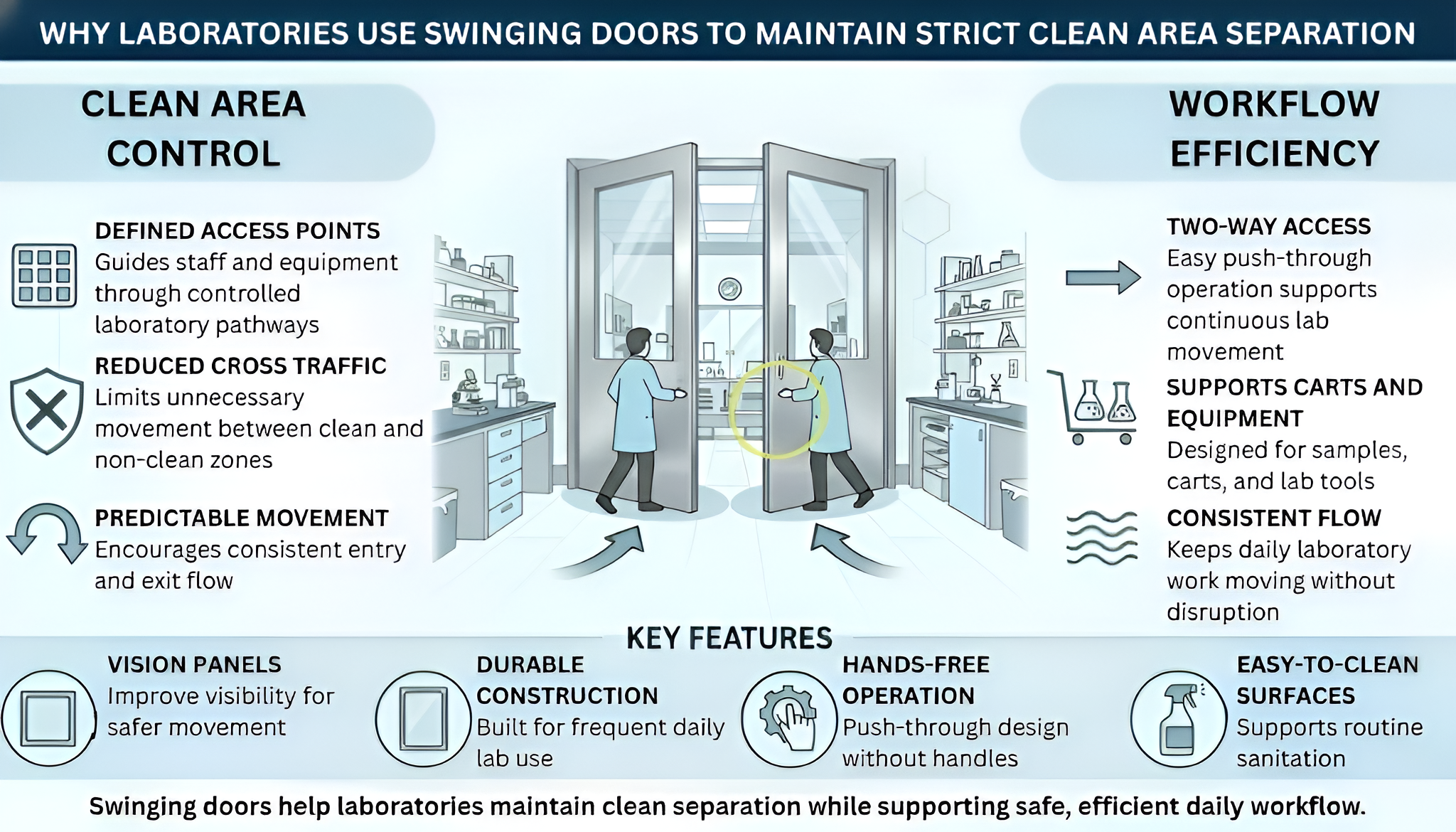
Swinging doors play a key role in helping laboratories maintain clean area separation while supporting daily movement. From managing foot traffic to allowing equipment to pass through without disruption, the right door setup helps protect clean zones and keep work moving efficiently. This infographic highlights how swinging doors support safer workflows and cleaner transitions in busy laboratory environments where control and efficiency both matter.
Why Clean Area Separation Matters in Laboratories
As laboratories manage frequent movement between rooms and work zones, maintaining clear separation between clean and non clean areas becomes increasingly important. Without defined boundaries and controlled access, routine activity can introduce risks that affect consistency, safety, and overall operational control. Clean area separation helps laboratories maintain order and stability as daily demands increase.
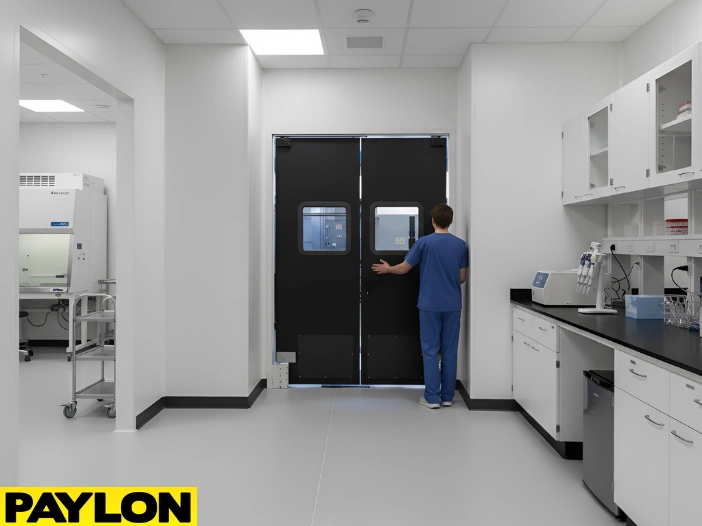
Reducing Risks Caused by Cross Traffic
How Cross Traffic Introduces Risk in Laboratories
When people and equipment move freely between areas, cross traffic can carry particles or materials into spaces intended to remain controlled. Even everyday movement can affect clean conditions if pathways are not clearly defined. Over time, this creates added risk in environments where precision and consistency are critical.
Why Unmanaged Movement Disrupts Clean Standards
Without clear separation, repeated movement between areas makes it harder to maintain reliable clean conditions. Small disruptions can accumulate, increasing the likelihood of contamination and requiring additional corrective steps. Managing traffic flow supports consistent standards and reduces unnecessary exposure across laboratory spaces.
Supporting Safer Movement and Reliable Workflow
Guiding Movement Through Defined Access Points
Clear separation allows laboratories to guide people and equipment through specific access points. When movement follows predictable paths, staff can work efficiently without unnecessary interruptions. This improves coordination in busy areas and supports smoother transitions between different laboratory zones.
Maintaining Workflow Without Added Disruptions
When movement is controlled, laboratories spend less time addressing congestion, delays, or repeated cleaning. Defined separation supports steady workflow and helps teams stay focused on their tasks. Over time, this creates a safer and more reliable operating environment that supports daily laboratory operations.
Swinging Door Options That Support Clean Area Separation
After clean area separation is established, selecting the right swinging door depends on how each laboratory space functions day to day. Corridors, access points, equipment paths, and heavy-use areas all place different demands on doors, making it important to match each space with the right solution.
The PE-620ALC is well suited for laboratory corridors and support areas with steady foot traffic throughout the day. It helps manage movement between spaces while maintaining consistent access in busy transition zones.
• Guides routine staff movement between rooms without creating congestion
• Supports transitions connecting controlled and non controlled areas
• Fits narrow corridor layouts used frequently during daily operations
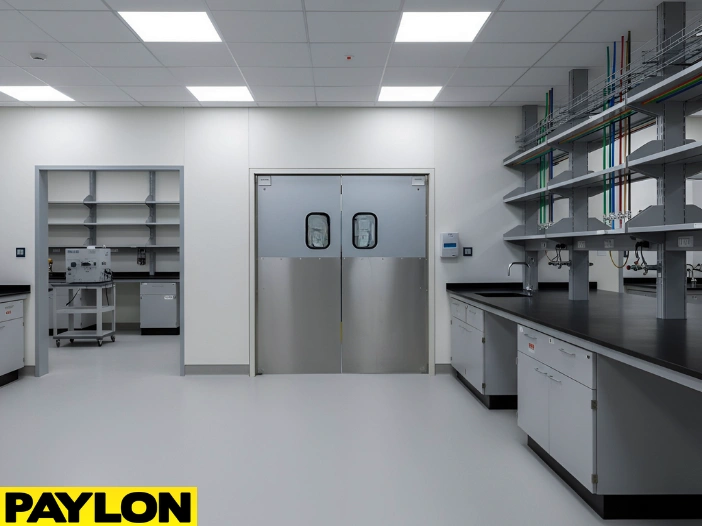
PE-710 for General Laboratory Access Points
The PE-710 works well for general laboratory access points that see frequent daily use. It provides dependable performance in spaces where consistent durability is needed without heavy-duty construction.
• Supports regular entry and exit between laboratory rooms
• Fits standard lab layouts used by staff throughout the day
• Provides reliable function for everyday movement needs
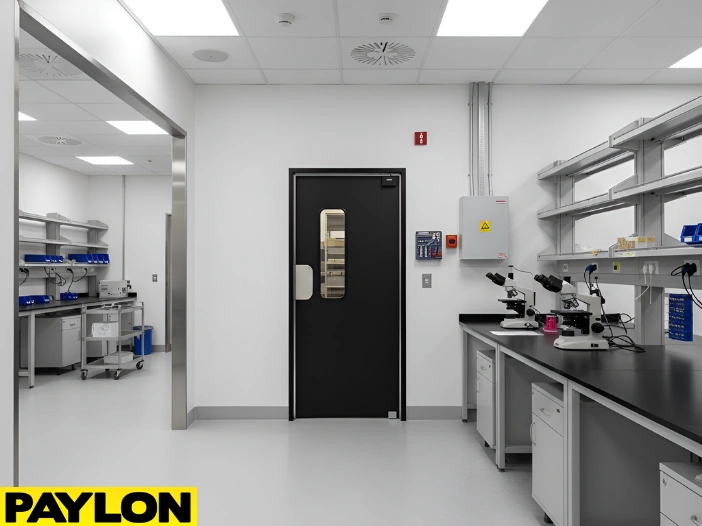
The PE-720 is ideal for laboratories that regularly move carts and equipment between clean zones. It supports smoother transitions in areas where internal transport is part of daily workflow.
• Allows carts and equipment to pass between separated areas
• Supports wider openings used for internal movement
• Helps maintain separation during frequent transport tasks
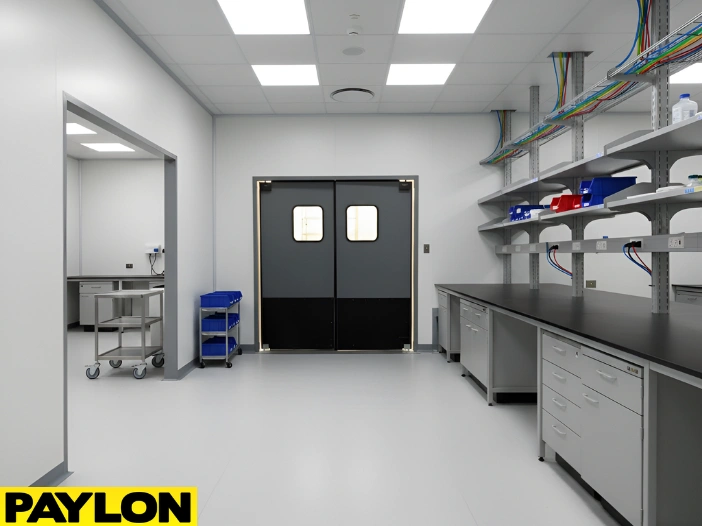
The PE-8000 is designed for laboratory environments with higher demands or areas connected to industrial processes. It performs well in spaces where repeated impact and constant use are expected.
• Handles heavy use in demanding laboratory conditions
• Fits areas near processing or industrial operations
• Supports separation where durability is critical over time
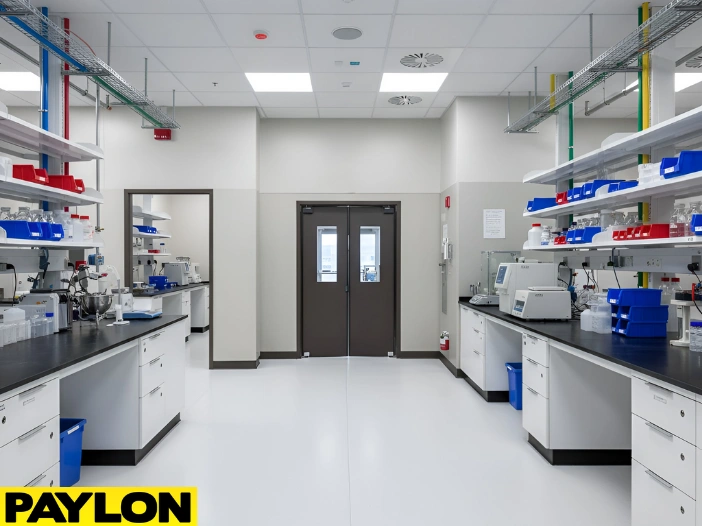
Side by Side Comparison of Swinging Doors for Lab Use
After knowing how each swinging door option fits different laboratory spaces, this side by side comparison helps clarify which model aligns best with specific needs. Use this table as a quick reference when evaluating options for clean area separation.
| Laboratory Need or Use Case | Recommended Swinging Door Model | Why It Fits the Environment |
|---|---|---|
| High foot traffic between lab zones | PE-620ALC | Supports frequent movement while maintaining clean area separation |
| General laboratory access points | PE-710 | Delivers dependable performance for daily laboratory use |
| Equipment and cart movement | PE-720 | Allows smooth transitions without disrupting clean zones |
| Heavy-use or mixed lab spaces | PE-8000 | Built for durability in high-impact environments |
This comparison makes it easier to narrow down the right swinging door based on how each laboratory area is used. The next section focuses on how laboratories assess traffic patterns and layout to choose the most appropriate door setup.
How Laboratories Choose the Right Swinging Door Setup
After comparing swinging door options, laboratories can shift focus to how those doors will function within their own space. Choosing the right setup depends on understanding movement patterns, clean zone boundaries, and how each area is used throughout the day.
| Feature | Why It Matters in Laboratories |
|---|---|
| Traffic Patterns & Clean Zone Boundaries | Understanding where staff, carts, and materials move most frequently helps determine where doors are needed and how those openings should be positioned. |
| Matching Door Durability to Daily Use Levels | Matching door durability to the frequency of use ensures consistent performance and reduces the need for ongoing adjustments in busy areas. |
| Customization Based on Layout & Workflow | Customizing door size, swing direction, and placement ensures a smoother flow and maintains clean area separation across the laboratory layout. |
When traffic flow, use levels, and layout are considered together, laboratories can create a swinging door setup that supports clean area separation without disrupting daily operations. A thoughtful approach helps ensure the solution fits the space now and continues to perform as laboratory needs evolve.
Frequently Asked Questions
FAQs About Swinging Doors in Laboratories
Are swinging doors suitable for laboratories with strict clean area separation?
Yes. Swinging doors are well suited for laboratories because they help control access between clean and non clean areas while supporting smooth daily movement.
Do swinging doors help reduce cross traffic in laboratories?
Yes. Swinging doors guide people and equipment through defined access points, which helps reduce unnecessary crossing between laboratory zones.
Can swinging doors handle frequent cleaning and sanitation in labs?
Many swinging doors are designed for environments that require regular cleaning, making them suitable for laboratories with consistent sanitation routines.
Which swinging door works best in high traffic laboratory areas?
High traffic laboratory areas often benefit from durable options like the PE-620ALC, which is designed to support frequent daily movement without interrupting clean area separation.
Are swinging doors customizable for laboratory environments?
Yes. Swinging doors can be customized in size, swing direction, and placement to better align with laboratory layout and workflow needs.
Do swinging doors slow down laboratory workflow?
No. When selected correctly, swinging doors support efficient movement and help staff transition between areas without unnecessary delays.
Can swinging doors be used in narrow laboratory corridors?
Yes. Models such as the PE-710 are commonly used in narrow laboratory corridors where consistent access and dependable performance are needed.
Are swinging doors suitable for laboratories that move carts or equipment?
Yes. Laboratories that regularly move carts or equipment often use doors like the PE-720, which support smoother internal transport between clean zones.
Do swinging doors help maintain consistent access between lab areas?
Yes. Swinging doors provide predictable access points that help maintain consistent movement patterns throughout the laboratory.
How do laboratories decide where swinging doors should be installed?
Laboratories typically assess traffic flow, clean zone boundaries, and daily movement patterns to determine where doors will be most effective.
Can swinging doors support both staff and equipment movement in labs?
Yes. Many swinging door setups are designed to accommodate both people and equipment without disrupting nearby work areas.
Are swinging doors appropriate for mixed use laboratory spaces?
Yes. In mixed use environments, doors like the PE-8000 are often chosen for areas that require added durability and repeated daily use.
Do swinging doors require special training to operate?
No. Swinging doors are designed for intuitive use, allowing staff to operate them naturally without additional instruction.
Can swinging doors help laboratories stay organized?
Yes. By directing movement through specific openings, swinging doors help laboratories maintain organized pathways and clearer separation between areas.
Are swinging doors a long term solution for laboratory environments?
Yes. When matched to daily use levels, swinging doors provide reliable performance over time and adapt well to ongoing laboratory demands.
Do swinging doors support laboratory compliance requirements?
Swinging doors can support laboratory protocols by helping maintain separation and controlled access when integrated into proper facility planning.
Can swinging doors be adjusted if laboratory layouts change?
Yes. Many swinging door setups can be modified or repositioned to align with layout changes as laboratory needs evolve.
Are swinging doors suitable for laboratories with multiple clean zones?
Yes. Swinging doors can be placed strategically to manage access between multiple clean and support areas within the same facility.
How do swinging doors fit into overall laboratory workflow planning?
They are often included as part of a broader strategy to manage movement, access control, and space efficiency across the laboratory.
What should laboratories consider before choosing a swinging door?
Laboratories should consider traffic volume, layout constraints, cleaning routines, and how each area is used throughout the day before selecting a door.
Photo Gallery
Bringing Clean Area Separation and Workflow Together
Clean area separation is an ongoing priority in laboratory environments where safety, efficiency, and daily movement must stay in balance. Swinging doors help laboratories manage access between spaces while allowing work to continue without interruption. When selected based on how each area is used, they provide a dependable long-term solution that supports both organization and workflow. For laboratories looking to improve separation and operational consistency, exploring the right swinging door options or requesting guidance is a practical next step.
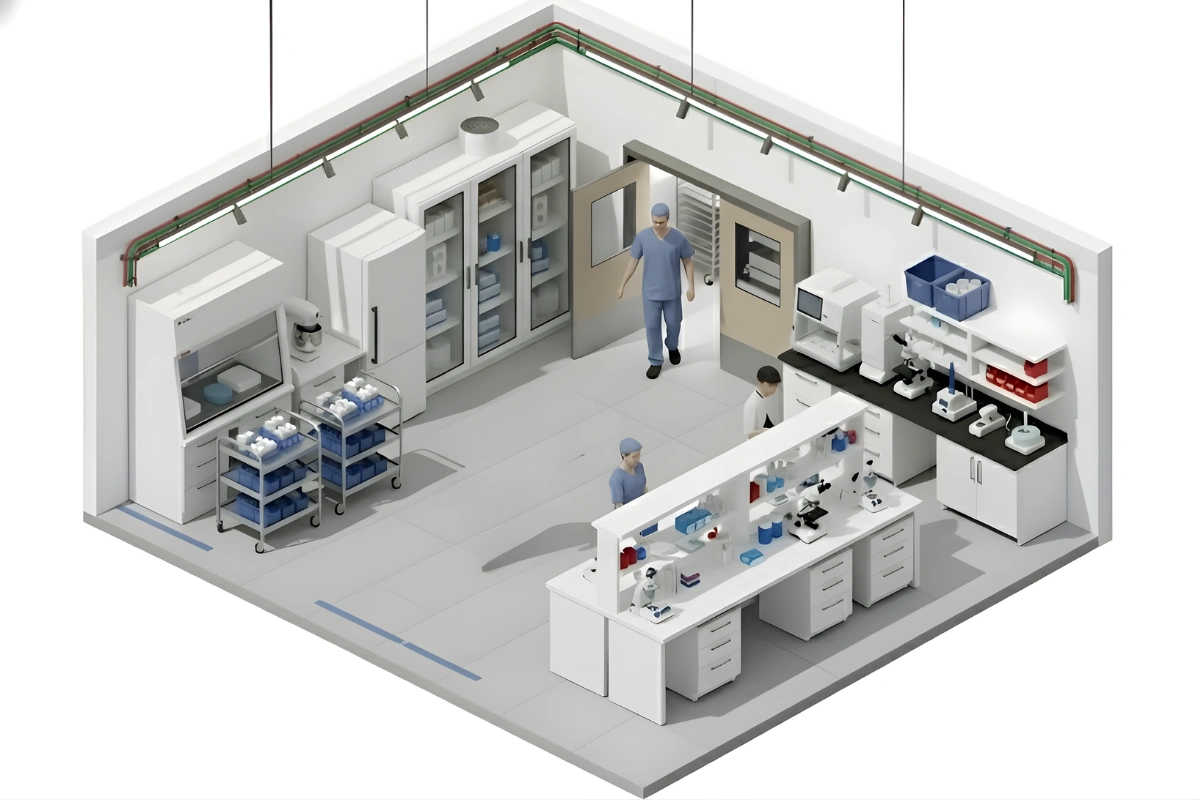
Laboratory Clean Zone Layout