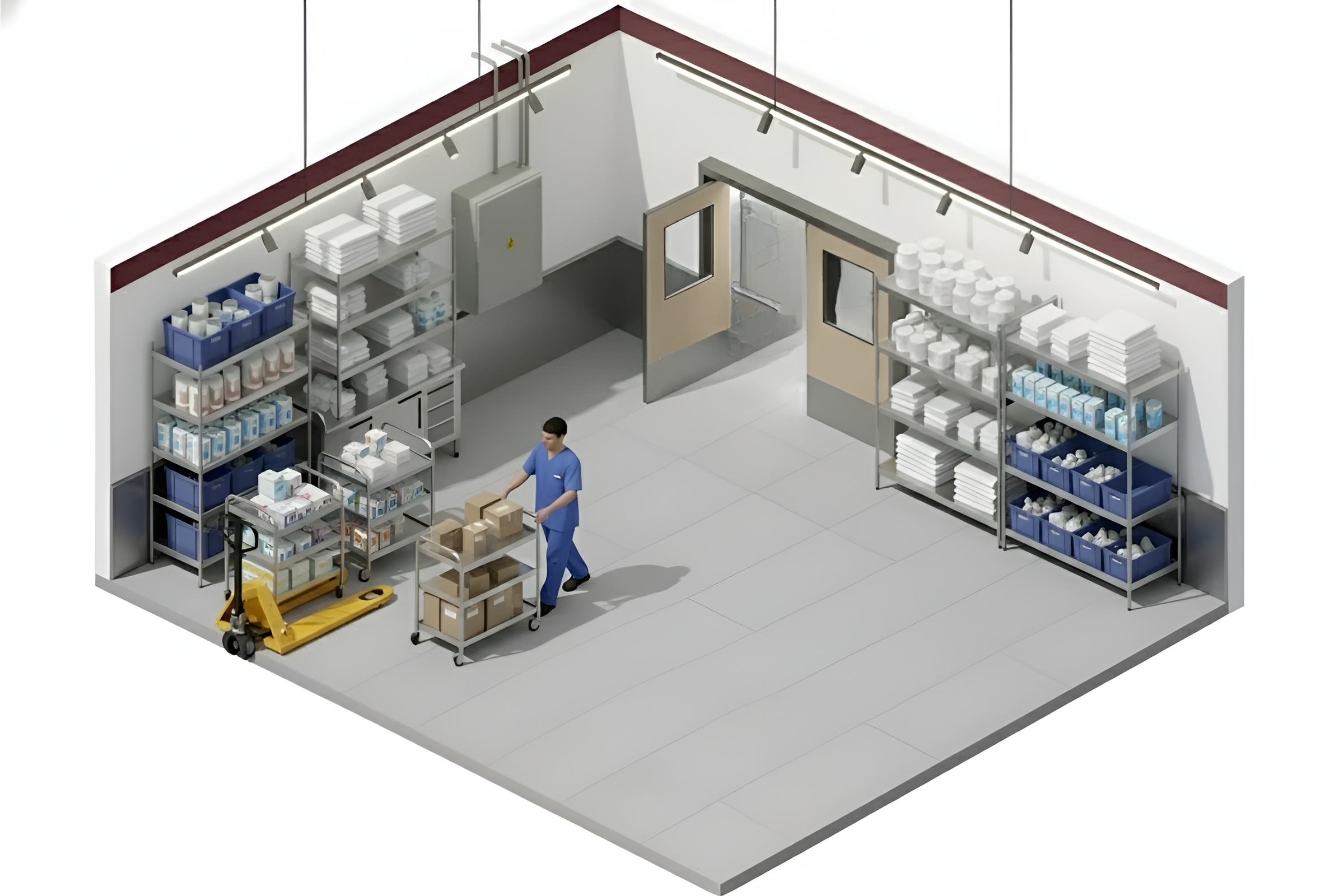
Service Area Swinging Doors
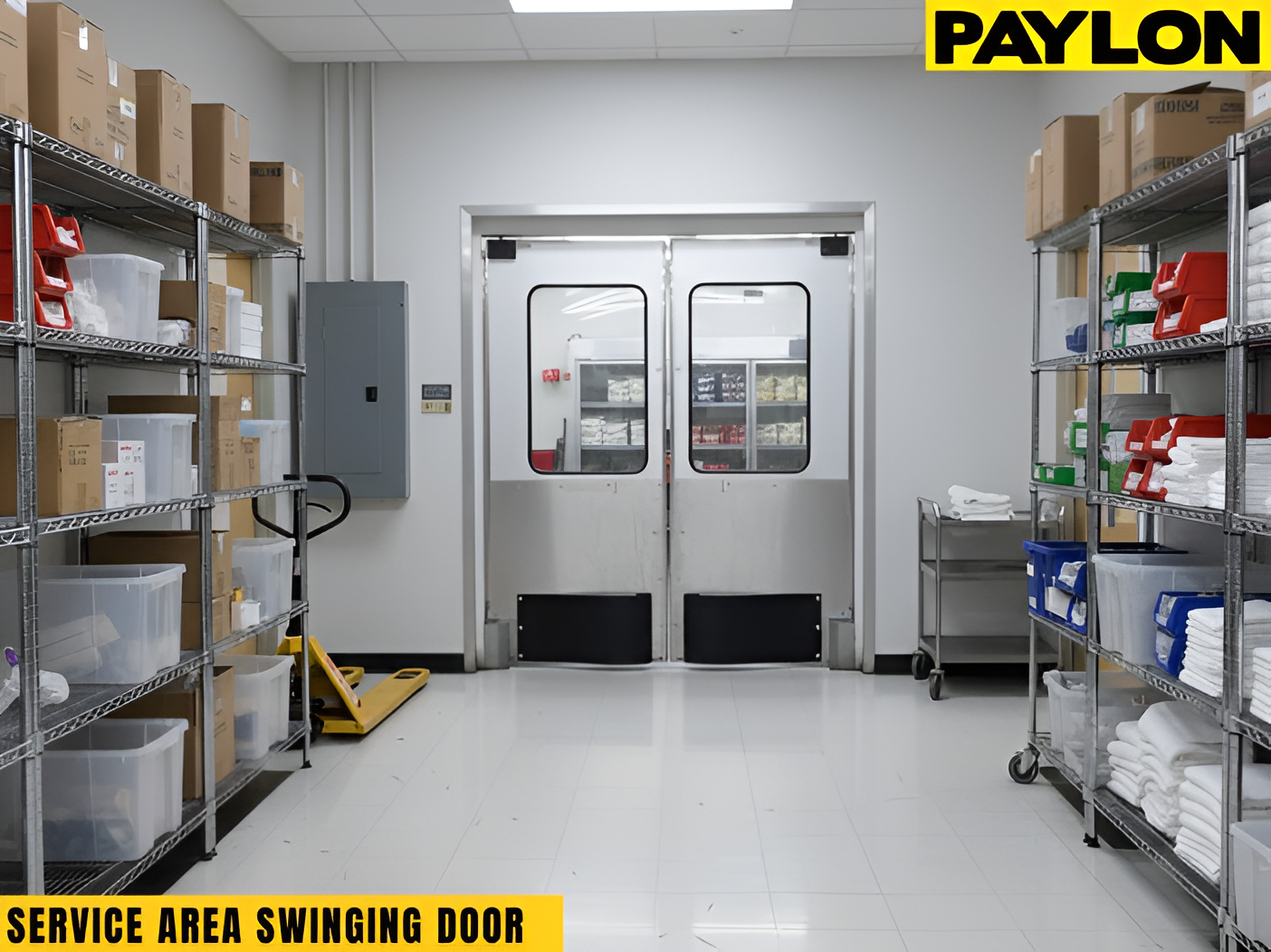
Busy service areas are spaces where constant movement supports daily operations. Workflow slowdowns are a common challenge in these environments and often stem from how people move between work zones. This article explains why delays occur in busy service areas, how access points influence flow, and how the right approach helps keep operations running smoothly.
Engineered for Daily Service Area Traffic
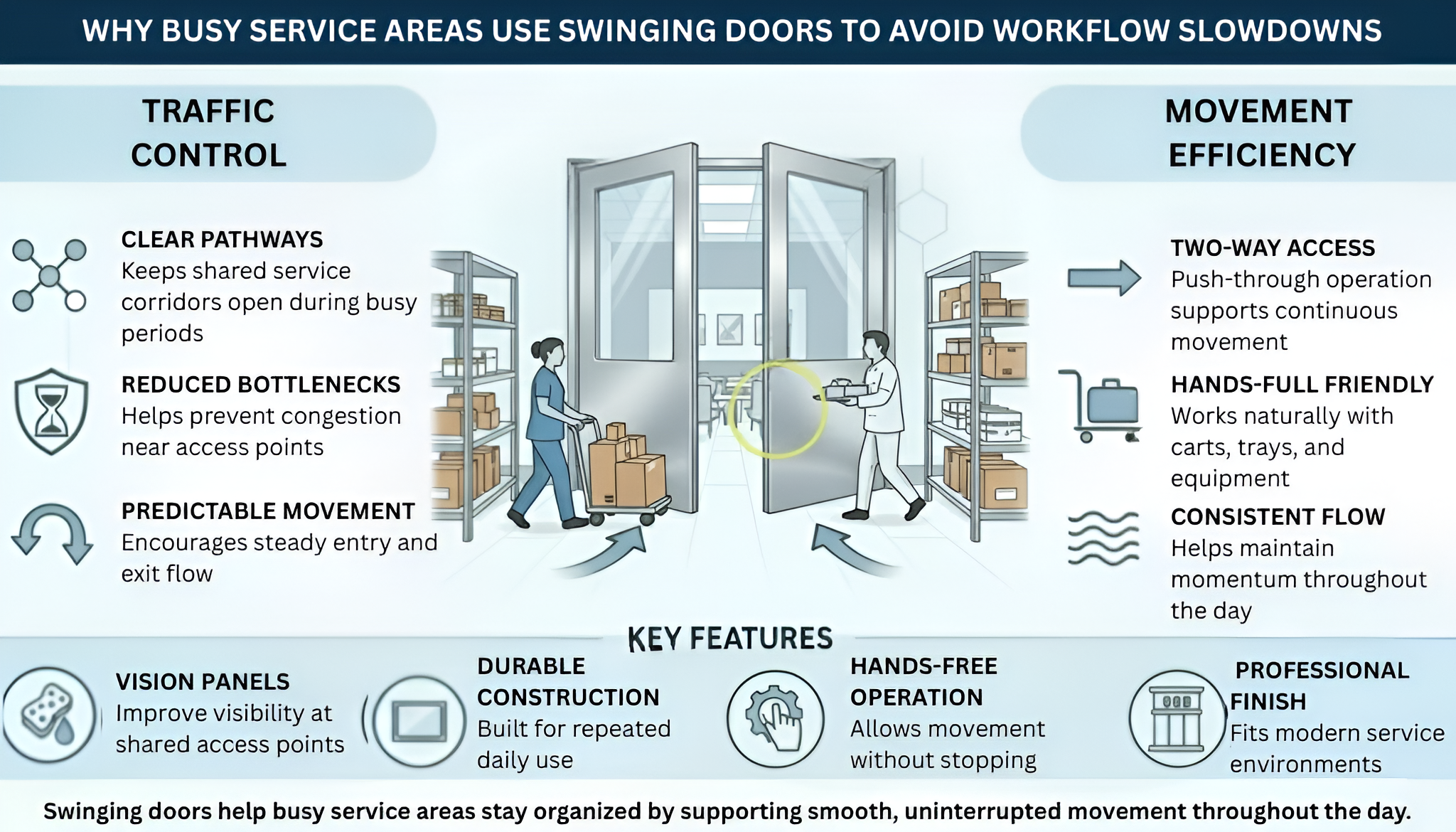
Busy service areas often slow down not because of staff, but because movement gets interrupted. Constant back-and-forth traffic, full hands, and traditional doors can quickly create bottlenecks. Swinging doors help reduce these delays by allowing smooth, two-way movement without stopping. When access points support momentum instead of interrupting it, service areas stay organized, staff move more efficiently, and daily operations run with fewer slowdowns.
Why Workflow Slowdowns Happen in Busy Service Areas
These slowdowns rarely come from a single issue. Instead, they build over time as everyday movement patterns begin to work against efficiency, especially as activity increases throughout the day.
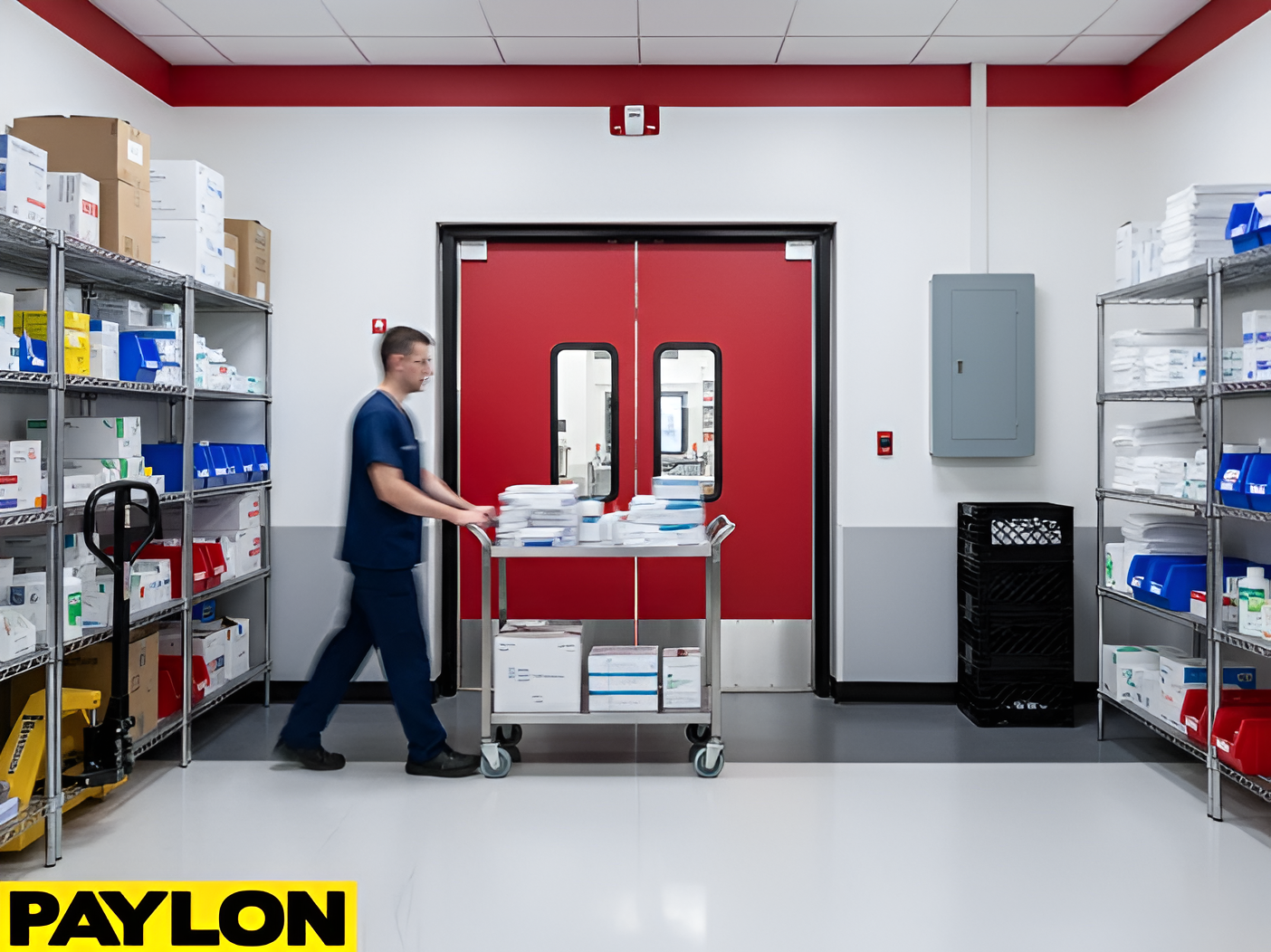
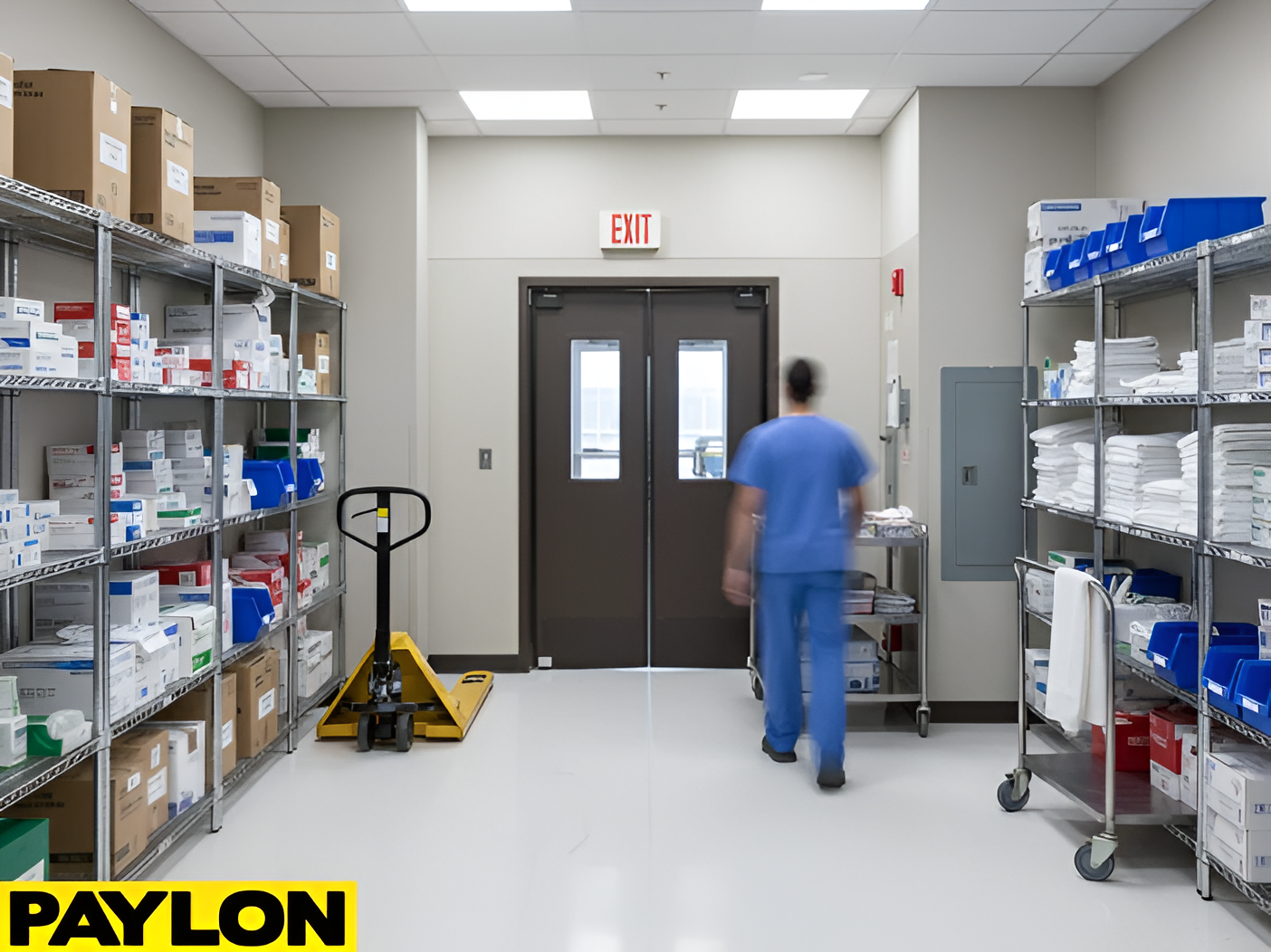
Constant Back-and-Forth Movement Disrupts Workflow
Repeated Movement Between Work Zones Adds Friction
Service areas rely on constant movement between rooms and work zones. Staff step in and out to restock, coordinate tasks, and respond quickly throughout the day. When this movement is frequent, paths begin to overlap and timing becomes harder to manage, particularly in shared spaces where multiple tasks happen at once.
Small Pauses Multiply Into Workflow Slowdowns
As more people move at the same time, brief pauses start to add up. Staff may adjust routes, wait for space to clear, or hesitate before moving forward. Over the course of a shift, these small interruptions create friction that slows progress and disrupts the natural rhythm of daily work across the service area.
Doorways Turn Into Bottlenecks During Busy Periods
Busy Doorways Concentrate Traffic Quickly
Doorways naturally funnel movement into a single point. During busy periods, staff approach these openings while carrying trays, boxes, or pushing carts. When several people arrive at once, space tightens and movement slows. This concentration of traffic makes doorways one of the most common places where delays first appear.
Traditional Doors Increase Hesitation and Waiting
Traditional doors often require stopping, reaching, and timing movement with others. These extra steps force hesitation, especially when hands are full or visibility is limited. As traffic builds, access points turn into choke points where lines form and movement stalls. Over time, these repeated pauses ripple outward and slow surrounding areas.
Swinging Door Options Used in Busy Service Areas
Once movement challenges are understood, the next step is choosing a door that fits how a service area actually functions. Different spaces experience different traffic patterns, so selecting the right option comes down to matching the door to daily demands.
The PE-620ALC is a practical choice for service areas with consistent, predictable traffic. It fits spaces where staff move regularly but conditions remain controlled.
• Fits service corridors with steady staff movement
• Supports daily access without feeling oversized for the space
• Works well where traffic patterns stay reliable
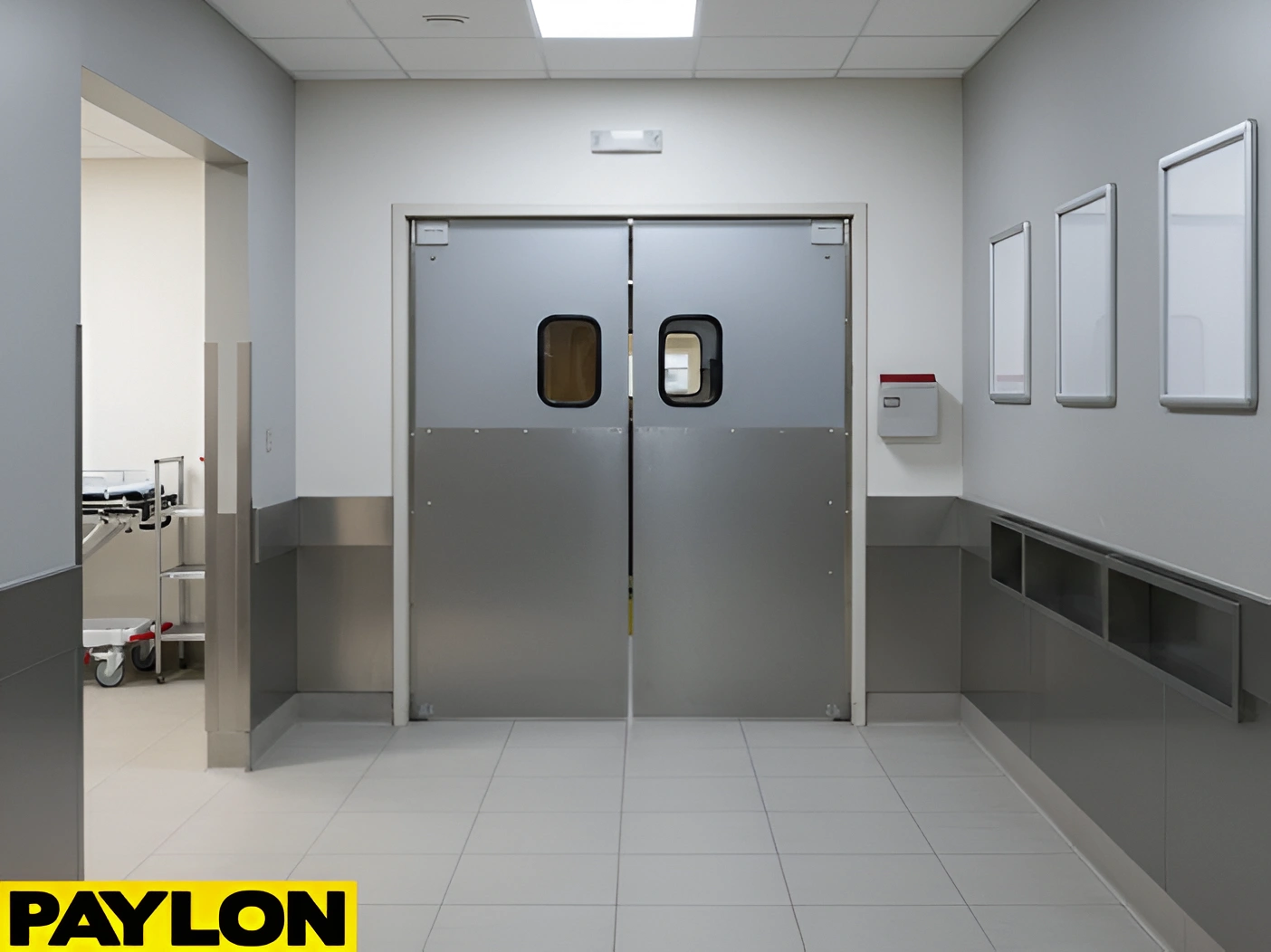
PE-710 for Frequent Back-and-Forth Access
The PE-710 is suited for service areas where movement rarely slows down. It makes sense in spaces where staff are constantly passing between rooms throughout the day.
• Designed for repeated trips between work zones
• Keeps pace with ongoing staff movement across long shifts
• Works well where access points stay active most of the day
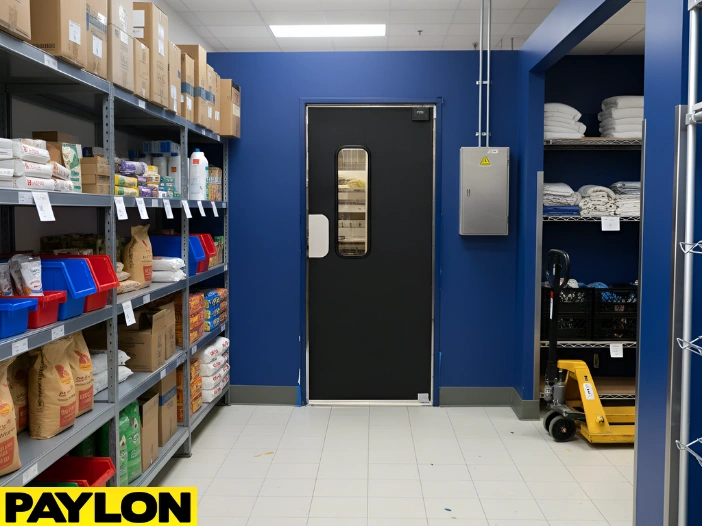
The PE-720 fits service areas that see higher traffic and faster movement. It is commonly used where activity increases during peak periods.
• Suited for service areas with higher traffic levels
• Handles times when multiple people move through together
• Fits spaces where delays are more likely during busy periods
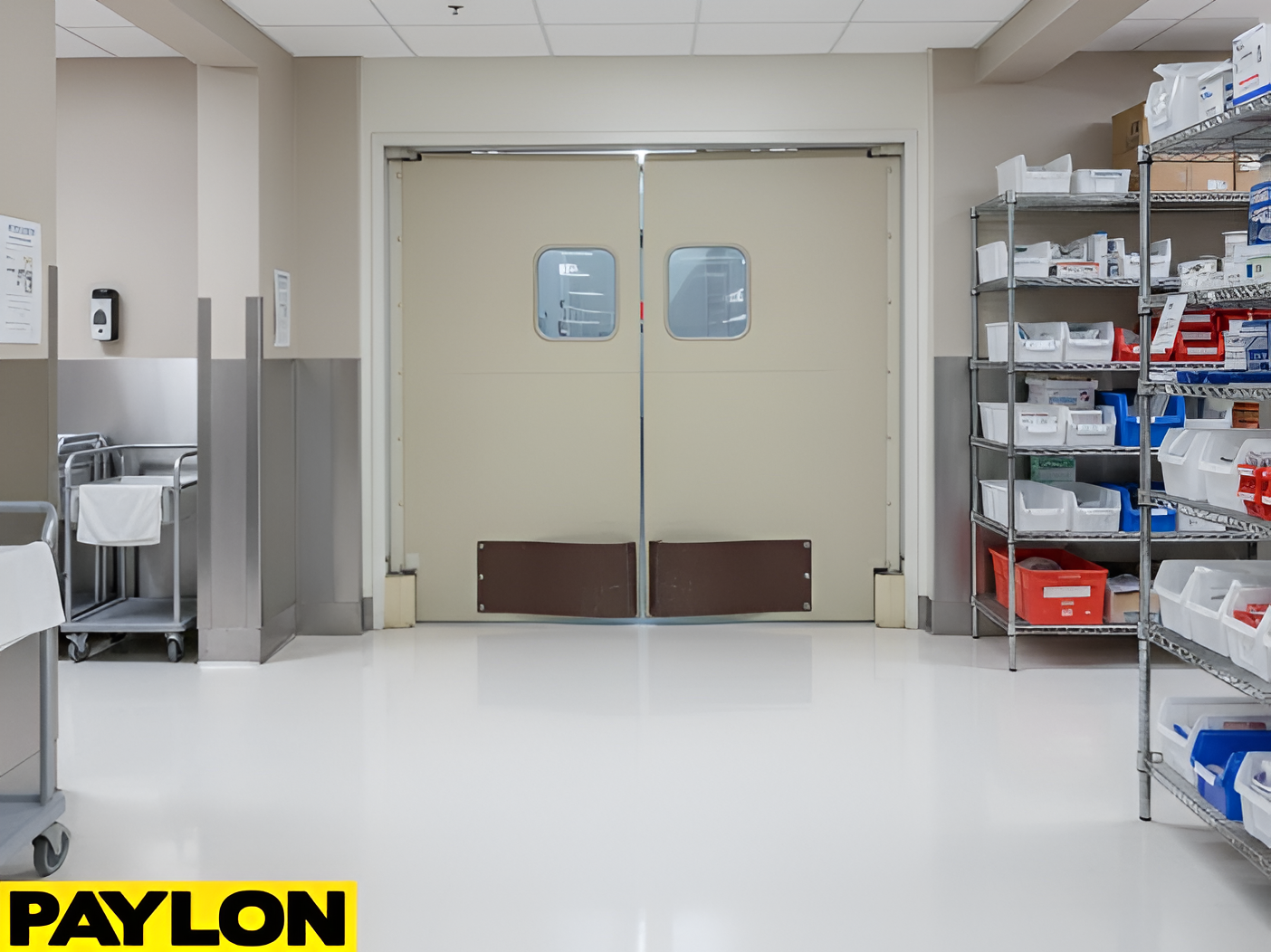
The PE-8000 is intended for service areas that face heavier daily demands. It makes sense where carts, equipment, or constant traffic place added stress on access points.
• Built for service areas handling carts or equipment movement
• Supports demanding operations with sustained daily traffic
• Fits environments where access points see constant heavy use
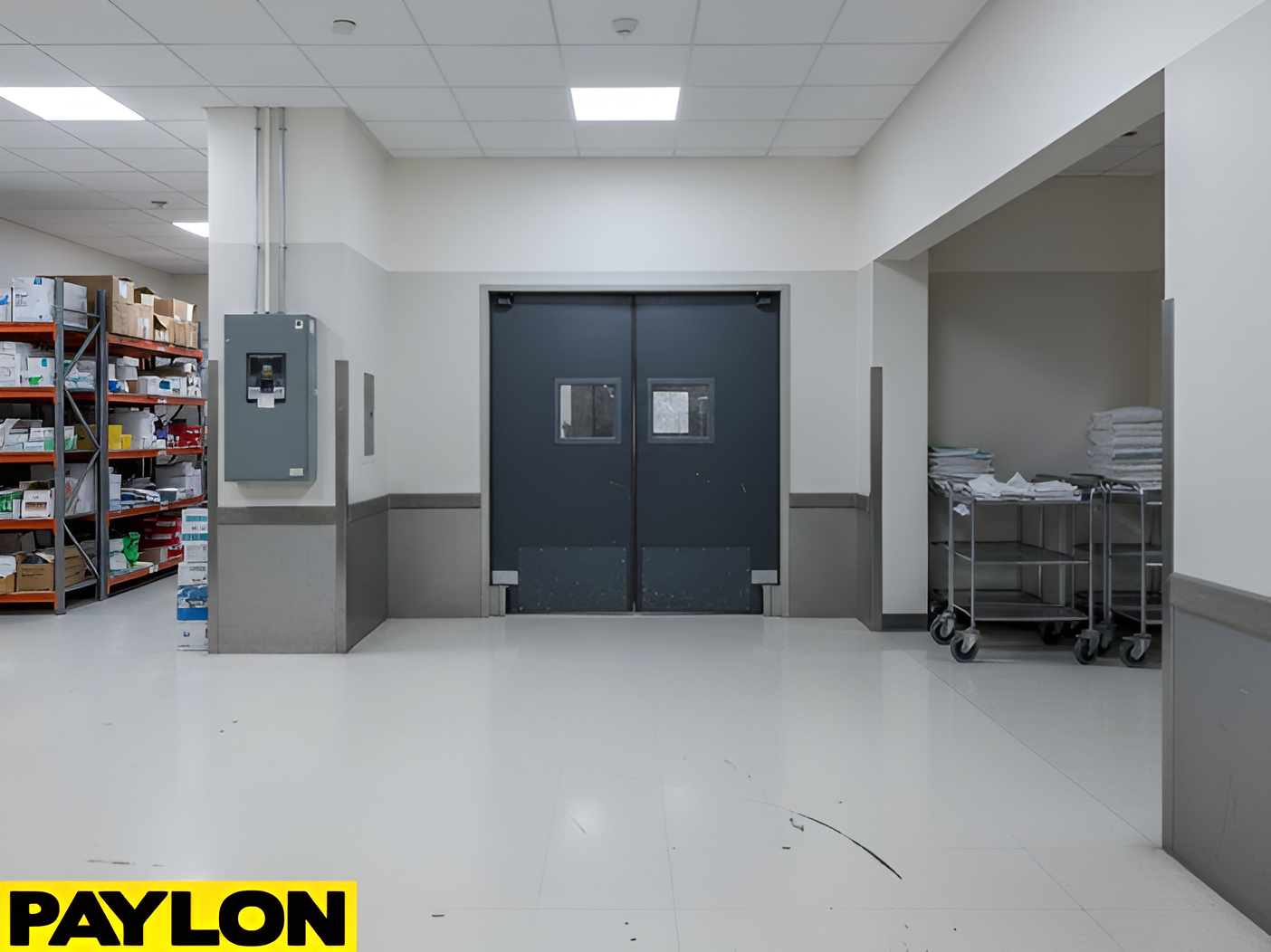
Choosing the Right Swinging Door for Your Service Area
The table below summarizes the swinging door options discussed in the previous section. It is designed as a quick reference to help match each door model to typical service area conditions without repeating earlier explanations.
| Door Model | Best For | Traffic Level | Common Service Area Use | Why It Helps Prevent Slowdowns |
|---|---|---|---|---|
| PE-620ALC | Everyday staff movement | Medium | Prep areas, back corridors | Supports steady movement without stopping |
| PE-710 | Repeated back-and-forth use | Medium to High | Staff hallways, storage access | Keeps traffic flowing during busy periods |
| PE-720 | Active service corridors | High | High-use back-of-house paths | Handles frequent movement during peak times |
| PE-8000 | Heavy carts and equipment | Very High | Receiving areas, equipment routes | Built for demanding movement without delays |
This comparison helps narrow down which swinging door aligns best with how a service area operates day to day. Once the right option is identified, the next step is understanding the characteristics that help these swinging doors maintain smooth movement and reduce interruptions across busy work zones.
Features That Help Service Areas Avoid Workflow Slowdowns
After knowing the right door type, it helps to look at the characteristics that influence how smoothly people move through busy service areas. These features do not change how work is done, but they quietly reduce friction at shared access points throughout the day.
| Feature | Why It Matters in Busy Service Areas |
|---|---|
| ✅ Vision Panels | Helps reduce hesitation at shared openings by improving visibility. Staff can time movement better and avoid abrupt stops that disrupt flow in active work zones. |
| ✅ Smooth Swing and Self-Return Action | Keeps openings usable without extra effort. Doors move easily and return to position on their own, reducing pauses from holding doors open or waiting for clearance. |
| ✅ Durable Construction | Supports consistent access over time. When doors hold up to daily use, service areas avoid interruptions from damage, temporary fixes, or restricted access. |
Together, these characteristics support steady movement without drawing attention to the door itself. When access points stay reliable and unobtrusive, service areas can maintain momentum and avoid unnecessary slowdowns during daily operations.
Frequently Asked Questions
FAQs About Swinging Doors in Busy Service Areas
Do swinging doors actually help prevent workflow slowdowns in busy service areas?
Yes. Swinging doors support continuous movement at shared access points, which helps reduce unnecessary pauses during daily operations.
Are swinging doors practical in high-traffic service areas with constant movement?
They are commonly used in high-traffic service areas because they allow people to pass through quickly without stopping or changing direction.
Which type of swinging door works best for heavy daily use?
Heavier-duty swinging door options are typically chosen for service areas that experience sustained traffic throughout long shifts.
Do swinging doors work well in service areas with carts and equipment?
Yes. Many service areas use swinging doors in spaces where carts and equipment move frequently between work zones.
How do I choose the right swinging door for my service area?
Start by looking at traffic volume, movement patterns, and how the area functions during peak periods.
Are swinging doors suitable for back-of-house service corridors?
They are widely used in back-of-house corridors where staff move continuously between rooms during daily operations.
Can swinging doors handle constant back-and-forth staff movement?
Yes. Swinging doors are designed for repeated passage and are often selected for areas with ongoing staff circulation.
Do swinging doors help manage congestion during peak service hours?
They help regulate movement at access points, which can reduce congestion when activity levels increase.
Are swinging doors easy for staff to use during busy shifts?
They allow natural movement and do not require special handling, which helps staff stay focused on tasks.
Do swinging doors work in narrow service area pathways?
They are commonly used in narrower pathways where efficient use of space and smooth movement are important.
Are swinging doors only useful in large facilities?
No. They are used in both small and large service areas wherever movement needs to stay organized.
Can swinging doors support fast-paced work environments?
Yes. They are often chosen for environments where timing, coordination, and steady movement matter.
Do swinging doors improve overall service area flow?
They help maintain consistent movement at access points, which supports smoother flow throughout the space.
Are swinging doors appropriate for areas with mixed foot traffic?
They work well in service areas where multiple people move through the same access point during the day.
Do swinging doors require special training for staff?
No. They fit naturally into daily routines and are intuitive to use.
Can swinging doors be used in both staff and service support areas?
Yes. They are commonly installed in staff corridors, prep areas, and other support spaces.
How long do swinging doors typically last in busy service areas?
Lifespan depends on usage and environment, but many options are designed to handle daily traffic over time.
Are swinging doors a good choice for improving efficiency without changing workflow?
Yes. They support existing movement patterns rather than forcing staff to adjust how they work.
What makes swinging doors a common choice for service area access points?
They balance speed, ease of movement, and reliability, which are important in busy environments.
What is the first thing to evaluate before choosing a swinging door for a service area?
Look at where slowdowns happen most often and how people move through those access points during busy periods.
Photo Gallery
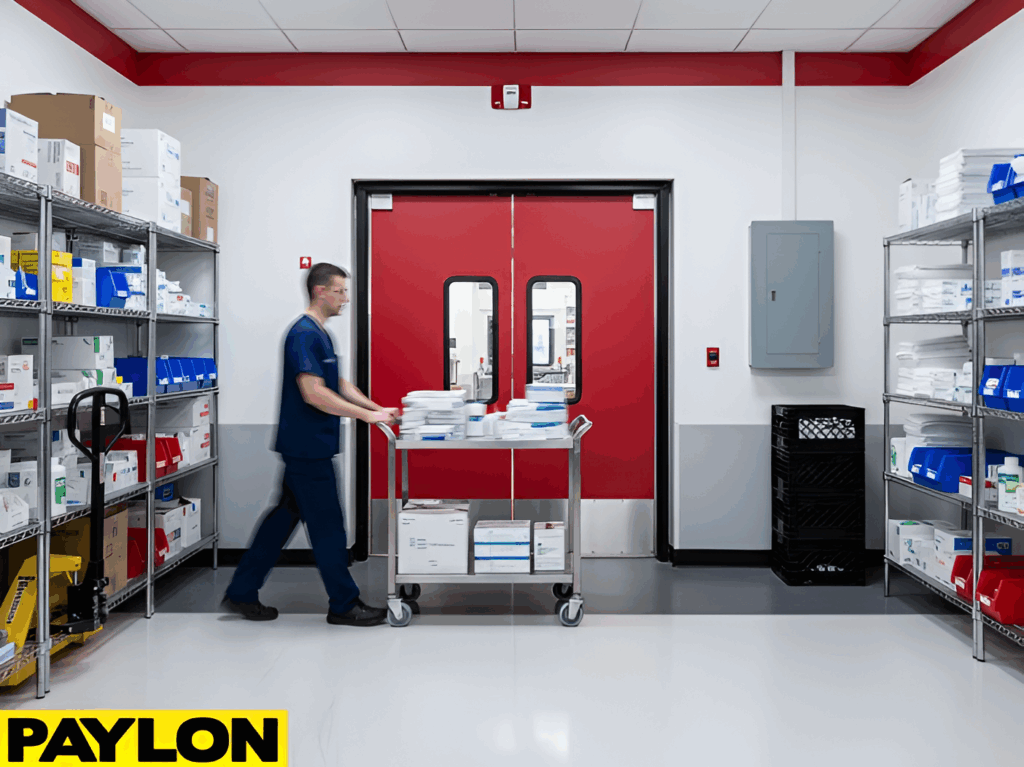
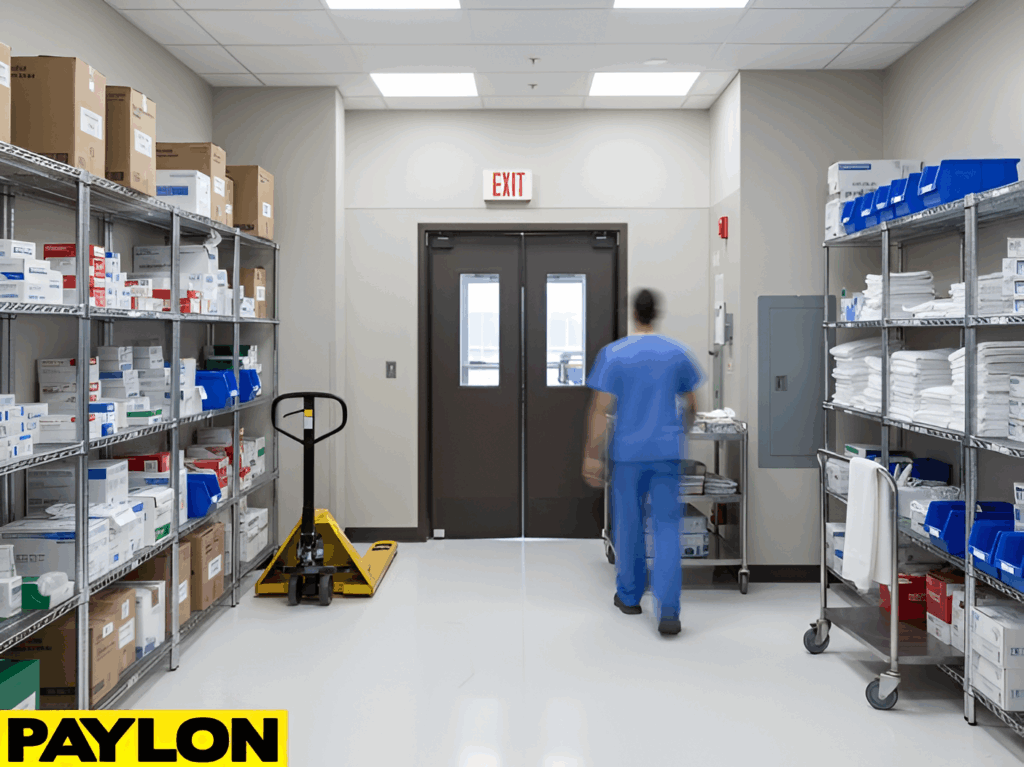
Keeping Service Areas Moving Without Disruption
Workflow slowdowns often begin at the points people move through most. In busy service areas, consistent movement matters more than anything that interrupts progress. That is why swinging doors are commonly used in these environments. They support daily momentum without changing how work gets done. If your service area experiences frequent interruptions, choosing a door that matches how the space operates can help keep work moving smoothly.
Busy Service Areas Keep Movement Flowing