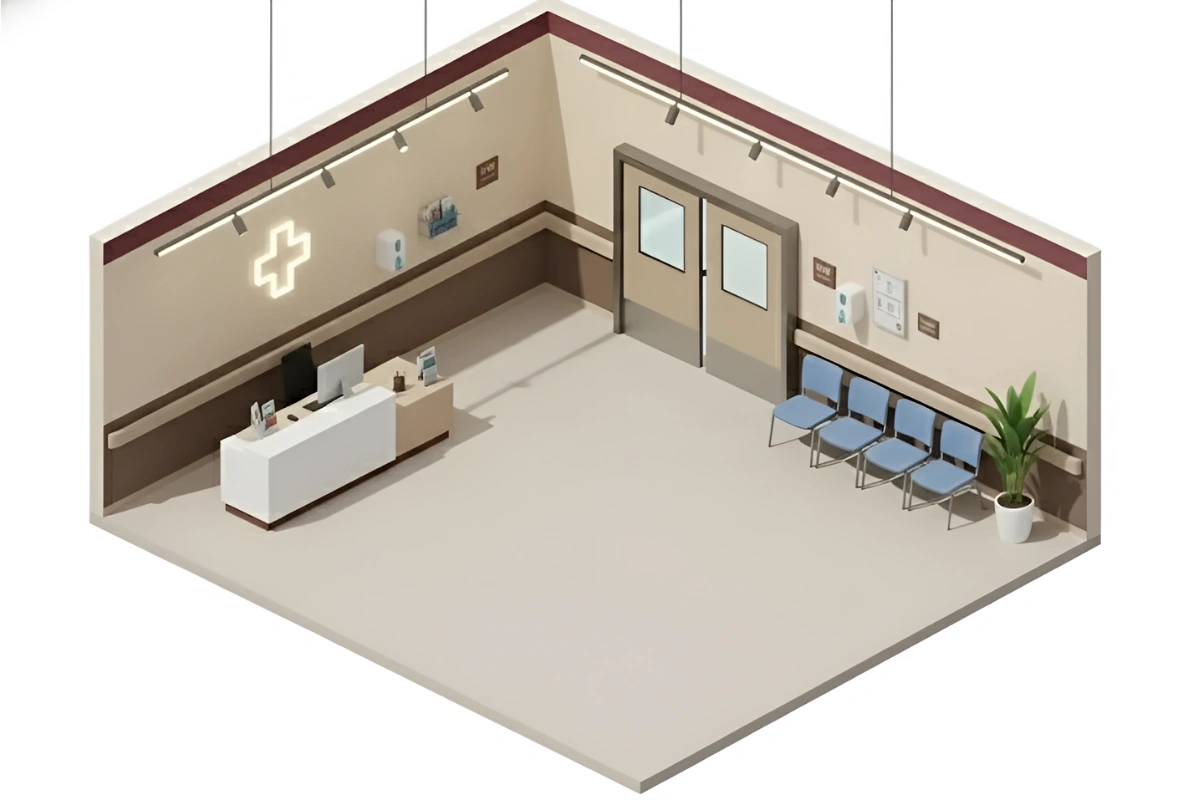
Health Facilities Swinging Doors
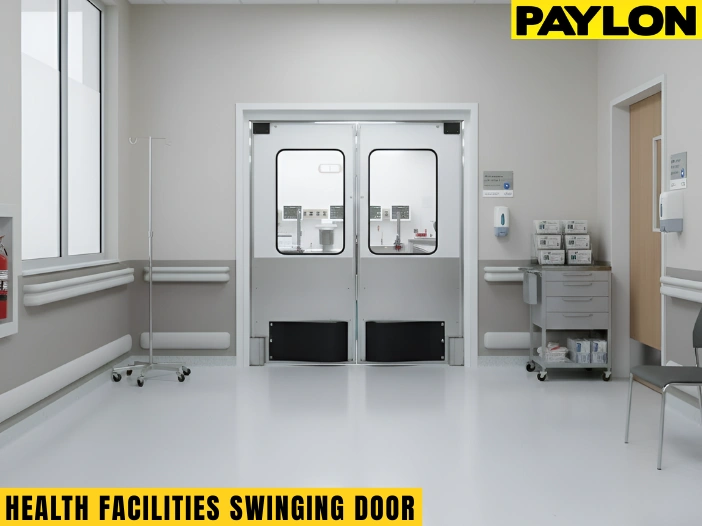
Busy health facilities often experience crowded hallways and constant movement, making it challenging for staff and patients to navigate smoothly. These pressures can slow daily operations and add unnecessary strain. This article explores why better traffic flow matters and how swinging doors offer a practical way to support safer, more efficient movement in medical environments.
Engineered for Fast, Safe Staff Movement
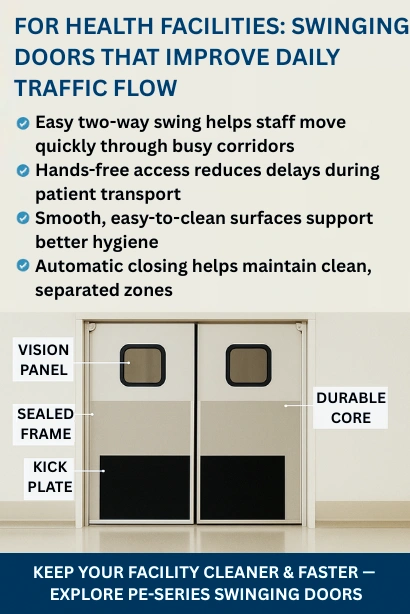
Swinging doors offer a simple upgrade that helps health facilities stay organized, hygienic, and efficient throughout the day. Their two-way swing design minimizes delays, while hands-free access supports smooth movement for staff transporting equipment or assisting patients. Easy-to-clean surfaces and automatic closing help maintain cleaner, safer spaces, especially in busy corridors. Choosing the right swinging door can make daily operations more comfortable, secure, and effective for everyone inside your medical environment.
Why Busy Health Facilities Need Better Traffic Flow Solutions
As health facilities get busier throughout the day, even small slowdowns can affect patient care and staff efficiency. Corridors often carry a constant mix of people, equipment, and daily tasks, which makes smooth movement essential. Understanding the main challenges inside these fast-moving spaces helps explain why choosing the right door system matters.
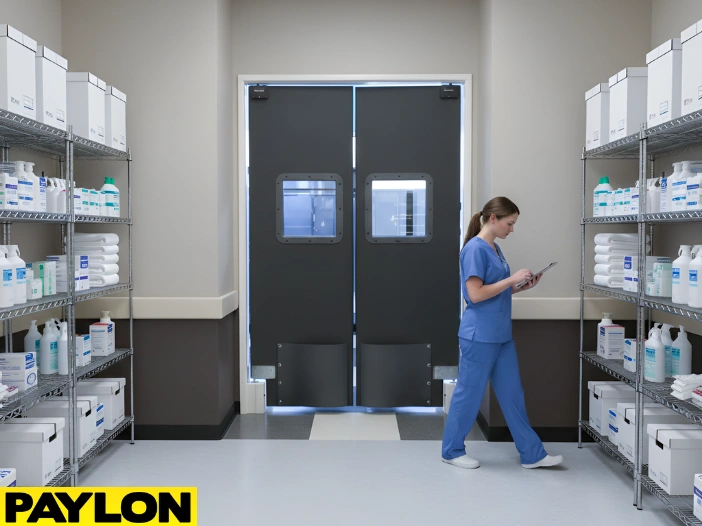
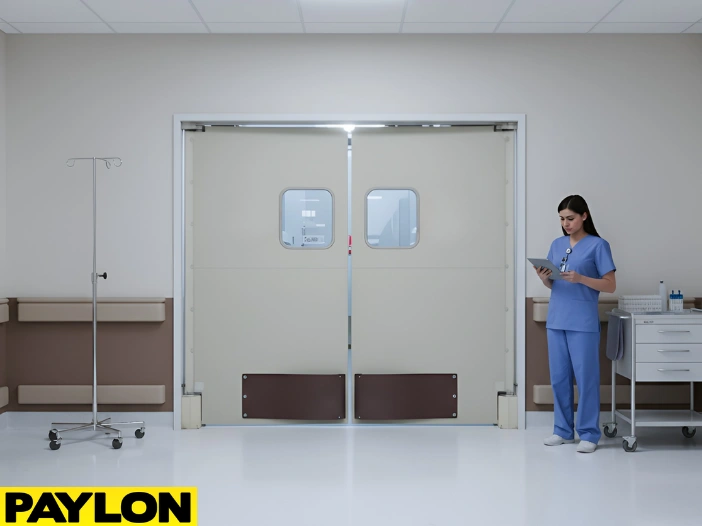
Movement Challenges in Tight Hallways
High Movement Creates Frequent Delays
Staff move through hallways constantly while assisting patients or transporting supplies. This steady activity can create slowdowns when multiple teams meet in narrow areas. Carts, wheelchairs, and stretchers add more obstacles, making it harder for everyone to pass through without interruptions.
Equipment Transport Adds Extra Congestion
Large or bulky equipment often needs to move between rooms throughout the day. When hallways are already crowded, transporting these items can block access points and slow down patient care. This makes it important for facility pathways to stay open and easy to navigate.
Cleanliness and Access Concerns
Hygiene and Access Become More Challenging
Shared doorways see nonstop contact, which increases hygiene concerns in environments where cleanliness is essential. With frequent touching, keeping surfaces sanitary becomes harder. Critical rooms also need fast entry for medical staff, making smooth access important for both safety and daily efficiency.
Frequent Use Makes Touchpoints Hard to Manage
When large teams use the same doors all day, touchpoints build up quickly, especially in high-traffic corridors. This creates more work for cleaning routines and increases the need for access systems that help limit unnecessary contact while keeping movement consistent.
Swinging Doors That Work Best for Healthcare
Choosing the right swinging door model helps busy medical spaces stay organized, hygienic, and easy to navigate. Each option offers features suited for different traffic levels and room layouts, giving health facilities dependable movement without adding extra strain to staff or patients.
The PE-620ALC is a reliable choice for everyday use in areas where staff and patients pass through constantly. It’s designed to provide a clean, professional appearance while supporting steady traffic throughout the day.
• Designed for steady daily movement in common hallways
• Smooth surfaces make routine cleaning simple
• Durable build supports continuous foot traffic
• Ideal for reception zones needing a clean, professional look
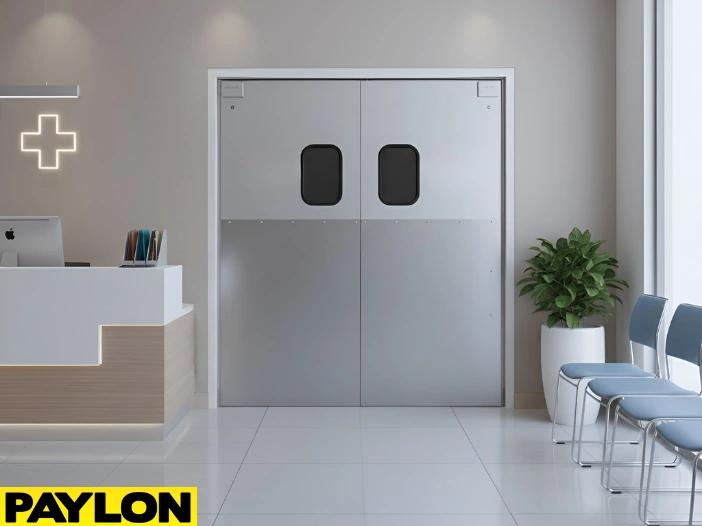
PE-710 for Compact Rooms and Medium-Traffic Spaces
The PE-710 is built for facilities that need strong performance in smaller spaces without restricting movement. Its compact design makes it ideal for rooms where every inch of clearance matters.
• Fits smaller doorways without restricting movement
• Honeycomb core provides dependable durability
• Window option improves visibility in busy areas
• Great for supply rooms, labs, and supporting staff routines
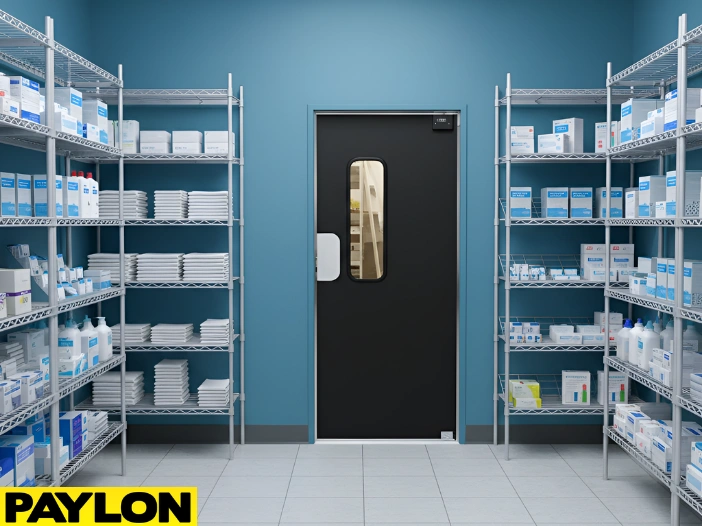
The PE-720 is tailored for spaces that experience nonstop activity throughout the day. Its durable surface and hygiene-friendly materials make it a strong fit for demanding medical environments.
• Built to stay reliable during nonstop daily activity
• ABS surface cleans quickly and supports hygiene goals
• Custom window sizes improve sightlines for safer movement
• Perfect for labs and central corridors with heavy use
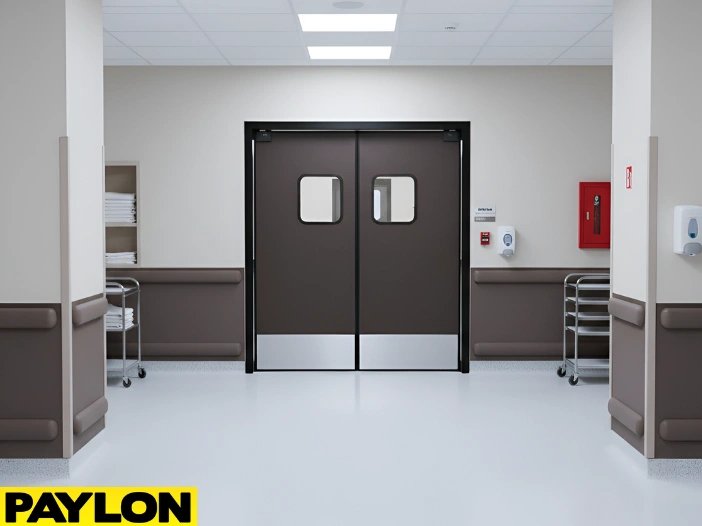
The PE-8000 offers the durability needed for areas where equipment impact, heavy loads, and intense daily movement are common. It’s engineered to support high-pressure hospital operations with a stronger core and larger sizing options.
• Strong core handles equipment impact and constant activity
• Wide sizing options help move large items easily
• Smooth return swing keeps pathways clear for staff
• Best for ER pathways, storage areas, and operational zones
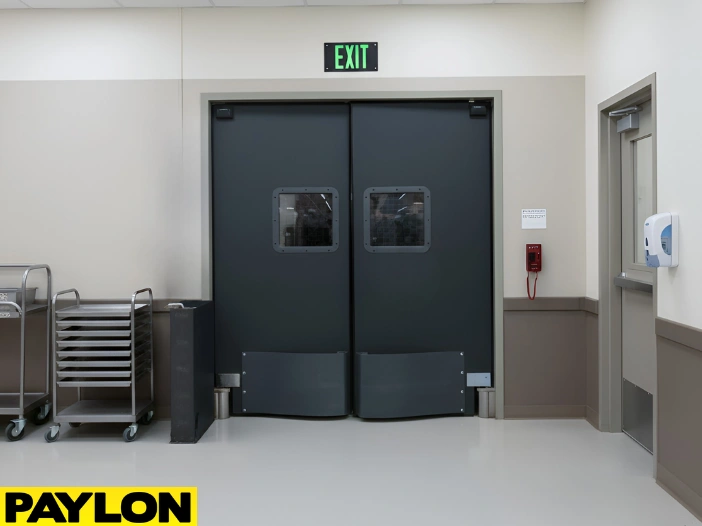
Find the Right Swinging Door for Your Facility
Choosing the right swinging door is easier when you can compare each model side by side. The table below gives a clear look at what each option offers so you can quickly identify which door best fits your medical environment.
| Model | Best For | Key Features | Ideal Environment | Material | Max Size |
|---|---|---|---|---|---|
| PE-620ALC | General corridors and waiting areas | Wood core, aluminum sides, stainless steel kick plates, customizable window sizes | Hospitals, clinics, reception zones | Wood core with aluminum sides | 96" × 96" |
| PE-710 | Smaller rooms and supply areas | Compact ¾" honeycomb core, thermoplastic skin, optional window for visibility | Labs, storage rooms, pharmacy spaces | Honeycomb core with thermoplastic skin | 48" × 96" |
| PE-720 | High-traffic corridors and labs | 5/8" ABS plastic, durable surface, easy to clean, optional window customization | Central hallways, labs, busy care areas | ABS with thermoplastic finish | 96" × 96" |
| PE-8000 | Heavy-duty, high-traffic operations | Urethane foam core, industrial-grade build, larger panel sizes for demanding use | ER pathways, storage areas, back-of-house | ABS with urethane foam core | 48" × 120" |
Each model brings something different to the table, making it easier for health facilities to choose a door that supports daily movement, hygiene needs, and durability. Understanding these differences helps ensure your facility selects a swinging door that can keep up with constant activity and maintain smooth, reliable flow throughout the day.
How Swinging Doors Support Daily Operations in Health Facilities
Once the right swinging door model is chosen, the next step is understanding how these doors actively support everyday movement inside a medical environment. Their design offers practical advantages that go beyond convenience, helping staff work efficiently while keeping patient areas safer and more comfortable.
| Feature | Why It Matters in Health Facilities |
|---|---|
| ✅ Two-way swing for smoother movement | Allows staff to move in both directions without stopping to open heavy doors, which helps reduce hallway bottlenecks during busy times. |
| ✅ Hands-free or easy push operation | Lets staff guide patients, carts, and equipment safely while keeping both hands on what they are handling, supporting faster, more controlled movement. |
| ✅ Automatic closing action | Helps doors return to a closed position after use, which supports cleaner, more separated zones and limits unwanted airflow between sensitive areas. |
| ✅ Smooth, hygienic surfaces | Flat, non-porous panels are easy to wipe down, making it simpler to follow cleaning routines and support infection control across high-traffic spaces. |
| ✅ Accessible, comfort-focused design | Wide swinging openings support wheelchairs, stretchers, and visitors, improving comfort and access for everyone moving through the facility each day. |
These features work together to give health facilities a smoother, safer, and more efficient flow throughout the day. By focusing on movement, hygiene, and accessibility, swinging doors help medical environments stay organized and supportive for both staff and patients.
Frequently Asked Questions
FAQs – Swinging Doors for Health Facilities
What types of swinging doors work best in hospitals?
Hospitals benefit most from durable models like the PE-620ALC for general corridors, the PE-710 for compact rooms, the PE-720 for high-traffic hallways, and the PE-8000 for heavy-duty back-of-house areas. Each model supports different traffic levels to keep movement smooth throughout the facility.
How do swinging doors help improve hygiene in medical environments?
Swinging doors limit hand contact, close smoothly behind staff, and have easy-to-clean surfaces. Models like the PE-720 and PE-620ALC use hygienic materials that help reduce contamination risks in busy care areas.
Can swinging doors be customized for different hospital departments?
Yes. All models, including the PE-710 and PE-8000, can be customized with window sizes, finishes, and hardware options to fit the needs of patient areas, labs, storage rooms, or ER pathways.
Are swinging doors suitable for sterile or restricted zones?
They can be. Doors like the PE-720 feature cleanable surfaces and smooth operation, making them suitable for zones that rely on quick access while maintaining sanitary conditions.
How durable are swinging doors in high-traffic corridors?
High-traffic models such as the PE-720 and PE-8000 are built with strong cores and reinforced surfaces that stand up to carts, equipment, and constant daily movement.
Do swinging doors help reduce bottlenecks in busy hallways?
Yes. Their two-way swing and hands-free operation keep staff moving smoothly, especially when transporting patients or equipment.
Are vision panels important in medical swinging doors?
Vision panels improve visibility and safety by helping staff see oncoming traffic. They’re available on all models, including the PE-620ALC and PE-710.
Can these doors help reduce noise in patient areas?
Yes. Models like the PE-710 and PE-620ALC offer quieter swing action, helping create a calmer atmosphere near patient rooms and waiting areas.
Are swinging doors easy to clean in fast-paced environments?
Absolutely. Surfaces on doors like the PE-720 and PE-8000 are designed to wipe clean quickly, helping teams keep hygiene standards on track.
How do swinging doors support accessibility for wheelchairs and stretchers?
Their two-way swing and wide openings make it easier to move patients or large equipment through halls without stopping to operate a handle.
Can swinging doors improve staff workflow in emergency areas?
Yes. The PE-8000 is especially helpful in ER pathways because its strong core and smooth return swing keep movement efficient during high-pressure situations.
Are these doors safe for pediatric or senior-care areas?
Yes. Their soft-close motion, clear visibility, and smooth surfaces help reduce accidents and support safer navigation for both staff and patients.
Do swinging doors help separate clean and soiled zones?
Yes. Automatic closing helps maintain proper separation between clean rooms, prep areas, and soiled utility spaces.
Are these doors compatible with high-moisture areas like labs or washdown rooms?
Models like the PE-720 and PE-8000 can withstand moisture, frequent cleaning, and daily sanitation routines.
Can swinging doors handle equipment impact?
Yes. The PE-8000’s reinforced structure and sturdy core are designed for areas where equipment or carts may make contact.
Do these doors support infection-control goals?
They help by limiting touchpoints, closing automatically, and offering smooth materials that resist buildup, especially in high-contact zones.
Are swinging doors a good fit for pharmacy or storage spaces?
Yes. The compact PE-710 works especially well in smaller rooms where space is tight but frequent access is needed.
Can swinging doors be designed to match existing facility aesthetics?
Yes. PE-Series doors come in various finishes and window options so facilities can match their interiors without sacrificing durability.
How long do swinging doors typically last in medical environments?
With their strong cores and durable surfaces, models like the PE-720 and PE-8000 are built to withstand years of daily use in demanding spaces.
How do I know which swinging door model is right for my facility?
It depends on your traffic level. The PE-620ALC suits general areas, the PE-710 fits compact rooms, the PE-720 handles heavy hallway flow, and the PE-8000 supports demanding back-of-house operations.
Photo Gallery
Why Upgrading to the Right Swinging Door Matters
Choosing the right swinging door can make a meaningful difference in how smoothly a health facility operates each day. With models designed to improve movement, reduce touchpoints, and support cleaner, more organized spaces, these doors help staff work efficiently while keeping patient areas comfortable and safe. If your facility is experiencing crowded hallways or slow access points, reviewing your current door setup is a simple first step toward better flow. Exploring PE-Series options can help you find a model that fits your traffic levels and supports a more reliable, patient-friendly environment.
Clean, Organized Healthcare Reception Area