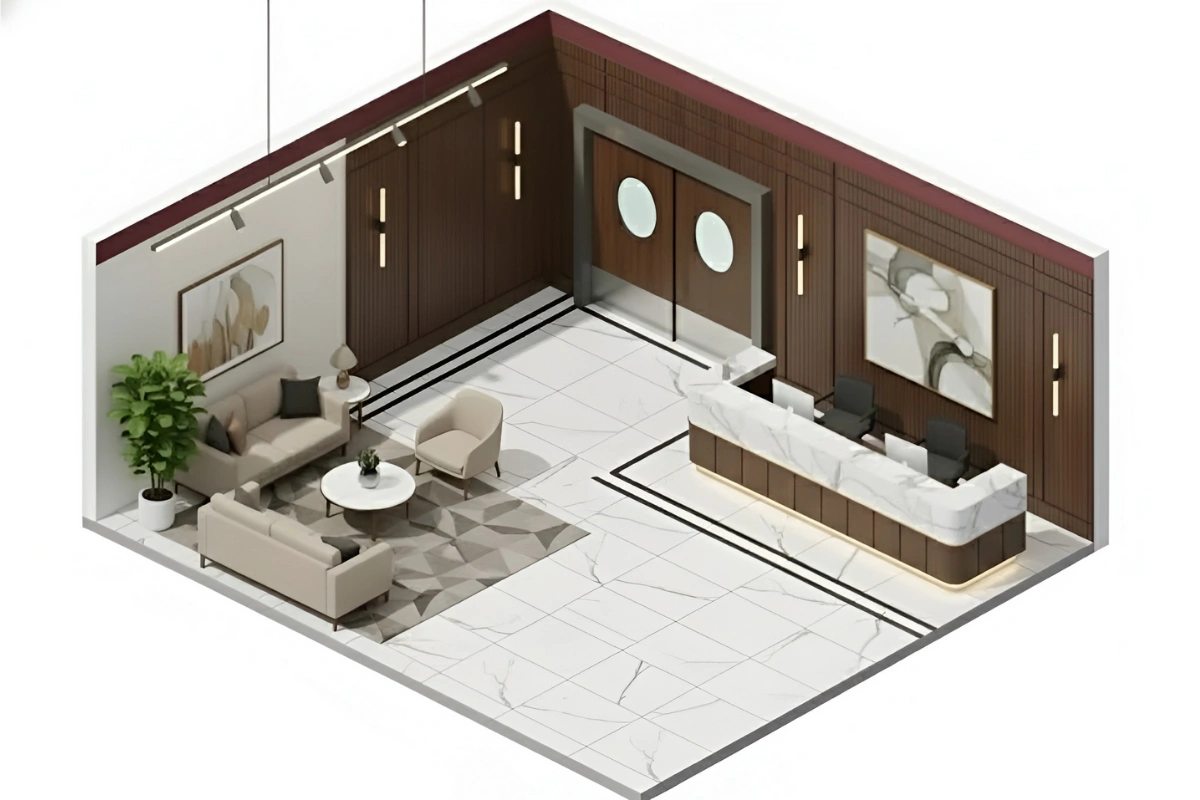
Hotel Reception Swinging Doors
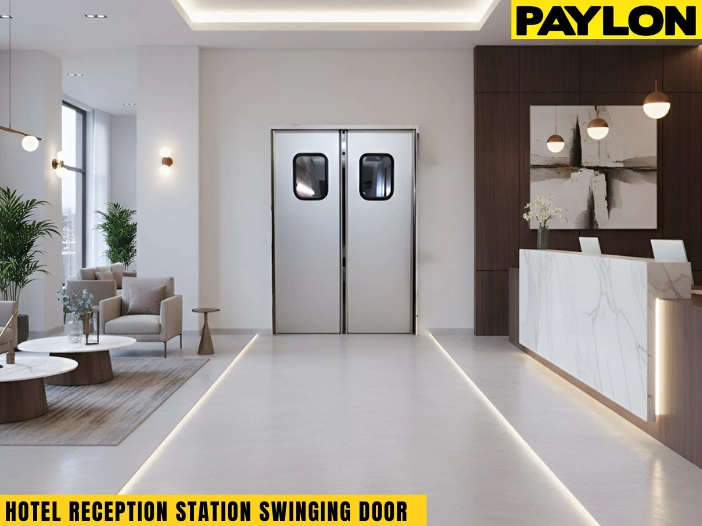
Hotel reception areas often experience congestion as guests, staff, and service traffic converge near the front desk. This article explains why traffic builds up, how hotels use swinging doors to guide movement, and which door options work best for busy reception layouts. You will also find common traffic challenges, practical solutions, and answers to frequently asked questions.
Built to Support Smooth Guest Flow
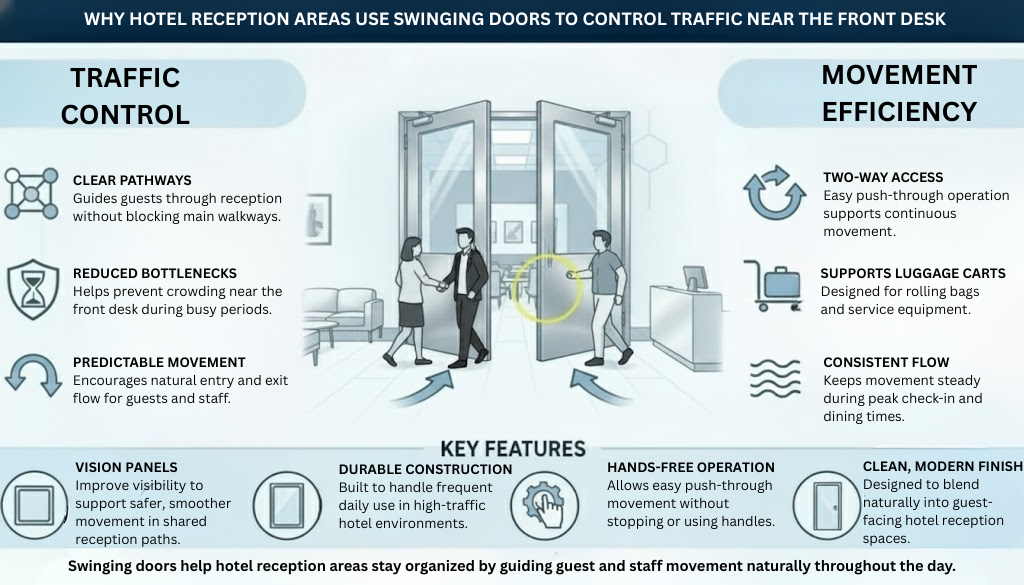
Busy hotel reception areas often struggle with congestion, especially during peak check-in times. Swinging doors help control traffic near the front desk by guiding guests and staff through clear pathways without blocking movement. By supporting smooth, two-way access for people and luggage carts, these doors reduce bottlenecks, improve flow, and create a more organized reception experience. It’s a simple design choice that makes a noticeable difference in daily hotel operations.
Why Traffic Builds Up Near the Front Desk
The front desk brings together several activities in one place, which makes it especially prone to congestion during busy periods. As guests, staff, and service traffic move through the same area, even small delays can add up and disrupt movement around reception.
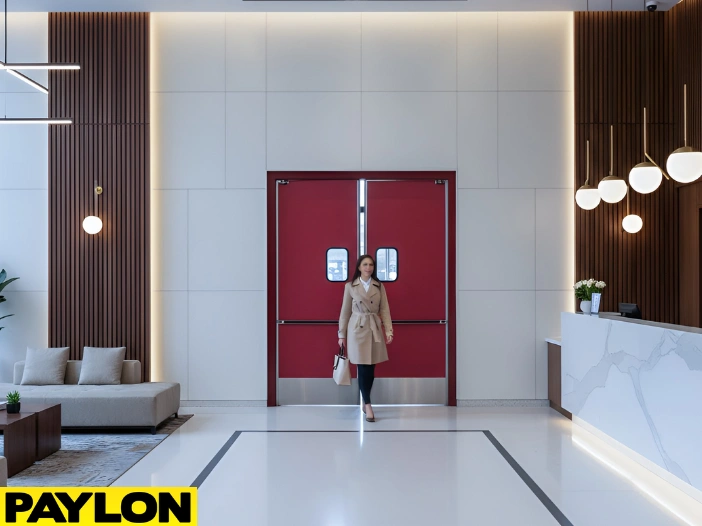

Guest Activity During Check-In and Check-Out
Guest Arrivals and Departures
Traffic often increases when multiple guests arrive or leave at the same time. Check-in and check-out windows bring groups of people to the front desk within short time frames, which raises foot traffic near reception and surrounding walkways.
Brief Stops That Slow Movement
Guests may pause to wait for assistance, ask quick questions, or complete paperwork near the desk. While these stops are usually short, they can interrupt the flow of others passing through the area, especially when small lines form close to main paths.
Staff Movement and Luggage Traffic in Shared Paths
Staff Movement Near the Front Desk
Hotel staff regularly move through the reception area to assist guests, manage front desk tasks, and support nearby service needs. This constant back-and-forth is necessary for daily operations and becomes more noticeable during peak activity times.
Luggage Carts in Shared Walkways
Luggage carts often travel along the same routes as guests on foot, adding another layer of traffic. When carts, staff, and guests share limited space, movement can slow quickly, making congestion harder to manage during busy periods.
Recommended Swinging Doors for Hotel Reception Areas
Once traffic challenges near the front desk are clear, choosing the right swinging door comes down to matching the door to the layout, traffic level, and guest-facing needs of the space. These options are commonly used in hotel reception areas because they support smooth movement while fitting naturally into public environments.
The PE-510ALC is a practical option for hotel reception areas that experience steady but manageable foot traffic. It is well suited for layouts where ease of movement and simplicity matter most.
• Best suited for lighter to moderate traffic near hotel reception areas
• Allows guests and staff to move through without added resistance
• A practical choice for hotels that need reliable performance without overbuilding
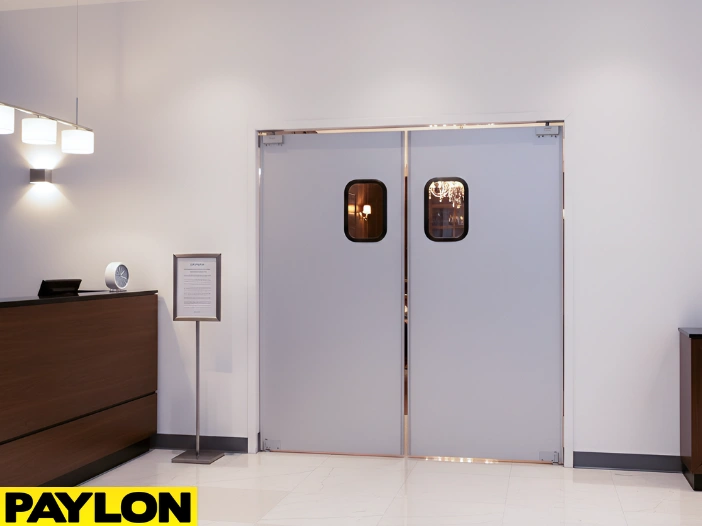
The PE-510HPL is designed for reception areas where appearance plays an important role in the guest experience. Its finish helps the door blend into visible areas while still supporting daily use.
• Designed for reception spaces where appearance is a priority
• High-pressure laminate finish complements guest-facing interiors
• Balances durability with a clean, professional look
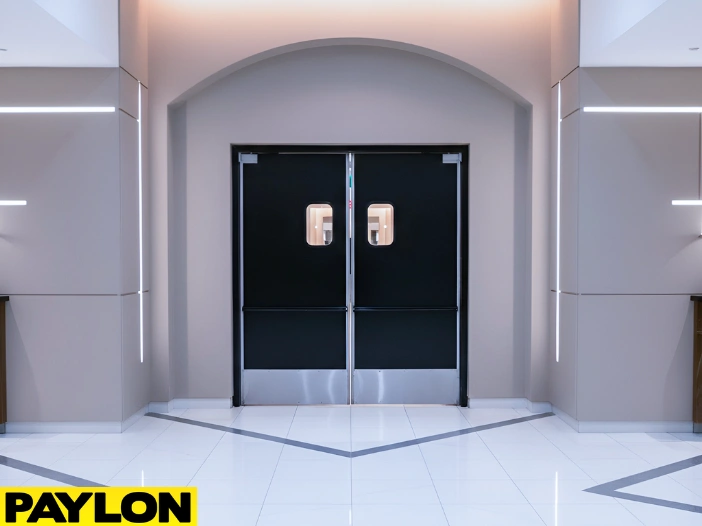
The PE-625HPL works well in hotel reception areas that see frequent movement throughout the day. It offers added strength while maintaining an appearance suitable for public-facing spaces.
• Built for reception zones with steady, higher-volume foot traffic
• Provides added durability for consistent daily use
• Maintains a refined look in busy hotel environments
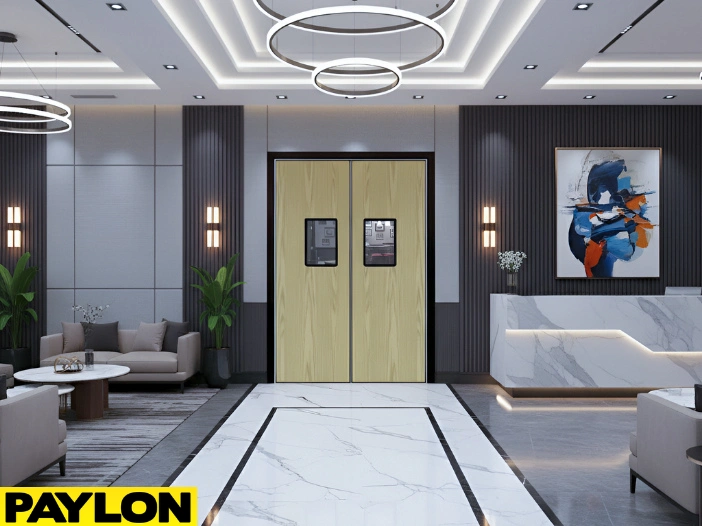
PE-630HPL for Wide Openings and Heavy Traffic
The PE-630HPL is ideal for hotel reception layouts that include wider openings or higher traffic demands. It supports frequent use while helping maintain predictable movement near the front desk.
• Well suited for wider reception openings and heavier traffic flow
• Handles frequent use without disrupting movement patterns
• Fits hotel layouts that require dependable performance throughout the day
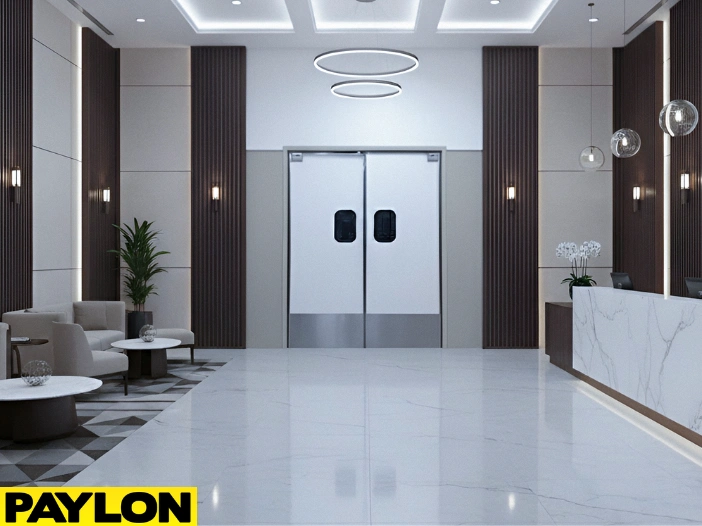
Common Hotel Reception Traffic Situations
The table below highlights typical areas and moments where congestion forms near hotel front desks. These situations are common in busy reception layouts and often point to the need for clearer traffic guidance.
| Reception Situation | Common Traffic Issue | Resulting Challenge |
|---|---|---|
| Peak check-in periods | Guests gather near the front desk | Walkways become crowded |
| Guests waiting for assistance | People stop in main paths | Movement slows for others |
| Staff moving through reception | Staff and guests cross paths | Confusion and interruptions |
| Luggage carts passing through | Carts share space with foot traffic | Bottlenecks form quickly |
| Activity near service paths | Multiple movements overlap | Flow becomes unpredictable |
These situations show how quickly congestion can develop when guest and staff movement overlaps near the front desk. While layouts and traffic levels may vary, the underlying challenges are often the same. In the next section, we’ll explain how swinging doors influence movement behavior and help guide traffic more naturally in busy hotel reception areas.
How Swinging Doors Control Traffic Near the Front Desk
Swinging doors help manage movement near the front desk by shaping how people naturally move through the space. Instead of relying on signs or constant staff direction, their placement creates clear pathways that feel intuitive for guests and practical for daily hotel operations.
| Feature | Why It Matters in Hotel Reception Areas |
|---|---|
| ✅ Natural entry and exit points | Helps guide guests through the most obvious route, reducing unnecessary stopping and side movement near the front desk. |
| ✅ Clear, predictable guest pathways | Encourages steady traffic patterns so guests move with less hesitation and main walkways stay open during busy periods. |
| ✅ Separation of guest and staff movement | Supports smoother operations by reducing cross traffic, so staff can move efficiently without disrupting the guest flow. |
| ✅ Smoother movement during peak activity | Allows quick two-way access without forcing people to stop and pull a door, helping reception traffic stay consistent when volume is highest. |
By guiding movement rather than forcing it, swinging doors help reception areas feel easier to navigate throughout the day. Guests move with more confidence, and staff can support operations without unnecessary interruptions. In the next section, we’ll answer common questions hotels have about using swinging doors near the front desk.
Frequently Asked Questions
FAQs About Swinging Doors in Hotel Restaurant Areas
Are swinging doors a good fit for hotel reception areas?
Yes. Swinging doors are a good fit for hotel reception areas because they help guide guest and staff movement near the front desk without creating visual or physical barriers.
Do swinging doors work well in guest-facing hotel spaces?
They do. Many hotels use swinging doors in guest-facing reception areas because the doors support steady traffic while blending into public spaces.
Can swinging doors help manage traffic near dining and service paths?
Yes. In hotels where reception areas connect to dining or service paths, swinging doors help guide movement so traffic stays organized without drawing attention to the separation.
Will swinging doors slow guests down at the front desk?
No. Swinging doors are designed for hands-free, two-way use, allowing guests to move naturally through reception areas without stopping.
Are swinging doors easy for guests to use?
Yes. Swinging doors use a simple push-through design, making them easy for guests of all ages to use without instructions.
Can swinging doors handle luggage carts and rolling bags?
Yes. Swinging doors used in hotel reception areas are commonly designed to accommodate luggage carts, rolling bags, and service equipment moving through the space.
Are swinging doors suitable for busy hotels with constant traffic?
They are. For higher-traffic reception areas, hotels often choose models built for frequent daily use, such as the PE-625HPL or PE-630HPL.
Do swinging doors create noise in hotel reception areas?
Modern swinging doors are built for smooth operation and typically open and close quietly when properly installed.
Will swinging doors affect the look of the reception area?
Swinging doors are available in finishes designed to complement hotel interiors, which helps them blend naturally into guest-facing spaces.
Can swinging doors be customized to match hotel interiors?
Yes. Options like the PE-510HPL and PE-625HPL are often chosen because they offer finishes that align well with reception design themes.
Do swinging doors require frequent maintenance in hotel settings?
Swinging doors used in reception areas are designed for durability and usually require minimal routine maintenance.
Are swinging doors safe for guests and staff near the front desk?
Yes. Swinging doors are commonly used in hospitality environments because they support predictable movement and visibility in busy areas.
Can swinging doors help staff move more efficiently near reception?
Yes. Swinging doors allow staff to move between reception and nearby service areas without interrupting guest flow or stopping to operate traditional doors.
Do swinging doors work in smaller hotel reception layouts?
They can. Models like the PE-510ALC are often used in reception areas with lighter traffic and more compact layouts.
Are swinging doors suitable for wider reception openings?
Yes. For wider openings and heavier traffic demands, hotels often choose models like the PE-630HPL.
Will swinging doors block visibility across the reception area?
Many swinging doors can be configured to maintain visibility, which helps support awareness and smooth movement near the front desk.
Can swinging doors be added to existing hotel reception layouts?
In many cases, swinging doors can be integrated into existing reception layouts without major changes to the space.
How do hotels choose the right swinging door model for reception areas?
Hotels typically choose a swinging door based on traffic volume, opening size, and whether the door is placed in a guest-facing location.
Are swinging doors only used in large hotels?
No. Hotels of many sizes use swinging doors near reception areas to help guide movement and manage daily traffic.
Which swinging door model works best for busy hotel reception areas?
For busy hotel reception areas, models like the PE-625HPL and PE-630HPL are commonly used because they are designed for higher traffic volumes and frequent daily use.
Photo Gallery
Creating a Smoother Reception Experience
Traffic near the front desk shapes both the guest experience and the rhythm of daily hotel operations. When movement feels crowded or uncertain, even well-designed reception spaces can lose their sense of ease. Swinging doors support a more intuitive flow by aligning with how people naturally move through shared areas. With the right placement and door selection, hotels can create reception layouts that feel calmer, easier to navigate, and better suited to modern hospitality environments.
Reception Traffic Flow