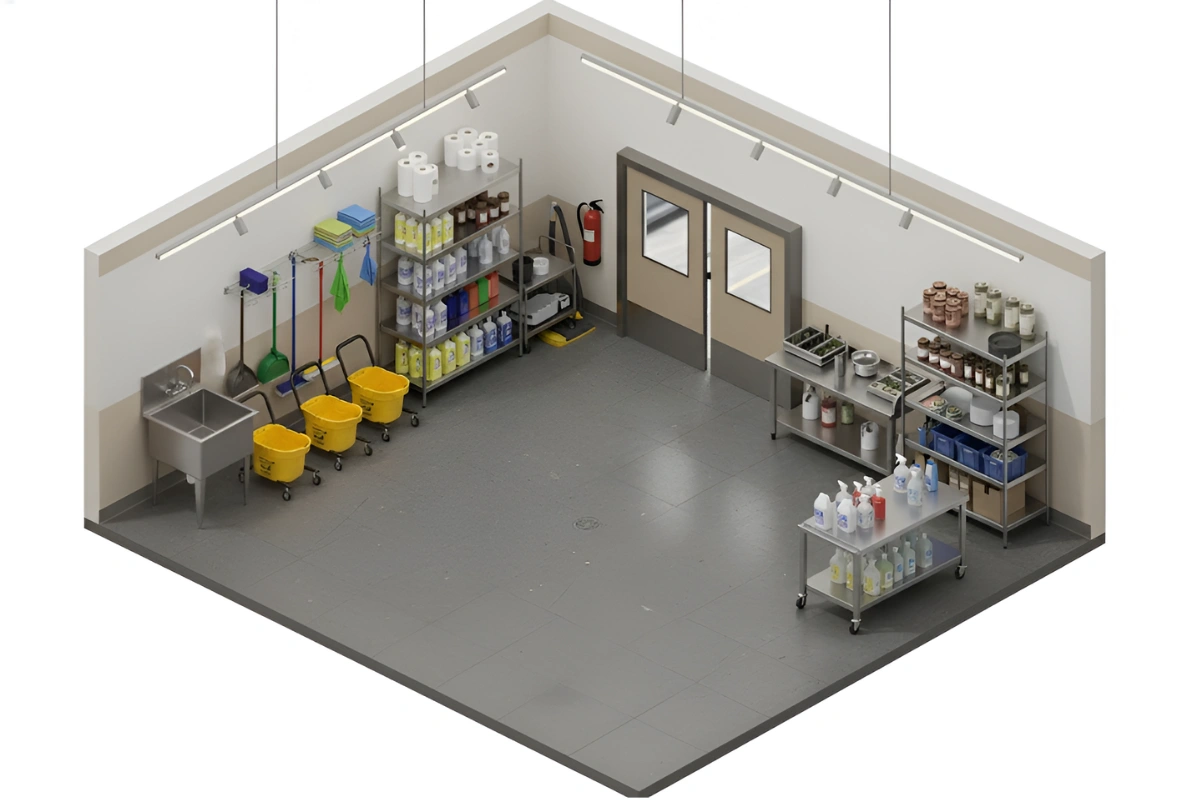
Janitor Closet Swinging Doors
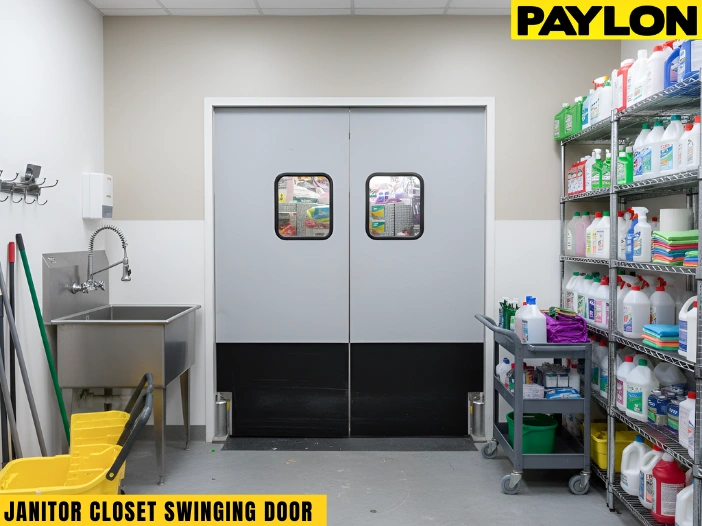
Janitor closet spaces use swinging doors to support constant staff movement, hands-full tasks, and safety needs in busy maintenance areas. This article explains the challenges inside janitor closets, outlines swinging door options by traffic level, shows how they improve workflow, and answers common questions to help choose the right solution.
Built for Safer Maintenance Spaces
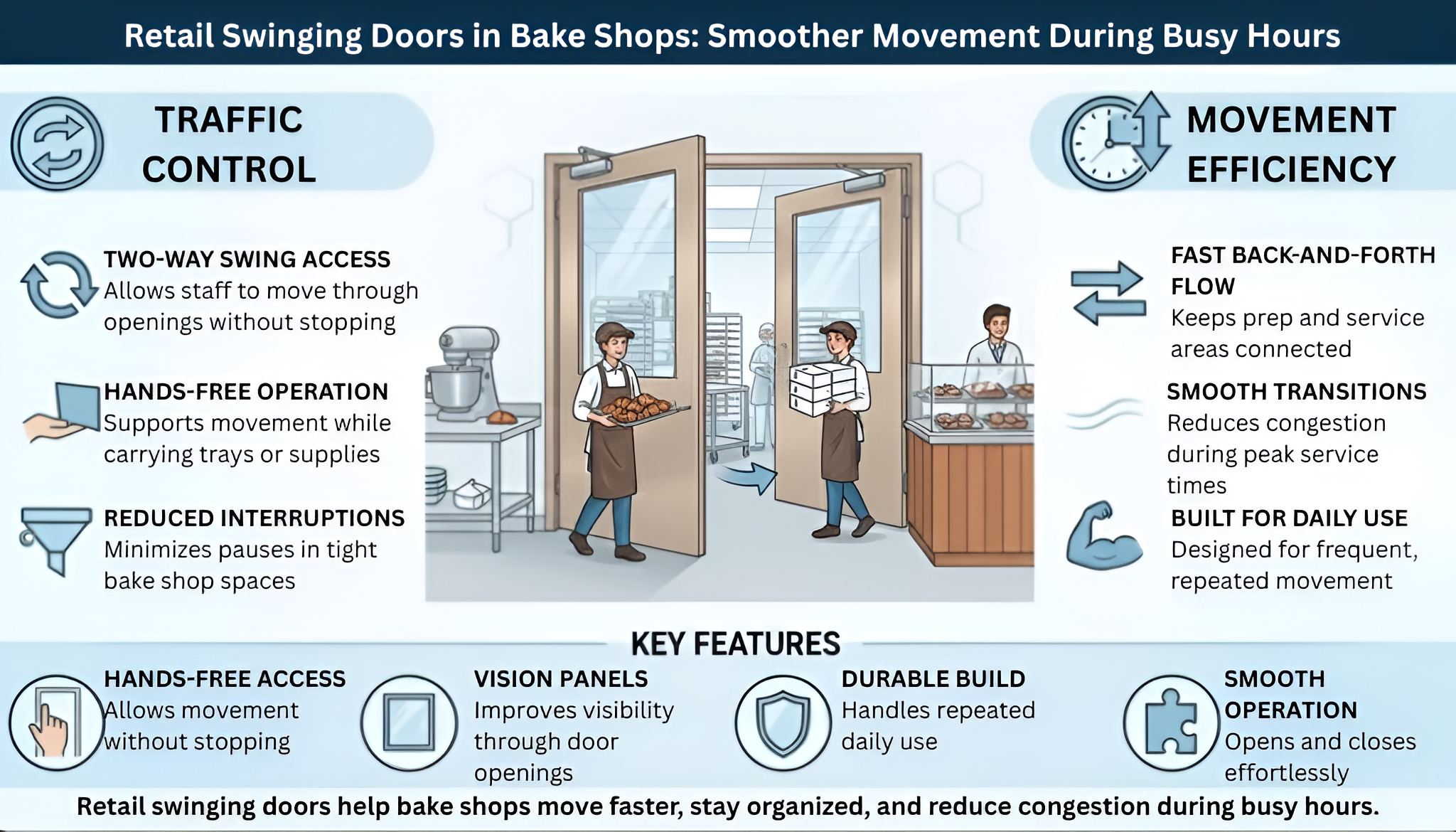
Busy janitor closet spaces require doors that keep up with constant movement, safety concerns, and daily cleaning routines. Swinging doors are designed to support hands-full staff, reduce congestion, and improve workflow in tight maintenance areas. By allowing smooth two-way access and minimizing contact points, the right swinging door helps create safer, more efficient maintenance spaces without slowing down operations. Choosing the right option depends on traffic level, space layout, and daily use demands.
Challenges Inside Busy Janitor Closet Spaces
Before choosing a door solution, it is important to understand the conditions inside busy janitor closet spaces. These areas support daily cleaning tasks and ongoing maintenance activity, which creates challenges related to movement, space, safety, and access when traditional door setups are used.
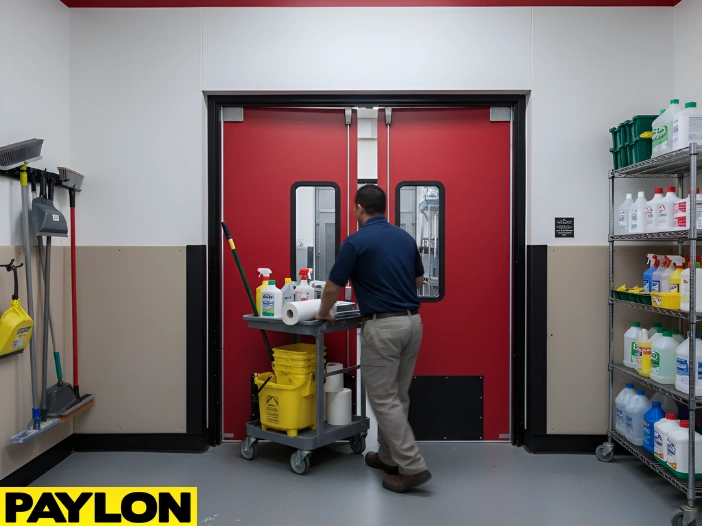
Constant Movement in Tight Maintenance Spaces
Frequent In and Out Movement Throughout the Day
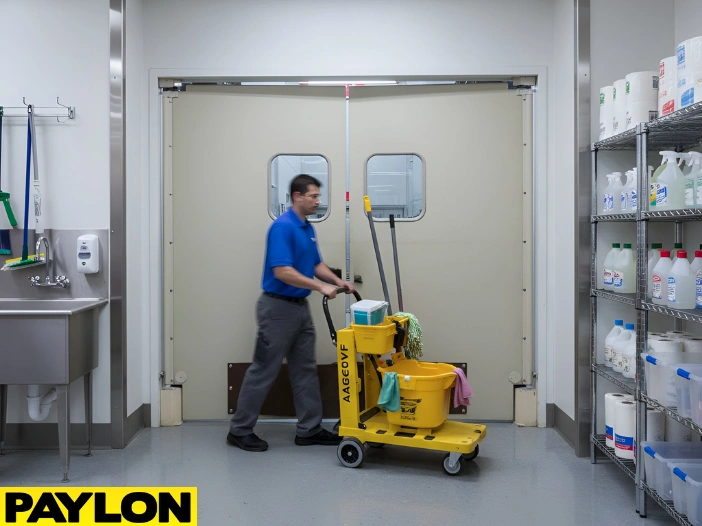
Janitor closets experience steady in and out movement as staff retrieve supplies, return equipment, and manage waste during daily operations. These trips often occur during active business hours rather than downtime, increasing pressure on maintenance routines and making smooth access more difficult to maintain.
Tight Spaces That Create Congestion and Delays
Because janitor closets are typically narrow, doorways quickly become congestion points when multiple staff members pass through. Carrying mops, buckets, or carts makes turning and stopping more difficult. This limited space increases delays and raises the risk of bumps or spills in busy maintenance areas.
Safety, Access Control, and Door Limitations
Safety Risks from Stored Tools and Chemicals
Janitor closets store cleaning chemicals, tools, and equipment that should remain limited to maintenance staff. When doors are difficult to manage, they are more likely to be left open or not fully closed. This increases the risk of accidental access and reduces overall safety awareness.
Limitations of Traditional Push Pull Doors
Traditional push pull doors require free hands and additional clearance to operate. In confined janitor closets, this slows daily tasks and increases surface contact. Over time, these limitations affect consistency and control, making routine cleaning operations harder to manage in active maintenance environments.
Swinging Door Options Designed for Janitor Closet Use
Once you understand the demands inside busy janitor closet spaces, the next step is to match those needs with a swinging door designed for the right level of traffic and daily activity. The options below are organized by typical workload and space requirements so you can choose the model that best fits your setting.
The PE-620ALC is a versatile retail swinging door built for areas that see steady movement throughout the day. Its construction supports frequent entry and exit without slowing work, making it well suited for janitor closets that serve multiple staff during busy shifts.
• Ideal for janitor closets with regular maintenance traffic
• Robust design that stays reliable with repeated use
• Easy to clean and maintain with standard hardware included
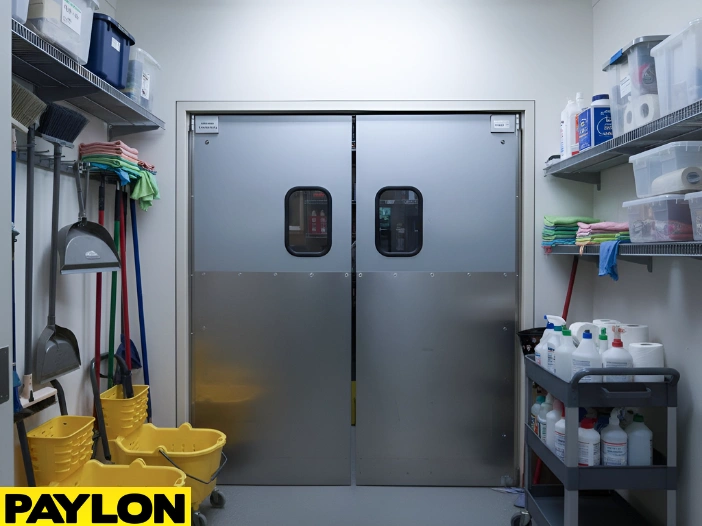
PE-710 for Durable Performance in High-Use Areas
The PE-710 features a strong expanded honeycomb core and thermoplastic skin for durability in spaces with frequent foot and cart traffic. Its construction supports busy maintenance areas while remaining easy to operate and care for.
• Built for heavy foot and cart movement
• Lightweight yet durable polymer construction
• Includes impact-resistant panel and strong hinge hardware
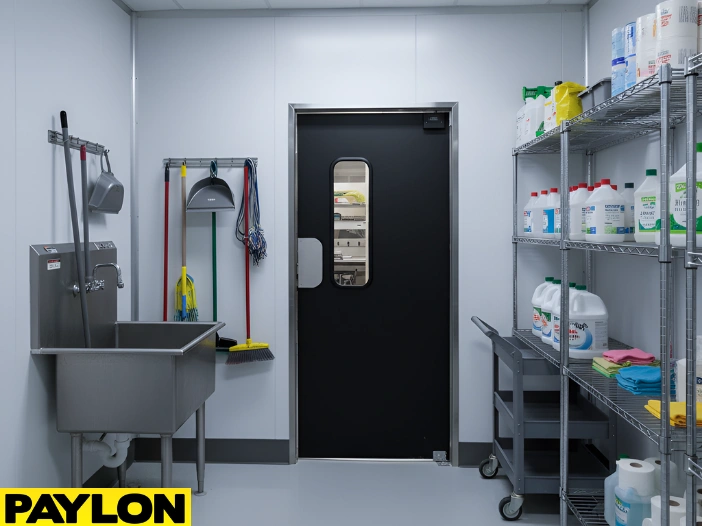
The PE-720 uses a thicker ABS core with hard facings to support heavy daily use, making it a solid choice where janitor closets see repeated passage by staff with carts or equipment. Its rugged build helps it maintain operation over time under demanding conditions.
• Designed for high daily traffic and tougher use
• ABS honeycomb core for added strength
• Easy to maintain and clean with standard swing hardware
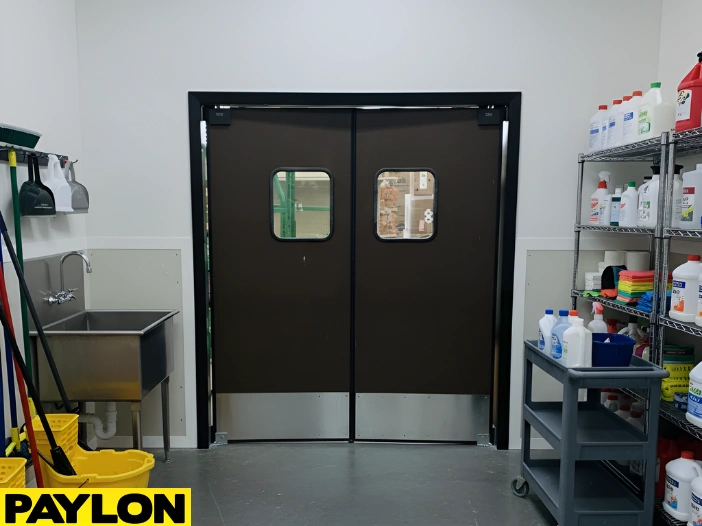
The PE-8000 is an industrial-grade swinging door constructed with a thick foam core and strong PVC frame. This model is designed for very heavy use and can handle regular cart and equipment movement without compromising performance or durability.
• Best for janitor closets connected to active service corridors
• High strength panel with easy-to-clean surface
• Includes perimeter seals and durable hinges for reliable use
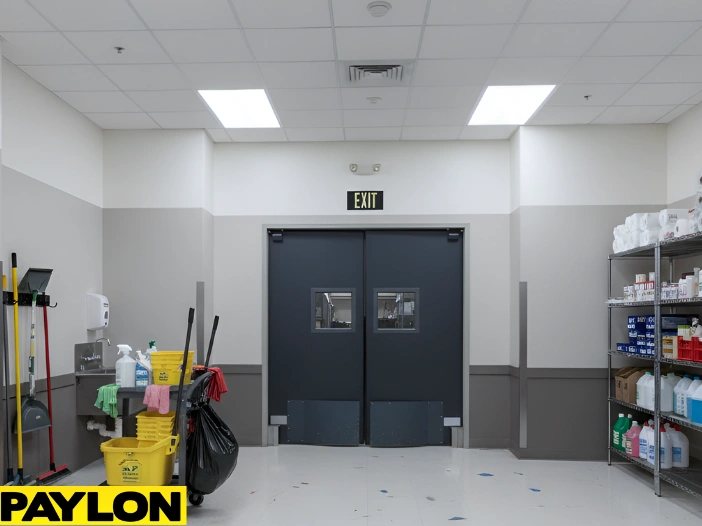
Finding the Right Fit for Your Janitor Closet
After knowing the available swinging door models, a side-by-side comparison makes it easier to see which option best fits your janitor closet space. This table focuses on daily use demands, traffic levels, and practical advantages so you can quickly narrow down the right choice.
| Door Model | Best Use Case | Traffic Level | Key Advantage |
|---|---|---|---|
| PE-620ALC | Janitor closets with steady daily staff movement | Moderate to heavy | Balanced durability with smooth operation for frequent use |
| PE-710 | Maintenance spaces with regular foot traffic and carts | Heavy | Lightweight yet impact-resistant for busy work areas |
| PE-720 | High-use janitor closets with repeated cart movement | Heavy | Thicker ABS core for long-term durability |
| PE-8000 | Janitor closets connected to service corridors | Very heavy | Industrial-grade construction for constant daily operation |
Knowing these options side by side allows facility managers and maintenance teams to match door performance with real-world use. Choosing the right traffic rating helps avoid premature wear while keeping daily cleaning routines moving smoothly.
How Swinging Doors Improve Safety and Maintenance Workflow
Once the right swinging door is installed, the difference shows up in how smoothly maintenance tasks are handled each day. Instead of slowing staff down, swinging doors help keep movement predictable, reduce interruptions, and support safer routines in busy janitor closet spaces.
| Benefit | Why It Matters in Busy Janitor Closet Spaces |
|---|---|
| ✅ Faster entry and exit during daily tasks | Two-way movement allows staff to pass through without stopping or repositioning, helping cleaning and restocking stay on schedule. |
| ✅ Reduced collisions in narrow or active areas | Smooth door operation supports safer movement when multiple staff members or carts move through tight maintenance spaces. |
| ✅ Less contact with door handles during cleaning routines | Fewer touch points help staff move between tasks more efficiently while supporting cleaner daily operations. |
| ✅ More consistent workflows during peak maintenance hours | Predictable door movement helps routines stay steady even when activity levels increase. |
| ✅ Clear separation between maintenance and public areas | Swinging doors help define boundaries, keeping cleaning activity contained and facilities better organized. |
Together, these benefits help janitor closet spaces function more smoothly throughout the day. In the next section, common questions are answered to help clarify details and support confident decision-making.
Frequently Asked Questions
FAQs About Janitor Closet Swinging Doors
Are swinging doors a good option for janitor closets in busy facilities?
Yes. Swinging doors are commonly used in janitor closets because they support frequent staff movement while helping maintain safer and more efficient maintenance routines throughout the day.
Can swinging doors be installed in small or tight janitor closets?
Yes. Swinging doors open in both directions and do not require extra clearance, making them well suited for narrow janitor closets and confined maintenance spaces.
Do swinging doors help reduce accidents in maintenance areas?
Swinging doors help reduce sudden stops and congestion by allowing smoother movement through doorways, which supports safer navigation in busy maintenance areas.
Which swinging door works best for moderate to heavy janitor closet traffic?
For moderate to heavy daily use, the PE-620ALC is a strong option. It balances durability and smooth operation for janitor closets with steady staff movement.
What swinging door is best for maintenance spaces with regular cart use?
The PE-710 and PE-720 are both well suited for maintenance spaces with carts. The PE-710 offers lightweight durability, while the PE-720 provides added strength for higher use.
Which swinging door should be used in high-traffic janitor closets?
For high-traffic janitor closets, the PE-720 is often selected due to its thicker ABS core and ability to handle repeated daily use.
What option works best for janitor closets connected to service corridors?
The PE-8000 is designed for very heavy use and is ideal for janitor closets connected to busy service corridors or main maintenance routes.
Are these swinging doors easy for staff to use without training?
Yes. Swinging doors are intuitive and easy to operate, allowing staff to move through naturally without special training or instructions.
Do swinging doors help keep janitor closets closed when not in use?
Yes. Swinging doors make it easier for staff to move in and out while helping the space remain closed between tasks, supporting better access control.
Are swinging doors suitable for janitor closets near public areas?
Yes. Swinging doors are often used where janitor closets connect to hallways or public spaces, helping separate maintenance activity from customer areas.
How do I choose the right swinging door for my janitor closet?
Choosing the right door depends on traffic level, cart usage, and how often the space is accessed each day. Matching the door to workload helps ensure long-term performance.
Are PE-710 and PE-720 doors easy to clean and maintain?
Yes. Both models are designed for regular cleaning routines and are commonly used in maintenance environments where cleanliness and durability matter.
Do swinging doors reduce contact with door handles during cleaning tasks?
Yes. Swinging doors reduce the need to use handles, which helps staff move between tasks more smoothly and supports cleaner daily routines.
Can swinging doors handle repeated daily use without wearing down quickly?
Yes. Models like the PE-720 and PE-8000 are built to handle repeated daily use in demanding maintenance environments.
What is the difference between PE-620ALC and PE-710?
The PE-620ALC is designed for steady moderate to heavy use, while the PE-710 is lighter but impact-resistant, making it suitable for areas with frequent carts.
Are swinging doors customizable for janitor closet openings?
Yes. Many swinging doors can be configured to fit different opening sizes and usage needs depending on the layout of the janitor closet.
Do swinging doors help improve overall maintenance workflow?
Yes. By supporting smoother movement and reducing delays, swinging doors help maintenance routines stay consistent and organized.
How long do heavy-duty swinging doors typically last?
Lifespan depends on use, but doors designed for heavy traffic, such as the PE-8000, are built to perform reliably in high-use environments over time.
Can swinging doors be used in facilities with strict cleaning schedules?
Yes. Swinging doors are commonly used in facilities with regular cleaning routines because they support efficient access without slowing work.
Which swinging door is best for long-term durability in demanding facilities?
For maximum durability and constant daily operation, the PE-8000 is the best choice for demanding janitor closet and maintenance environments.
Photo Gallery
Making the Right Choice for Busy Janitor Closets
Janitor closet spaces are active areas that support daily cleaning and maintenance work, which is why swinging doors are commonly used in these environments. They help staff move more easily, maintain safer routines, and keep workflows steady throughout the day. By selecting a swinging door that aligns with traffic level, space layout, and cleaning demands, facilities can improve efficiency while keeping maintenance areas organized and well controlled.
Efficient Swinging Door Placement